June 30, 2026, (Inside AI) — Amazon Web Services has published a detailed guide on implementing resilience patterns for large language model inference using Amazon Bedrock and an LLM gateway. The post outlines five practical patterns that address real-world challenges like quota exhaustion, geographic distribution, and noisy neighbor problems in multi-tenant environments.
The patterns progress from native Bedrock features to multi-model orchestration, offering a crawl-walk-run approach for production generative AI workloads. They are designed to keep inference highly available, responsive, and cost-effective at scale.
From Cross-Region Inference to Multi-Account Sharding
The first pattern leverages Amazon Bedrock cross-Region inference (CRIS), which automatically routes requests to optimal Regions based on availability and latency. In a demo, 10 requests were distributed across three AWS Regions without manual intervention.
For additional scale, pattern two introduces AWS account sharding. By distributing requests across multiple accounts with independent quotas, teams achieve fault isolation and higher throughput. A demo showed two accounts independently routing 10 requests each through CRIS.
Read: LLM Fallbacks Break Agent Pipelines
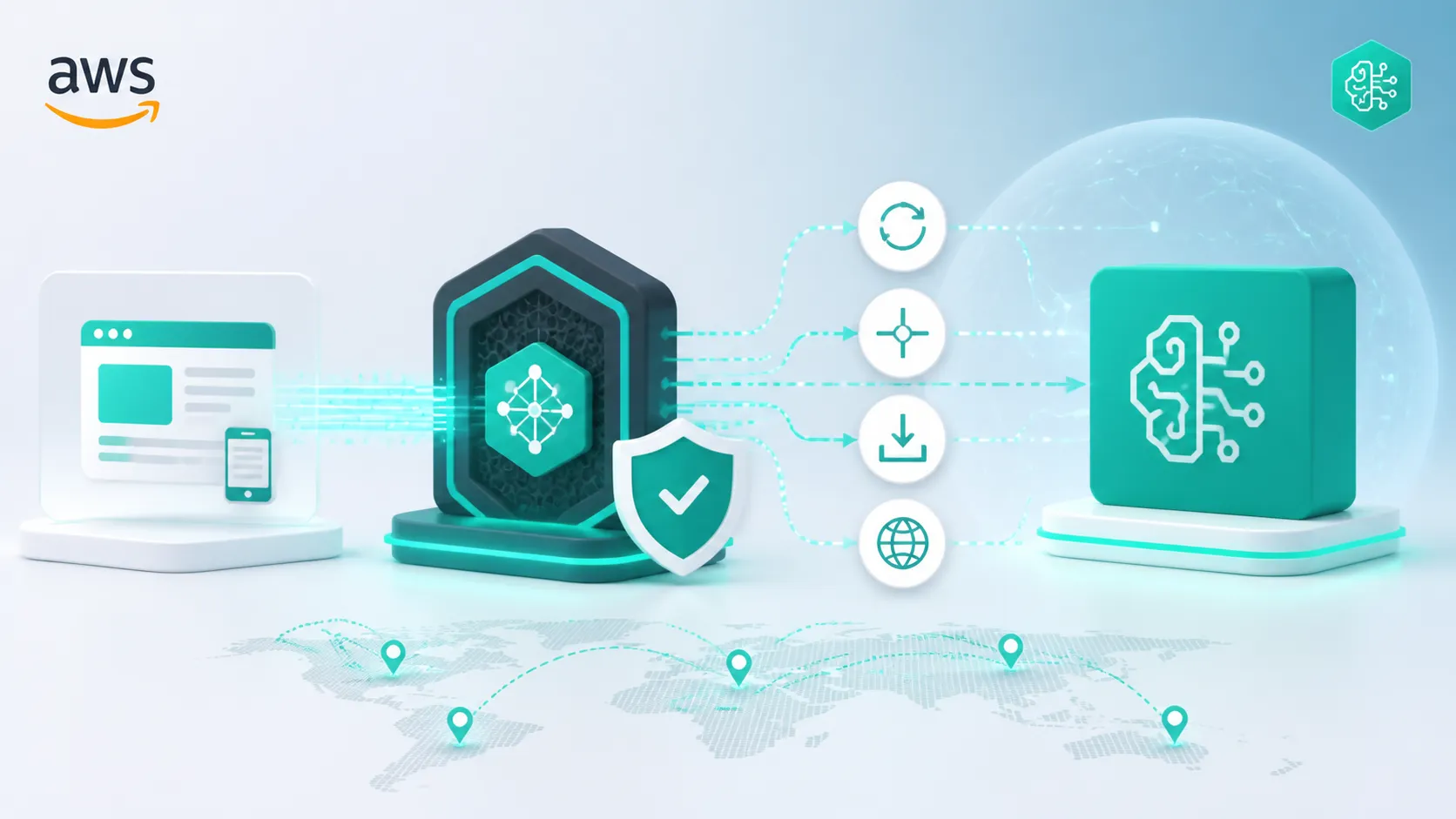
These native features set the stage for more advanced patterns using an LLM gateway. The gateway acts as an intelligent proxy, offering unified access to multiple models and providers with capabilities like automatic retries, rate limiting, and cost tracking.
Advanced Resilience with an LLM Gateway
Pattern three demonstrates model fallback. Using LiteLLM, a primary model with a 3 RPM limit and a fallback model with 25 RPM handled 10 concurrent requests. The gateway automatically diverted 7 requests to the fallback, achieving 100% success.
Pattern four covers load balancing across models. A shuffle strategy distributed 10 requests between two primary models, with a fallback handling overflow after rate limits hit. Again, 100% success was maintained.
Pattern five tackles multi-tenant quota isolation. Three consumers with different RPM limits sent 5 requests each. Consumer A, limited to 3 RPM, saw 2 rejections, while B and C succeeded fully. This prevents noisy neighbor issues in shared environments.
The guide emphasizes that these patterns suit high-availability requirements, scaling beyond single-model quotas, multi-tenant isolation, and separating development from production. Code samples are available in a GitHub repository, and a production-ready reference implementation exists via the AWS Solution for Multi-Provider Generative AI Gateway.
For cleanup, users must delete CloudWatch logs to avoid ongoing charges. AWS notes that the answer to when to use these patterns is “It depends!” on workload requirements and compliance needs.
Read: GPU Time-Slicing in Kubernetes