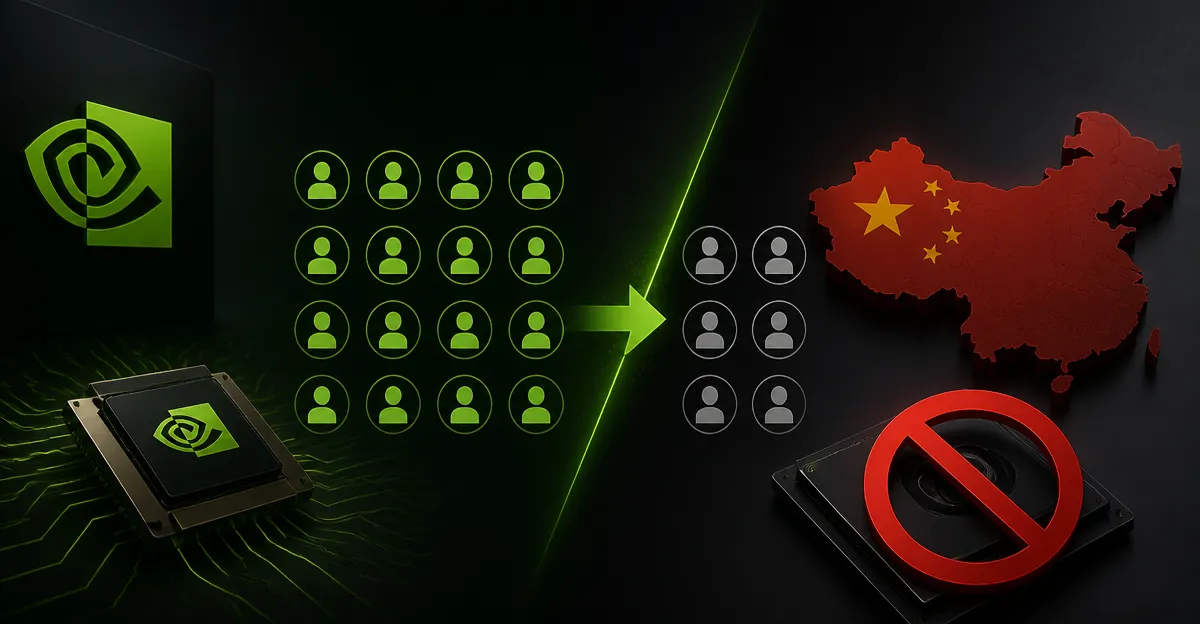
July 14, 2026, (Inside AI) — Nvidia has slashed its list of Asian buyers for advanced AI chips by more than half, implementing a stringent new “white list” after tightening compliance checks to block shipments from reaching China. The Financial Times broke the news on Monday, citing three people familiar with the matter.
The U.S. chip giant intensified due diligence in Singapore, Malaysia, and Japan over recent months. The crackdown aims to close loopholes that allowed restricted technology to flow into China despite export controls.
Nvidia’s move reflects mounting pressure from Washington to enforce semiconductor sanctions. The company now vets customers more aggressively, scrutinizing end-use and ownership structures to prevent diversion.
The white list replaces a broader authorization framework. Only entities passing rigorous verification can purchase Nvidia’s most powerful GPUs, such as the H100 and B200 series.
This shift marks a significant operational change for Nvidia in Asia. Singapore, a major transshipment hub, has been under watch after suspicious shipment patterns emerged. Malaysia and Japan also saw increased scrutiny due to their proximity to Chinese supply chains.
Export controls on AI chips have evolved rapidly since October 2022. The U.S. government has repeatedly updated rules to limit China’s access to advanced computing. Nvidia responded by designing China-compliant chips like the A800 and H800, but regulators later closed those gaps.
Industry analysts note that middlemen and shell companies have exploited regional trade networks. Nvidia’s white list strategy mirrors approaches by other tech firms facing sanctions, such as ASML and Applied Materials.
“The company has over the past few months intensified due diligence in Singapore, Malaysia and Japan,” the FT report stated, quoting the sources.
Nvidia did not immediately respond to requests for comment. Reuters could not independently verify the report.
The development underscores the escalating tech cold war. China has accelerated its domestic chip efforts, but advanced AI training still depends on Nvidia’s hardware. Smuggling attempts have become more sophisticated, prompting tighter corporate compliance.
Some experts question whether the white list will be effective. History shows that determined actors often find workarounds. However, Nvidia’s direct control over sales channels could reduce leakage compared to broad export rules alone.
Japanese and Singaporean authorities have cooperated with U.S. export control initiatives. Malaysia has faced criticism for lax enforcement but recently pledged to strengthen oversight.
The white list could impact smaller AI startups and research institutions in Asia that rely on Nvidia chips. Legitimate buyers may face longer approval times and invasive audits.
Nvidia’s stock showed little immediate reaction, as investors weigh the long-term risk of lost revenue against regulatory compliance. The company derives a significant portion of its data center sales from Asia.
Looking ahead, the U.S. is expected to further tighten chip restrictions. Nvidia’s proactive stance may become a template for other semiconductor firms navigating geopolitical tensions.