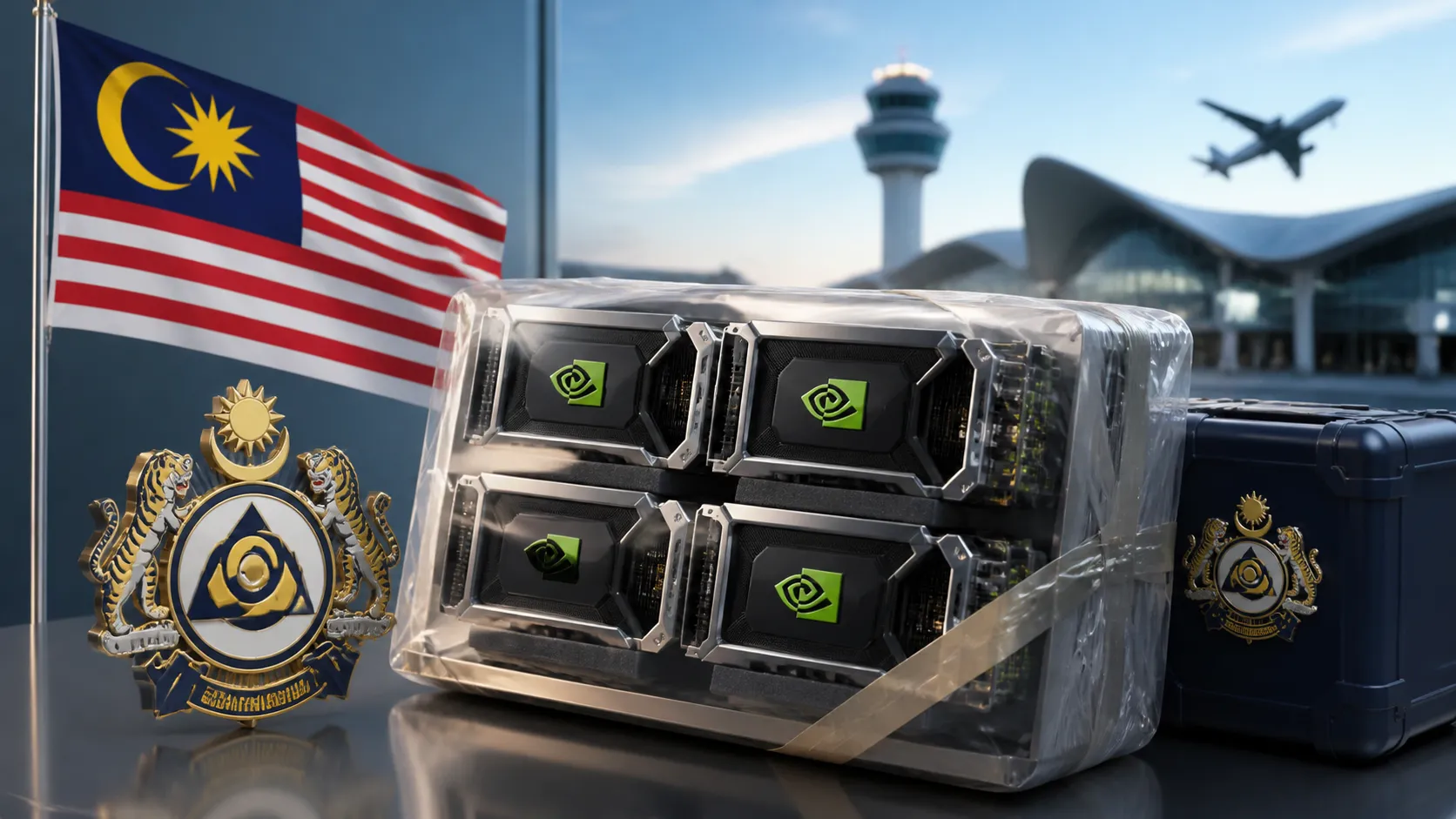
June 26, 2026, (Inside AI) — Malaysia’s customs department intercepted an attempt to smuggle advanced artificial intelligence chips worth 52.9 million ringgit ($12.93 million) through Kuala Lumpur International Airport on June 5. Authorities seized 72 server units containing the high-performance chips, which had been falsely declared as computer components.
The servers arrived in the airport’s free trade zone and were destined for re-export to another Asian country without the required permit under Malaysia’s Strategic Trade Act. Airport customs director Zulkifli Muhammad told reporters the items were listed as a transit destination to bypass restrictions.
Zulkifli declined to name the destination country, citing an ongoing investigation. A Malaysian company that facilitated the shipment is assisting authorities. No arrests have been announced yet.
Export Controls and Geopolitical Pressure
Malaysia imposed export controls last year on U.S.-origin high-performance chips after pressure from Washington to curb their flow to China. These semiconductors are vital for AI development, placing Malaysia at the center of tech supply chain tensions.
Read: Super Micro Taiwan Staff Detained in Probe Over AI Server Exports
The seizure follows a pattern of regional smuggling cases. In August 2025, the U.S. charged two Chinese nationals with illegally shipping AI chips worth tens of millions of dollars from their El Monte-based company to China via Malaysia and Singapore.
Last year, Malaysia investigated a Chinese firm suspected of using Nvidia-equipped servers for AI development locally but found no evidence of illicit trade. The current case suggests smugglers are adapting tactics, using transit hubs to mask final destinations.
Dual Discoveries at the Airport
In a separate case on June 10, customs seized six boxes containing 4,760 cartridges of vape liquid worth 1.19 million ringgit ($290,953.55). The liquid was hidden inside central processing unit casings and laced with methamphetamine, destined for a neighboring country.
Zulkifli provided no further details on that shipment. The dual discoveries highlight Kuala Lumpur International Airport’s vulnerability as a transshipment point for both high-tech and narcotics trafficking.
Read: U.S. Delays Blacklisting DeepSeek and 100+ Firms Amid China Tensions
The chip seizure underscores the escalating cat-and-mouse game between regulators and smugglers as AI hardware becomes a strategic asset. Malaysia’s customs department has not revealed how the servers were flagged, but the false declaration suggests gaps in cargo screening that authorities are now racing to close.