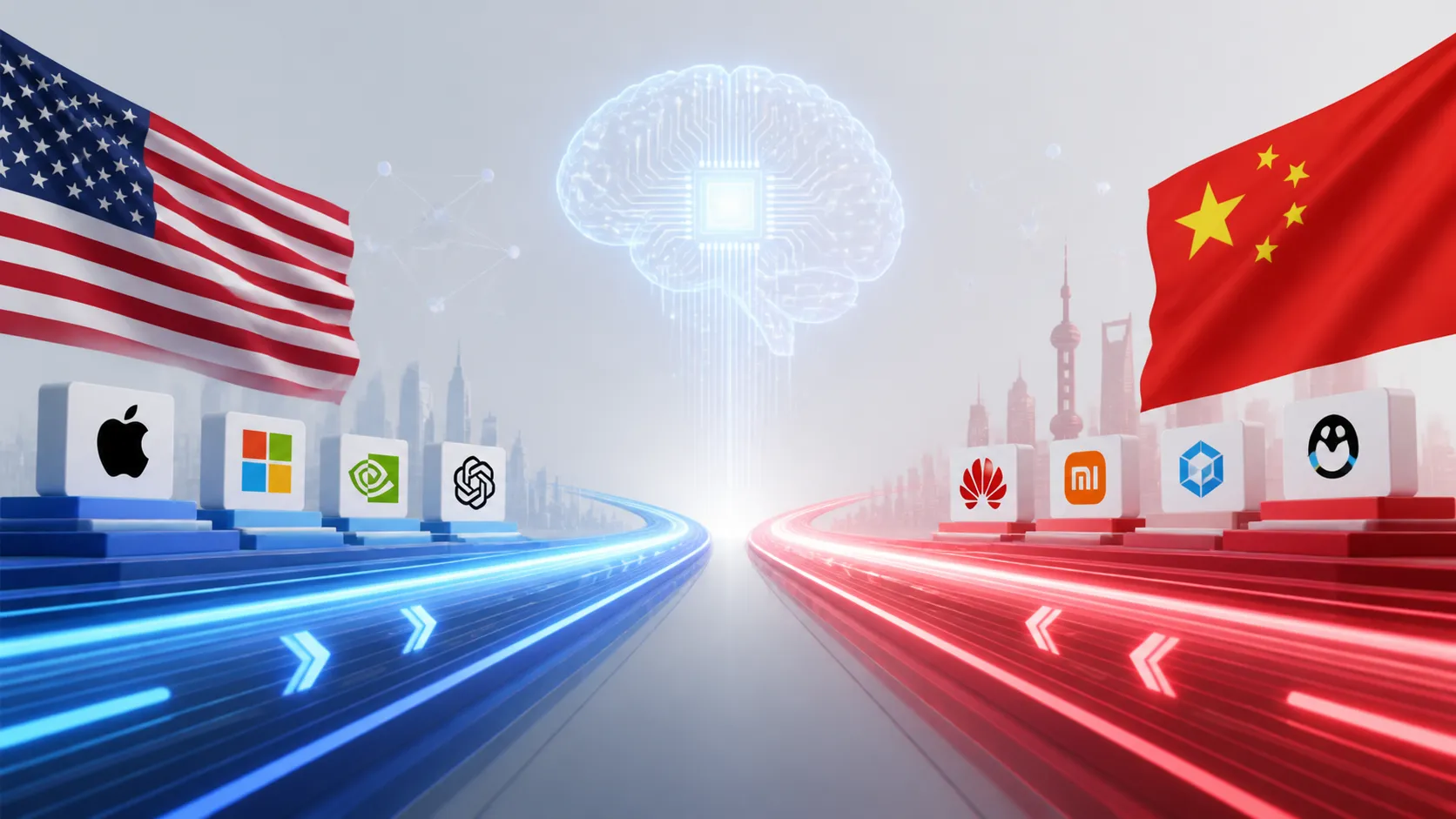
July 1, 2026, (Inside AI) — The United States and China are locked in a high-stakes race to dominate artificial intelligence, but the winner won’t be decided by who has the most chips or data. Instead, the advantage will go to the nation that can learn, innovate, and adapt faster than its rival, according to geopolitical risk expert Marco Vicenzino.
In a new analysis, Vicenzino argues that the AI era compresses strategic time, forcing governments to rethink how they measure power. Traditional metrics like territory, population, and military might remain foundational, but each technological revolution reshapes geopolitical competition. AI accelerates everything: breakthroughs now take years instead of decades, supply chains reorganize in months, and military innovation cycles shrink dramatically.
This compression leaves little room for error. Governments have less time to spot strategic failures and even less time to correct them. The decisive edge belongs to those who adapt effectively, not those who simply possess the greatest resources. For the US and China, this means their competition hinges on institutional agility and the capacity to turn learning into action.
Vicenzino’s thesis challenges the prevailing narrative that AI supremacy is a matter of outspending or out-producing an adversary. He points to a deeper vulnerability: great powers often weaken not because of a stronger rival, but because domestic institutions struggle to adapt as international ambitions expand. Strategic overextension begins at home when national capacity lags behind national ambition.
This perspective gains urgency as both nations pour billions into AI research and development. The US leads in foundational models and venture capital, while China excels in manufacturing scale and government-backed deployment. Yet, Vicenzino suggests that the real battlefield is internal—how quickly each country can reform education, regulation, and defense procurement to keep pace with AI’s breakneck evolution.
Historical parallels abound. The Industrial Revolution rewarded Britain for its adaptable financial and legal systems, not just its coal reserves. The digital age saw the US outmaneuver Japan in semiconductors by fostering a more dynamic startup ecosystem. Now, AI demands a similar institutional nimbleness. Vicenzino’s warning echoes strategists like Andrew Krepinevich, who has long argued that military revolutions favor those who can adapt doctrine and organization, not just technology.
Competing viewpoints add nuance. Some analysts, like Graham Allison, emphasize the “Thucydides Trap” of inevitable conflict between a rising power and an established one. Others, such as Kai-Fu Lee, predict a bifurcated world where China dominates AI implementation while the US leads in innovation. Vicenzino’s focus on adaptation speed bridges these views, suggesting that the outcome depends less on static advantages and more on dynamic responses.
What’s missing from the public debate, Vicenzino implies, is a frank assessment of domestic constraints. US export controls on advanced chips aim to slow China’s progress, but they also risk fragmenting global supply chains and stifling American companies. China’s centralized approach accelerates deployment but may hinder the creative destruction that drives breakthroughs. Both nations face a paradox: the very systems that built their power could become anchors in the AI storm.
Vicenzino’s analysis does not offer a crystal ball but a framework. The AI era does not guarantee a new hegemon; it guarantees that the old rules of competition are obsolete. As he puts it, the question is not who has the most, but who can learn the fastest. For policymakers in Washington and Beijing, that means looking inward before looking outward.