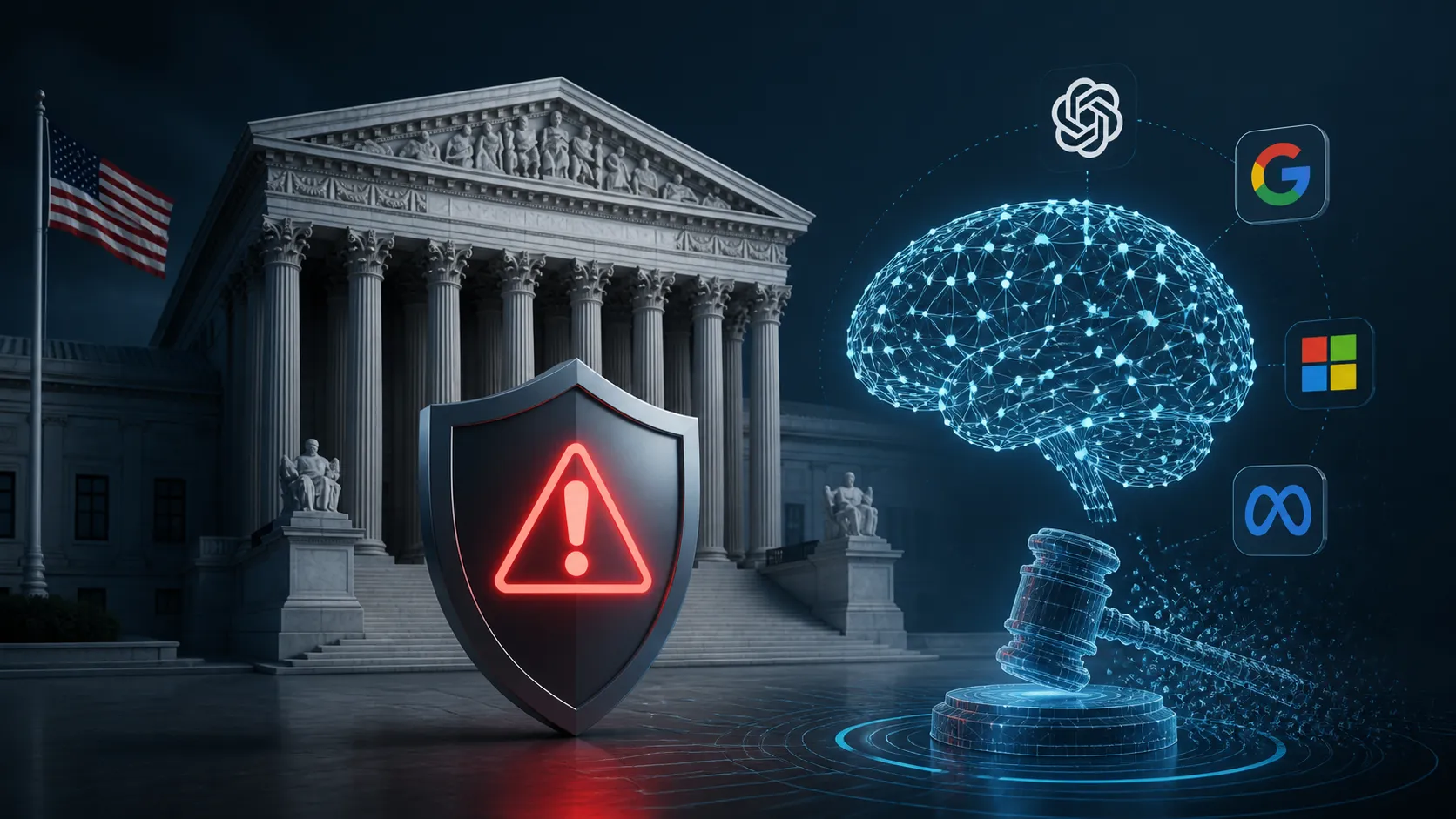
July 2, 2026, (Inside AI) — India’s Supreme Court issued a stark warning Thursday about the dangers of unregulated artificial intelligence in judicial proceedings, calling the use of AI-generated fake precedents “catastrophic” and akin to a toxic gas leak in the legal system.
A bench of Justices P S Narasimha and Alok Aradhe set aside orders from the National Company Law Tribunal (NCLT) and National Company Law Appellate Tribunal (NCLAT) after discovering they relied on non-existent, AI-hallucinated judgments. The NCLT order dated August 28, 2024, and the NCLAT order of September 11, 2025, cited fabricated cases, and even when citations were real, the content included AI-generated paragraphs.
The court declared such decisions void, stating they subvert the rule of law. It directed the Bar Council of India to form a committee and establish guidelines to prevent lawyers from submitting fake AI material, with disciplinary consequences for violations.
The Methyl Isocyanate of Justice
In unusually forceful language, the bench compared AI-generated fake precedents to the 1984 Bhopal gas tragedy, where methyl isocyanate leaked and killed thousands. The judgment said:
“For those in the province of adjudication and determination of disputes, this by-product of AI, i.e., the production of fake, non-existent, and hallucinated material and its utilisation as precedents in law, is like the release of methyl isocyanate in the province of law and justice: invisible, insidious, and catastrophic by the time anyone notices. It not only contaminates but takes away the very lifeblood of judicial determination.”
The court mandated a “zero-tolerance mode” for citing unverified AI-generated precedents, calling it misconduct for advocates and a serious lapse for judges. It clarified that any decision tainted by even an “iota” of fake material must be set aside, regardless of its impact on the outcome.
This ruling comes amid growing global concern over AI hallucinations in legal contexts. In 2023, a New York lawyer faced sanctions for citing fake ChatGPT-generated cases. The Supreme Court’s proactive stance sets a precedent for other jurisdictions grappling with generative AI’s infiltration into legal research.
Delegating Thought, Losing the Saadhana
The judgment delved into the philosophical risks of AI dependency, warning that unregulated use could erode human reasoning. It described the judicial process as a “Saadhana”—a disciplined practice of discerning truth from falsehood—and cautioned that delegating thinking to machines could have “serious consequences for the core of human existence.”
The court acknowledged technology’s role in courts but stressed that AI is transformative, not just an aid. It emphasized the need for “absolute and total control” over AI usage, while recognizing that this requires public policy and enforceable regulations, not just judicial orders.
The bench also noted that real success lies in the will of the Bar and Bench to harness AI carefully, requiring unprecedented collaboration. This echoes a 2025 Supreme Court panel proposal to ban AI from deciding verdicts or bail criteria, signaling a judiciary keen to set boundaries before harm escalates.
Legal experts see the ruling as a wake-up call. “It’s a landmark judgment that draws a clear line,” said Dr. Arvind Datar, a senior advocate not involved in the case. “The court is saying that AI can assist, but the human mind must remain the ultimate arbiter.”
The Bar Council of India has been given no specific deadline but is expected to act swiftly. The court’s directive may accelerate India’s Digital Personal Data Protection Act implementation, which includes AI governance provisions.
As AI tools become ubiquitous in legal research, the Supreme Court’s message is unequivocal: the integrity of justice depends on human vigilance, not machine-generated shortcuts.