July 15, 2026, (Inside AI) — As artificial intelligence shifts from simple chat interfaces to autonomous, multi-step agentic workflows, enterprise leaders face a pressing challenge: how to manage AI investments when usage patterns are opaque, costs are unpredictable, and value is hard to measure. OpenAI today outlined a five-part framework for navigating this new era, emphasizing that the key metric is not token price, but “useful work per dollar”—tasks completed, time saved, and decisions improved.
The announcement comes as OpenAI’s latest model, GPT‑5.6, demonstrates a 97% drop in price per million tokens since GPT‑4, alongside a 54% reduction in output tokens and 57% less time per task on the Artificial Analysis Coding Agent Index. Yet, the company warns that cheaper tokens can mask hidden costs from model failures, retries, and human corrections, urging a shift toward outcome-based evaluation.
“Token price alone does not show whether AI is creating value,” an OpenAI spokesperson said. “Leaders should look at useful work per dollar.”
From Black Box to Business Dashboard: The Visibility Imperative
As agentic systems like ChatGPT Work handle longer, multi-step tasks, IT administrators need granular visibility into who is using AI, which models, for what work, and at what cost. Without this, a rising bill could signal waste, productive experimentation, or a critical business process—leaving leaders in the dark.
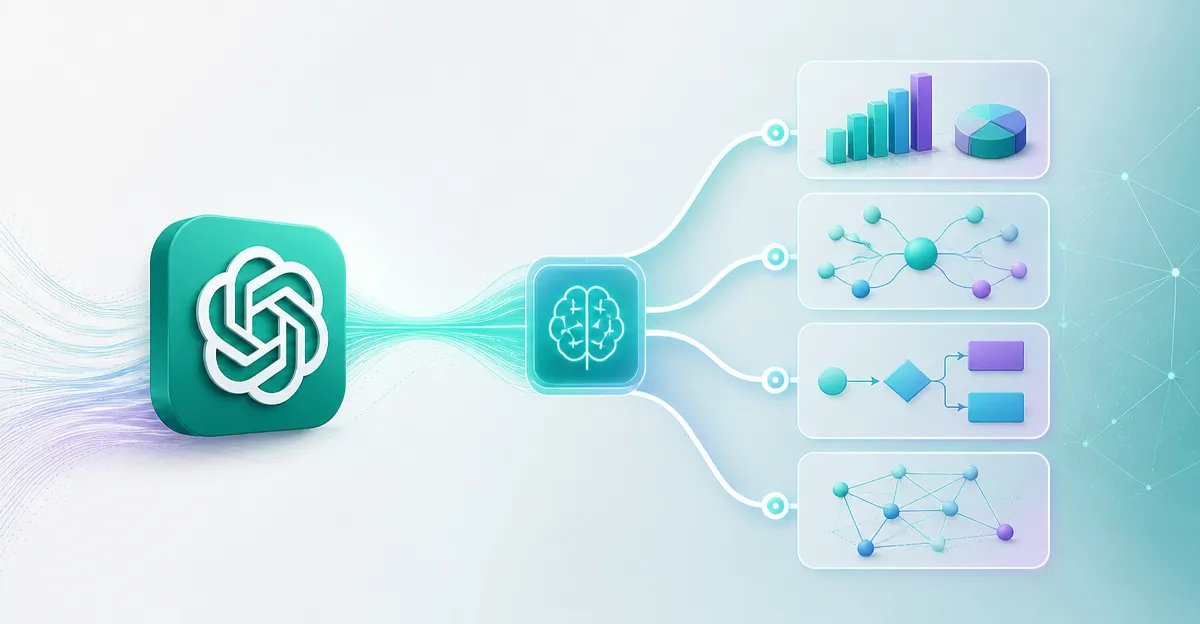
OpenAI’s updated Admin Console now provides usage analytics and spend controls that break down adoption, credit consumption, and spending by user, product, and model. Admins can track trends, spot power users, and identify workflows that merit further investment.
The console offers insights at multiple altitudes: from individual user behavior to department-wide trends, helping leaders decide where to invest, coach, or set limits. This shared view across the enterprise is designed to turn AI spending from a black box into a strategic dashboard.
Industry analysts note that such visibility is rare in the agentic space. “Most enterprises are flying blind with agent costs,” said Dr. Elena Torres, an AI governance researcher at Gartner. “OpenAI’s approach could set a standard, but it also raises questions about vendor lock-in and data privacy.”
Redefining ROI: Cost Per Accepted Outcome
The cheapest model rarely yields the lowest total cost. A less capable model may hallucinate, loop, or require extensive human review, while a pricier frontier model might nail the task in one shot. OpenAI advises evaluating models on real-world tasks using custom evals that include edge cases, then measuring the full cost of reaching an acceptable result—including attempts, latency, and human oversight.
For high-priority workflows, the metric shifts to cost per accepted outcome. In customer support, that’s a resolved case; in engineering, a tested change that passes review. This cost is then weighed against business value like time saved, revenue protected, or risk avoided.
“Model choice is only part of the equation,” the spokesperson added. “Clear instructions, focused tools, and explicit stopping conditions can reduce loops and wasted spend.” The goal: use smaller models for routine tasks and reserve frontier intelligence for complex, high-stakes work.
This outcome-focused lens challenges the industry’s obsession with benchmark scores. A recent MIT Sloan study found that companies using cost-per-outcome metrics saw 30% higher ROI on AI projects than those optimizing for model accuracy alone.
To operationalize this, OpenAI’s AI Deployment Engineers work directly with customers on evals, architecture, and workflow design. For sensitive deployments, the company offers Zero Data Retention options, allowing AI to operate in high-trust environments without storing prompts or completions.
Governance becomes the operating layer that determines which AI work can scale. Admins must define what context ChatGPT can access, which tools it can use, what actions it can take, and who approves higher-risk steps. This is critical as teams adopt plugins, connectors, and Computer Use capabilities that can act across enterprise systems.
ChatGPT Work provides centralized controls for access, approved context, and spend—including workspace defaults, group limits, and individual overrides with project context. This allows leaders to support high-value work without broadly raising limits, balancing innovation with risk.
Finally, OpenAI recommends treating AI investments as a portfolio: broad access for productivity, function-specific workflows for repeatable tasks, and a few strategic bets built on proprietary data. Funding should follow maturity from exploration to validation to production, with shared capabilities like identity, connectors, and evals funded centrally.
For production workloads, commercial structures should match usage patterns: Guaranteed Capacity for agents needing access certainty, Scale Tier for predictable high-volume APIs, and Batch API or Flex processing for asynchronous work. Larger deployments can leverage OpenAI Frontier and Deployment Company to build and manage AI coworkers across systems.
As the agentic era matures, the winners will be those who move beyond per-token pricing to measure what truly matters: work done, outcomes achieved, and value created—all under a governance framework that keeps risk in check.