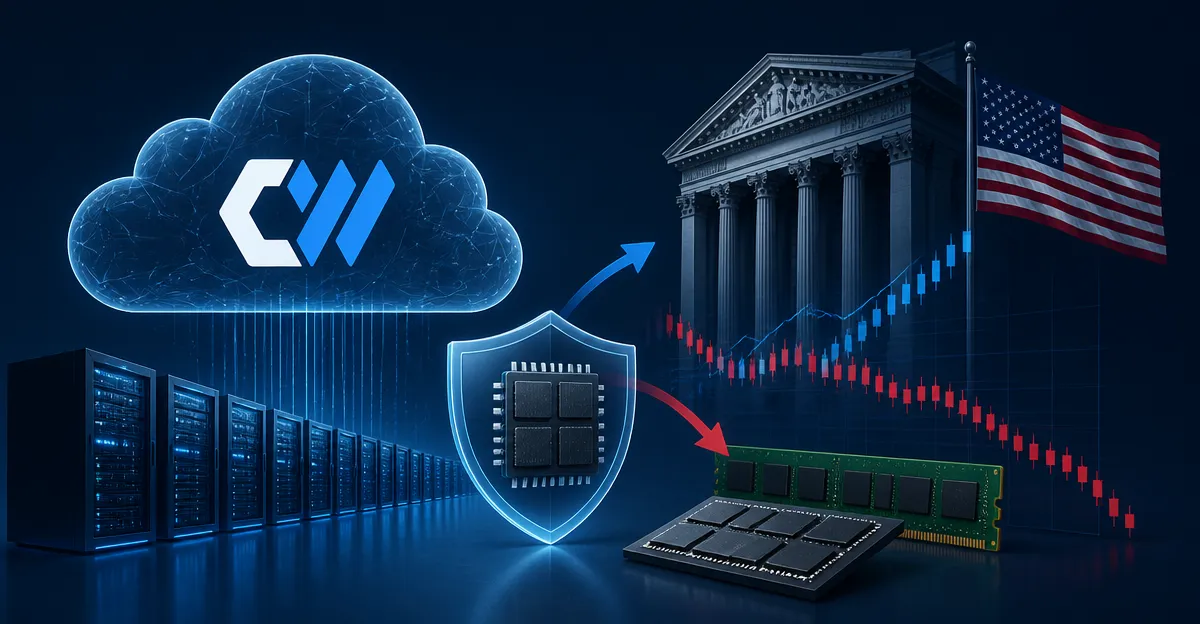
July 15, 2026, (Inside AI) — AI cloud provider CoreWeave is exploring financial derivatives to hedge against a potential decline in memory and storage chip prices, according to a person familiar with the matter. The move highlights how deeply intertwined cloud operators have become with the cyclical semiconductor market.
The discussions, still in early stages, involve instruments like put options that could protect CoreWeave if chip prices fall. No hedges have been executed yet. The company has signed long-term supply agreements with manufacturers including Micron and SanDisk, locking in prices for DRAM and storage chips amid soaring AI infrastructure demand.
These deals guarantee chipmakers a price floor, shielding them from downturns. But they expose cloud companies to overpayment if market prices drop. CoreWeave’s exploration of hedging signals a strategic shift in managing this risk, borrowing tactics from industries like airlines and energy.
The Double-Edged Sword of Long-Term Chip Deals
Long-term agreements have become essential for cloud providers racing to secure chip supply. The AI boom has strained manufacturing capacity, forcing companies to commit years in advance. For chipmakers, these contracts ensure stable revenue even in a downturn.
Read: Micron Signs Long-Term Chip Deals with Qualcomm, Harman for AI-Powered Cars
But for buyers like CoreWeave, the arrangement is risky. Memory prices are historically cyclical, spiking during shortages and crashing when new capacity comes online. SK Hynix and Micron expect fully ramped-up new manufacturing by early 2028, which could flood the market and slash prices.
A person familiar with the matter said CoreWeave executives have discussed hedging against a slide in memory chip stocks that would occur if prices drop. The source, who requested anonymity because the talks are private, confirmed the early-stage nature of the discussions.
Put options are among the instruments considered. These contracts allow the holder to sell an asset at a predetermined price, offering a safety net if market values tumble. Other derivatives may also be on the table, though specifics remain unclear.
Lessons from Airlines and Energy Hedging
Hedging is not new in capital-intensive industries. Airlines routinely hedge jet fuel costs, while energy companies lock in oil prices. However, these strategies can backfire. U.S. airlines have suffered losses when fuel prices fell below their hedged rates, leaving them paying above-market costs.
For CoreWeave, the challenge is similar. If memory prices stay high, hedging could be an unnecessary expense. But if prices collapse, the protection could save millions. The company must weigh the cost of options premiums against the risk of overpaying for chips.
Memory and flash storage prices have spiked in recent months, driven by insatiable AI demand. This mirrors past cycles, such as the 2018 DRAM boom that preceded a sharp correction. Industry analysts warn that current elevated prices may not last.
CoreWeave’s move could set a precedent for other cloud providers. Amazon Web Services, Microsoft Azure, and Google Cloud also rely heavily on memory chips but have not publicly disclosed similar hedging strategies. If successful, CoreWeave’s approach may prompt wider adoption.
Read: AI Trade Wobbles: Chip Stocks Slide Globally as Investors Question Capex Sustainability
The company, which specializes in GPU-accelerated cloud services for AI workloads, has grown rapidly. It operates massive data centers packed with Nvidia GPUs and depends on a steady flow of high-bandwidth memory. Any disruption in chip pricing could impact its aggressive expansion plans.
Financial derivatives offer a way to smooth out volatility, but they require sophisticated risk management. CoreWeave would need to model potential price scenarios and decide how much protection to buy. The source emphasized that no decisions have been made, and the company may ultimately choose not to hedge.
For now, the exploration signals a maturation of the AI infrastructure market. As cloud providers become more like industrial giants, they are adopting the financial tools of traditional heavyweights. Whether this leads to stability or unforeseen risks remains to be seen.