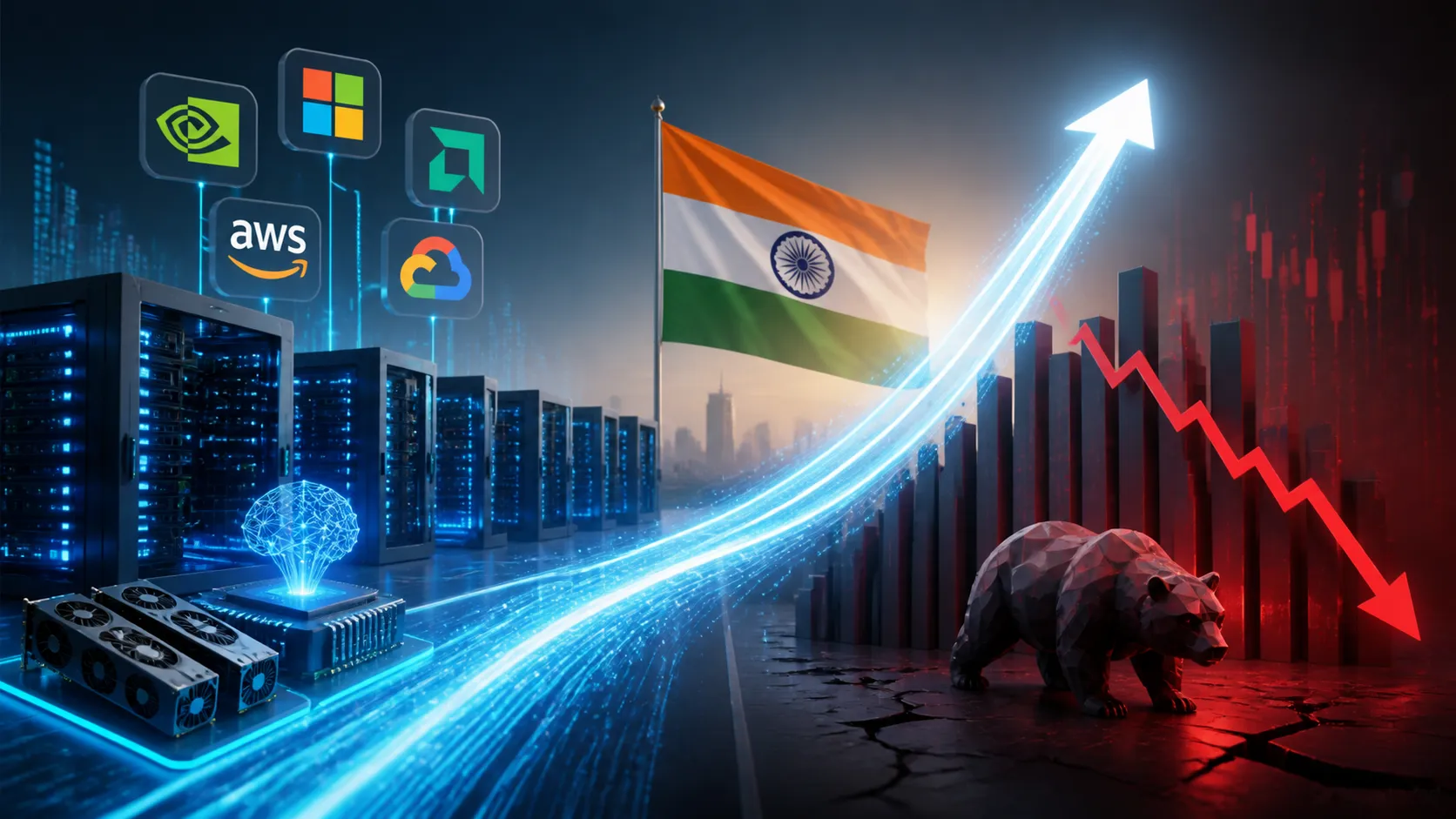
June 29, 2026, (Inside AI) — India’s benchmark indices have slumped 8-10% in 2026, partly due to a dearth of prominent AI stocks. Yet beneath the surface, a cluster of domestic companies building AI infrastructure has surged, delivering outsized returns.
Acutaas Chemicals and CG Power and Industries Solutions exemplify this divergence. Their shares have climbed 93% and 45% respectively this year. These firms supply critical components—specialty chemicals, semiconductor assembly, and power equipment—for the global AI supply chain.
This rally highlights a structural gap: India’s frontline indices lack direct AI representation, but its industrial base feeds the boom. Foreign institutional investors (FIIs) have noticed, quietly raising stakes in these niche players even as they pulled roughly $30 billion from broader Indian equities.
The Hardware Behind the Hype
Surat-based Acutaas produces photoresist chemicals essential for semiconductor circuits. In February, it acquired a 75% stake in South Korea’s Indichem Inc., forming a joint venture to target the global chip chemicals market. This move positioned it directly in the supply chain of advanced fabs.
Read: Adani and Jabil Forge AI Data Centre Manufacturing Powerhouse in India
CG Power, through its subsidiary CG Semi, runs an outsourced semiconductor assembly and testing (OSAT) facility in Sanand, Gujarat. It has partnered with Thai and Japanese firms to boost manufacturing. Its Bengaluru-based Axiro Semiconductor unit designs radio frequency chips, adding another layer to its AI relevance.
Power equipment makers have also thrived. Data centers demand massive, reliable energy, driving gains for GE Vernova India, Hitachi Energy India, and Quality Power. Their shares rose 61% to 86%.
“We are looking at a much higher demand for data centres…data centres give you a better realisation of prices for the same products,” GE Vernova’s management said after Q4 earnings.
Transformers and transmission gear are crucial. Polycab India and RR Kabel, which supply cables and wiring, saw shares jump 25% to 71%. Polycab’s management noted on its Q4 call:
“In power sector alone, if Rs 100 is spent on transmission and distribution, the translation to cable requirement is around 15% to 20%, which basically indicates that any amount invested in the power sector will translate into heavy demand for cable and wire.”
Invisible Winners, Visible Gains
Beyond hardware, AI server designer Netweb Technologies surged 59%. MTAR Technologies, a precision component maker for chip equipment, more than tripled. GPU cloud provider E2E Networks doubled. These firms sit outside major indices but inside the AI value chain.
Persistence Capital captured the dynamic in a recent report: “AI will eventually have an impact on every business. For now, we think it positively impacts two kinds: those that enable the build-out, and those that can immediately use AI to cut costs or launch new products.”
Read: India’s Four Unmatched Advantages in the Global AI Race
The report flagged a problem: these companies have “immaterial representation in frontline Indian indices.” It added, “In other markets, the AI winners are the biggest names, easy to find. India sits below the top of the index.”
FIIs, despite heavy selling elsewhere, raised stakes in several AI-linked firms. Their overall holdings in NSE-listed companies hit a 17-year low of 15.8% by March-end. But in MTAR Tech, FII stake rose over 5 percentage points to 17.31%. Polycab’s FII holding increased by 3.4 points to 18.21%. Acutaas saw a 2.8 point bump to 19.48%.
These moves suggest foreign investors recognize India’s role in supplying the physical backbone for global AI leaders like Nvidia and AMD. While the country lacks headline-grabbing AI platforms, its factories and power grids are indispensable.