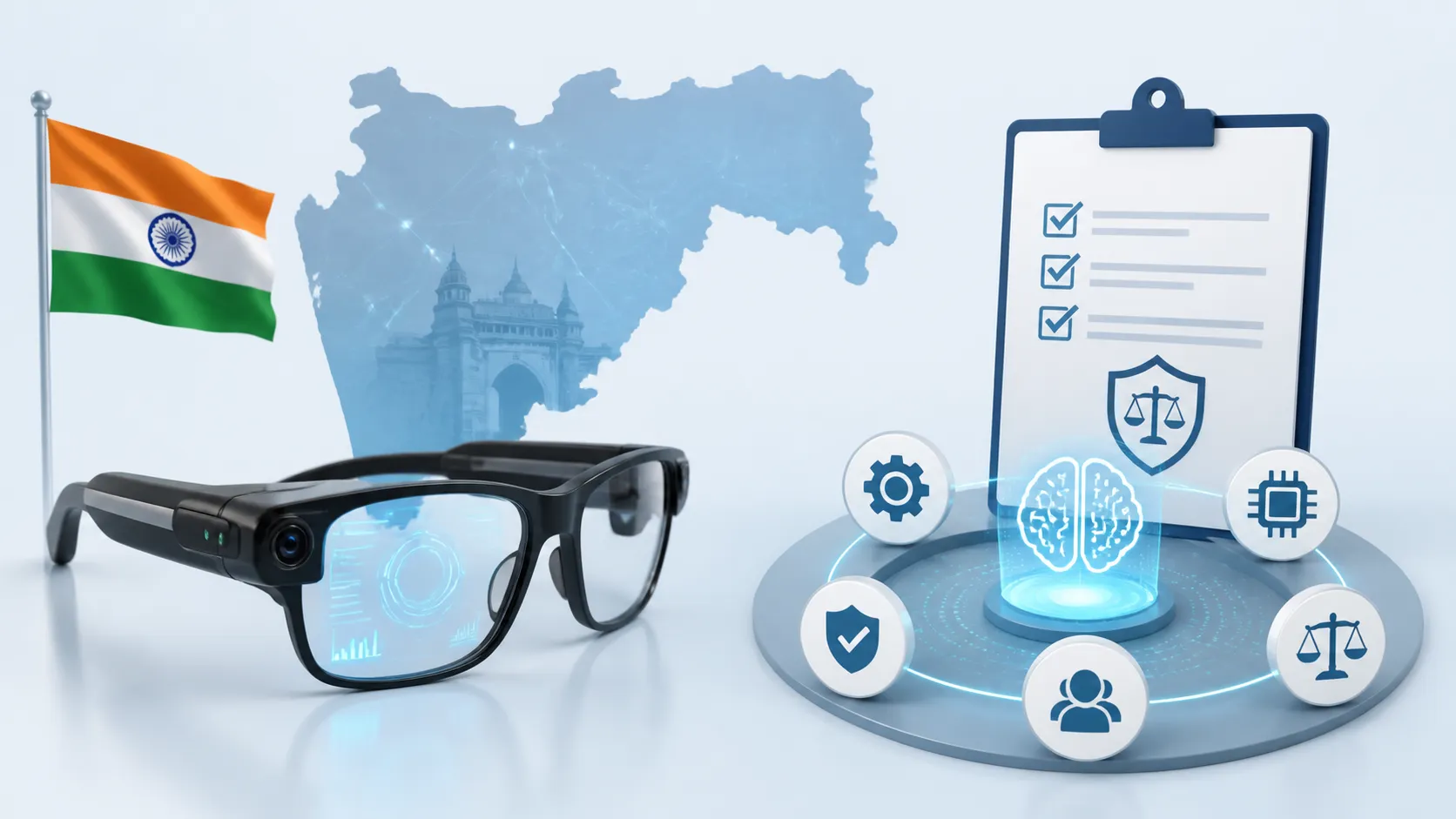
June 30, 2026, (Inside AI) — The Maharashtra government will draft guidelines to regulate AI-powered smart glasses and similar wearables in sensitive locations, and within one month will form an expert committee to recommend AI usage policies.
The announcement came Tuesday in response to a Calling Attention Motion by NCP MLA Sana Malik, who warned that such devices—now widely available—can secretly capture photos, video, and audio, perform facial recognition, analyze conversations, and harvest personal data while looking like ordinary spectacles.
Malik highlighted risks in places like Mantralaya, government offices, police stations, courts, defense sites, schools, hospitals, and places of worship. She flagged dangers to privacy, women’s safety, child protection, medical confidentiality, and sensitive government information.
Minister of State for Home Affairs Yogesh Kadam acknowledged the need for tighter rules, noting that the Digital Personal Data Protection Act already allows complaints to the Data Protection Board for privacy breaches.
“The law contains provisions for penalties if sensitive or personal information is collected without the consent mandated under the Act,” Kadam said.
He confirmed the state will set up a committee within a month, with a mandate to deliver its report in four months. Recommendations will then be forwarded to the central government for crafting legal provisions.
The debate exposed deeper tensions. Shiv Sena (UBT) MLA Aaditya Thackeray challenged the use of facial recognition for entry into the Legislature complex, asking how legislators’ photos could be used for authentication without consent or physical presence.
Fellow party MLA Varun Sardesai voiced fears about legislators’ data being shared with third parties. These questions remain unanswered, underscoring gaps in India’s regulatory framework for biometric surveillance.
Global Scrutiny and Local Blind Spots
The Maharashtra move mirrors international pushback. Meta has faced U.S. lawsuits over privacy risks tied to its AI glasses. In May, the Indian Premier League’s Anti-Corruption and Security Unit banned internet-enabled smart glasses in restricted zones, citing unauthorized recording and communication threats.
Yet India’s approach remains fragmented. The Digital Personal Data Protection Act offers a complaint mechanism, but critics say it lacks proactive enforcement tools for real-time surveillance tech. No dedicated law governs facial recognition in public spaces, leaving a regulatory vacuum.
Kadam’s promise of a committee signals intent, but the four-month timeline may struggle to keep pace with rapid tech advances. Previous state panels on AI ethics have produced reports with limited legislative follow-through, raising doubts about tangible outcomes.
Privacy advocates warn that focusing only on “sensitive locations” ignores broader misuse risks. Smart glasses can record anywhere, and piecemeal rules may create loopholes. The committee’s composition—still undisclosed—will be critical to balancing security and civil liberties.
The state’s push could pressure the Centre to accelerate a national AI accountability framework. For now, Maharashtra’s initiative is a cautious step, but the real test lies in whether guidelines translate into enforceable, rights-respecting regulation.