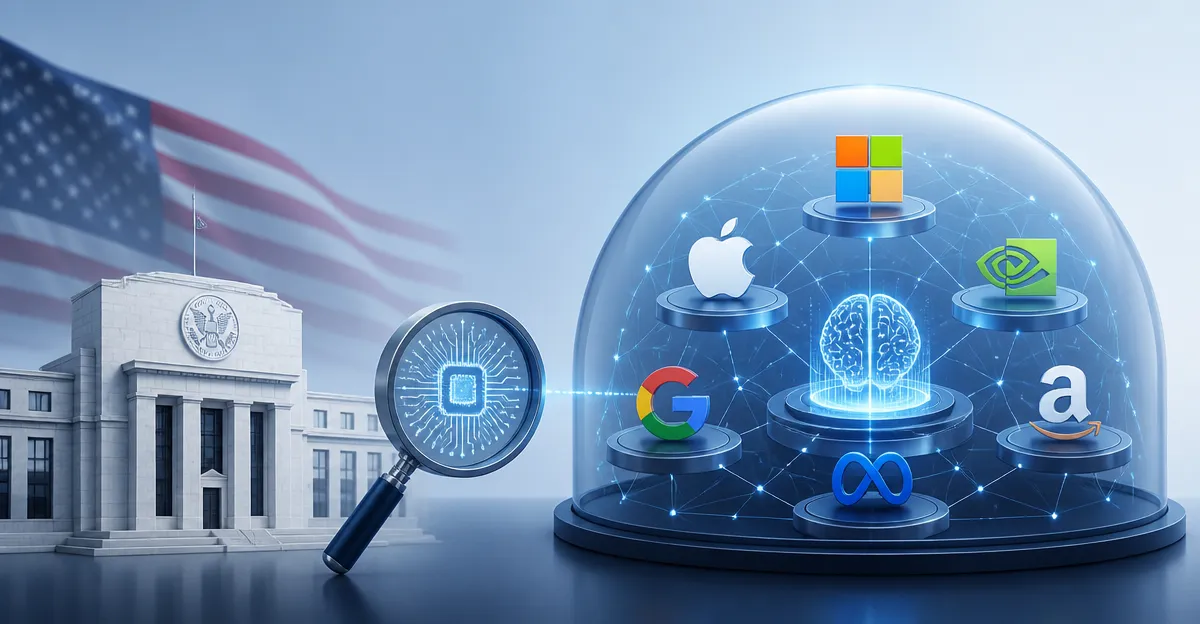
September 25, 2026, (Inside AI) — The artificial intelligence boom has created a sprawling network of companies and contracts that may soon rival the too-big-to-fail institutions that triggered the 2008 financial crisis. Kansas City Fed President Jeff Schmid raised this concern on Thursday, urging regulators to understand whether the AI ecosystem is becoming so large and interconnected that its failure could threaten the broader economy.
Schmid's warning comes as AI investment surges, with data centers, chipmakers, and cloud providers forming a tightly woven web of dependencies. The Federal Reserve official questioned whether the current build-out is creating systemic risk similar to that posed by major banks before the 2008 crisis.
"Where we have to start to really synthesize what's happening in the AI and the data center build-out is are we moving to a too-big-to-fail AI ecosystem," Schmid said, referring to the need for public bailouts of major financial institutions during the 2007 to 2009 financial crisis because of their size and influence on the broader economy.
Schmid's comments echo earlier warnings from financial regulators about the concentration of AI power. The AI sector's rapid growth has been fueled by massive capital expenditures from a handful of tech giants, including Microsoft, Google, Amazon, and Meta. These companies not only develop AI models but also own the data centers and cloud infrastructure that power them. This vertical integration could make the entire system vulnerable to a single point of failure.
Read: Sued for seeking 'safer AI': Lawsuit against Google, xAI, Anthropic, and OpenAI
"You worry a little bit about how do we understand what's inside. ... Is there anything systemic?" he asked.
The Fed's role in monitoring AI risk is not new. In recent months, officials have flagged the potential for AI-driven market volatility and the need for stress tests that account for AI-related exposures. However, Schmid's focus on the "ecosystem" suggests a broader concern: the intricate web of contracts, partnerships, and supply chains that bind AI firms together. If one major player falters, the ripple effects could be severe.
Historically, too-big-to-fail designations have been reserved for banks whose collapse would cripple the financial system. The 2008 crisis led to the Dodd-Frank Act, which imposed stricter oversight on large financial institutions. No such framework exists for AI companies, even as their market valuations and economic influence soar.
Some analysts argue that the AI industry's interdependence is different from banking. Unlike banks, AI firms are not highly leveraged, and their failures may not directly threaten the payments system. But others counter that AI is now embedded in critical infrastructure, from energy grids to healthcare, making its stability a matter of national interest.
The Fed's ability to regulate AI is limited. Much of the oversight falls to agencies like the Federal Trade Commission and the Department of Commerce, which handle antitrust and export controls. Schmid's remarks may signal a push for the Fed to take a more active role in assessing AI's systemic risks.
This is not the first time Schmid has addressed AI. In prior speeches, he has noted the technology's potential to boost productivity but also warned about disruptions to the labor market. His latest comments add a new dimension: the possibility that AI could become a source of financial instability.
Read: California Governor Issues Executive Order on AI Safety
As AI investment continues unabated, the question of whether the ecosystem is too big to fail will likely gain urgency. For now, Schmid's call for understanding is a reminder that the technology's rapid ascent carries risks that extend beyond the tech industry.