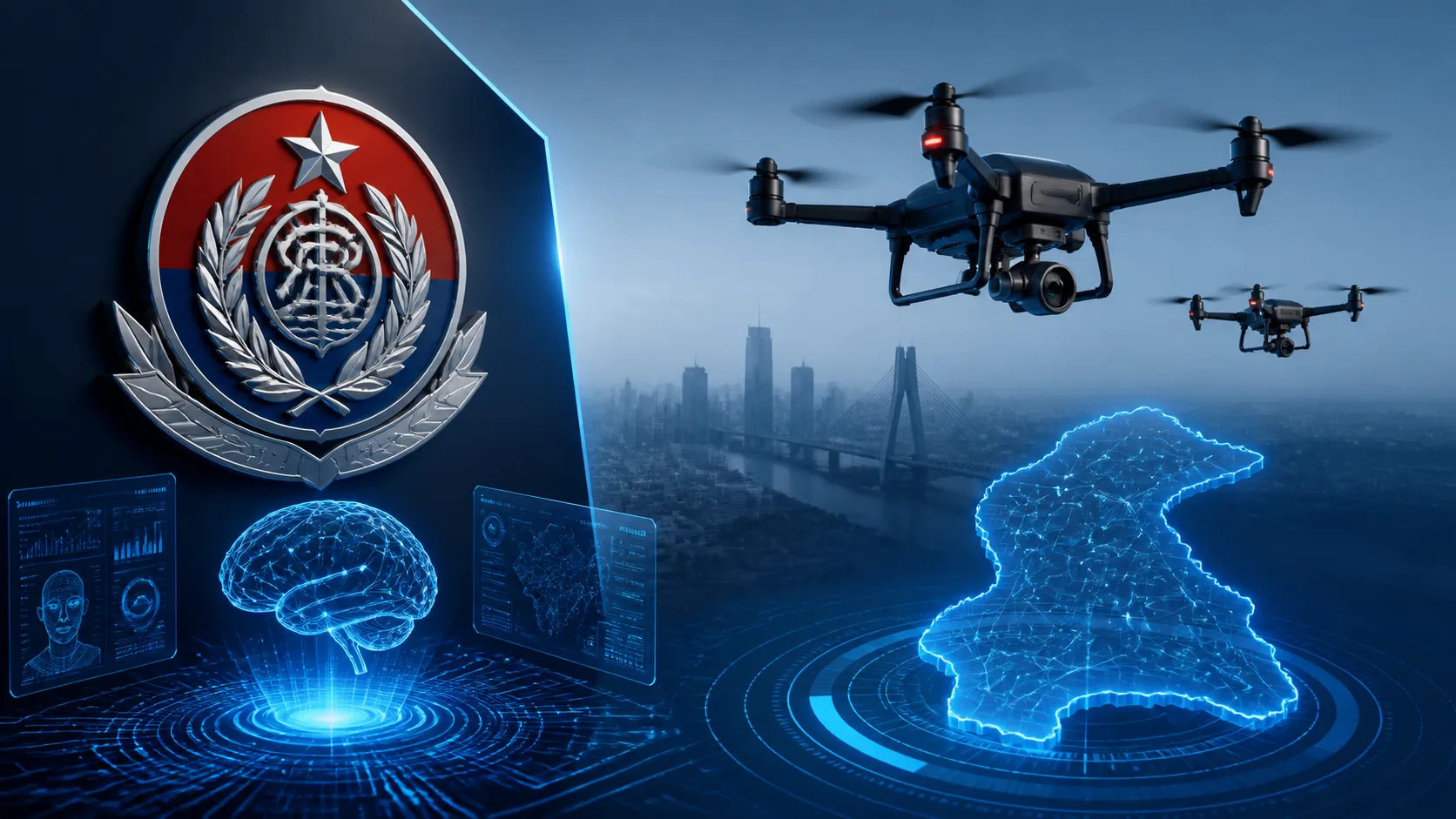
June 16, 2026, (Inside AI) — The Sindh Police has launched an ambitious modernization drive, establishing a high-level committee to integrate artificial intelligence and drone-based aerial surveillance into its operations. The move signals a significant shift toward tech-driven law enforcement in Pakistan’s southeastern province.
The committee, chaired by AIG Iqbal Dara, includes senior officials from key departments. It will assess the force’s need for real-time drone surveillance and propose a dedicated drone operations wing. This reflects a growing global trend where police forces adopt unmanned aerial systems for crowd monitoring, crime scene analysis, and rapid response.
But the initiative goes beyond drones. The panel will also evaluate requirements for an AI division, a cybercrime wing, and specialized investigation units. These additions aim to tackle emerging threats like digital fraud, online extremism, and data-driven crime — areas where traditional policing often falls short.
A Digital Nervous System for Policing
The committee’s mandate includes a technical review to identify staffing needs. It will explore recruiting IT experts and skilled professionals directly into policing roles. This breaks from conventional hiring practices, potentially bringing data scientists and AI ethicists into the force.
A structured framework will guide the transfer or recruitment of officers into these specialist roles. The goal is a systematic transition, not a haphazard tech infusion. Such planning is critical; without it, AI tools risk becoming expensive shelfware.
Notably, the panel will also form a professional media and strategic communication team. This unit aims to modernize public engagement, counter misinformation, and manage the narrative around AI-driven policing — a growing concern as surveillance tech expands.
Echoes of Global Ambitions, Local Hurdles
Sindh’s move mirrors efforts in cities like London and New York, where predictive policing and drone units are already deployed. However, those programs have faced backlash over privacy violations and algorithmic bias. The Sindh committee’s composition — lacking civil society or privacy advocates — raises questions about oversight.
Pakistan’s history of tech adoption in governance is mixed. While the national AI policy of 2023 set ambitious goals, implementation has lagged due to funding gaps and skill shortages. Sindh Police will need sustained investment and training to avoid similar pitfalls.
Moreover, the legal framework for AI in law enforcement remains unclear. Without robust data protection laws, drone surveillance could infringe on citizens’ rights. The committee’s work must address these gaps proactively.
What’s Unspoken in the Blueprint
The announcement lacks details on data governance, algorithmic transparency, or community consultation. Will the AI division use proprietary black-box systems or open-source tools? How will drone footage be stored and shared? These omissions could fuel public distrust.
Experts argue that successful AI integration requires a human rights-centered approach. The committee could set a precedent by including ethical review mechanisms from the start. Otherwise, the modernization drive may replicate the controversies seen elsewhere.
For now, the initiative is a bold statement of intent. The committee’s findings, expected in the coming months, will reveal whether Sindh Police can turn this vision into a responsible, effective reality.