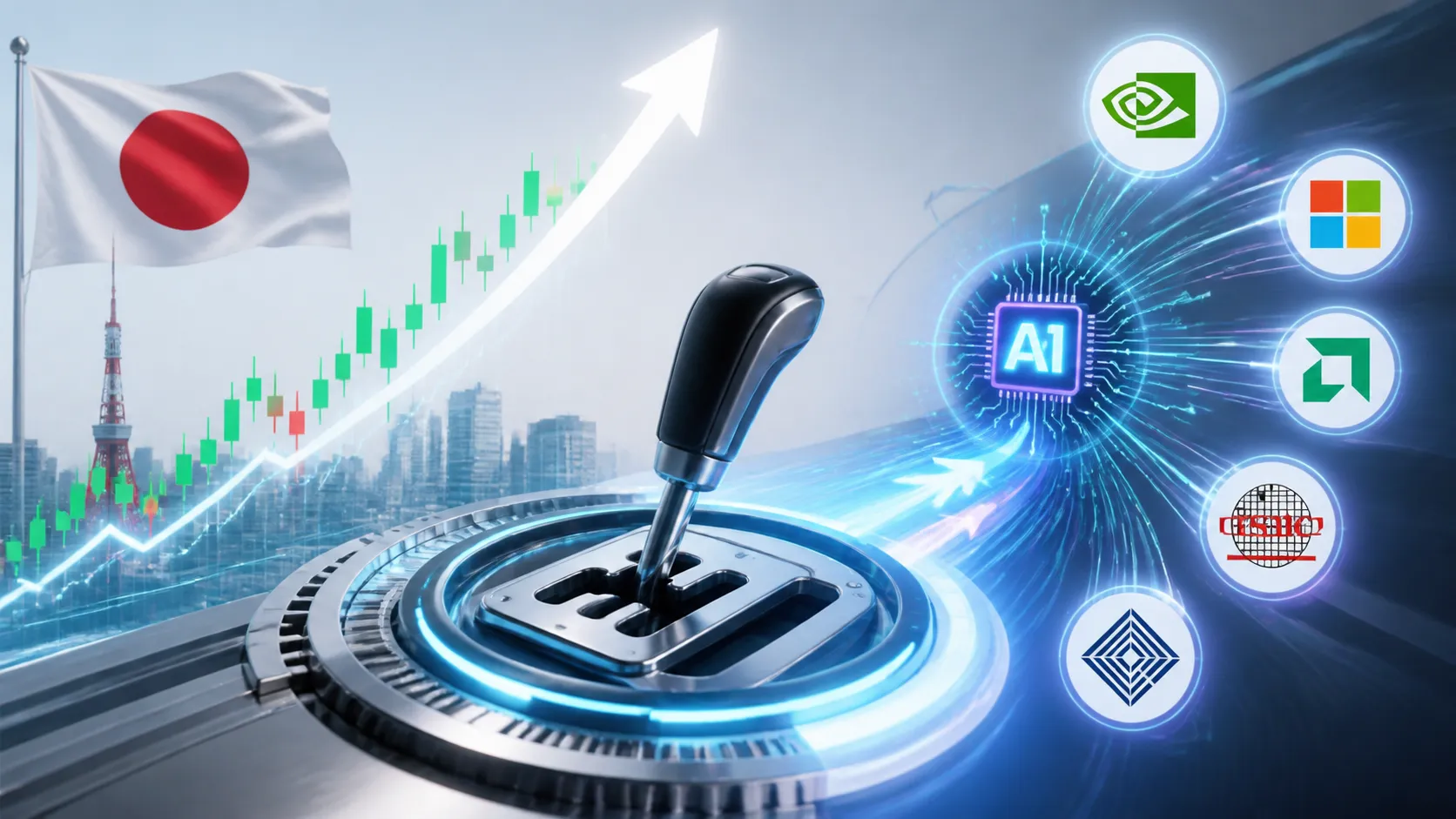
June 26, 2026, (Inside AI) — Japan’s Nikkei index has surged 37% this year, outpacing major global benchmarks as a third wave of AI investment reshapes its rally. The latest phase pivots from well-known chipmakers to obscure component and power infrastructure firms critical for data centers.
Early gains centered on SoftBank Group, Advantest, and Tokyo Electron. A second leg elevated fibre-optic suppliers Fujikura and Furukawa Electric. Now, investors target makers of multi-layer ceramic capacitors (MLCCs) that regulate power in AI servers.
Murata Manufacturing shares have climbed 268% year-to-date. Taiyo Yuden skyrocketed 438%, trailing only memory maker Kioxia, which surpassed Toyota Motor as Japan’s most valuable company. Ibiden, an Nvidia supplier, jumped 292%. Panasonic Holdings hit a record after announcing mass production of data center battery cells in Kansas.
“This is just the beginning of their rally. Investors will continue to hunt stocks that are related to AI data centres,” said Kazuaki Shimada, chief strategist at IwaiCosmo Securities.
Read: Japan’s Kioxia Stock Crashes 12% as OpenAI IPO Delay Rattles AI Sector
The concentration raises caution. Chip-related names like Tokyo Electron, Advantest, and Kioxia represent about 25% of the Nikkei’s value, per Takamasa Ikeda, senior portfolio manager at GCI Asset Management. Including Murata, Sony Group, and Kyocera, the weighting reaches 35%.
The Philadelphia semiconductor index traded over 70% above its 200-day average, signaling potential overheating. Ikeda warned: “It might be hard for the SOX index to maintain its current momentum in the mid-to-long term. And if there’s a correction in the SOX, the same fate will be inevitable for the Nikkei.”
This rotation mirrors historical patterns where infrastructure plays follow initial tech hype. The shift to MLCCs and power solutions underscores AI’s insatiable energy demands. Yet, the narrow leadership exposes the Nikkei to sharp reversals if global semiconductor sentiment sours.
Read: Micron Earnings Loom as Critical Test for AI Stock Rally Momentum
Analysts note that while the rally broadens, liquidity remains concentrated. The surge in components like capacitors and substrates reflects real supply constraints, but valuations stretch beyond traditional metrics. The market’s fate now hinges on whether data center buildouts meet lofty expectations.