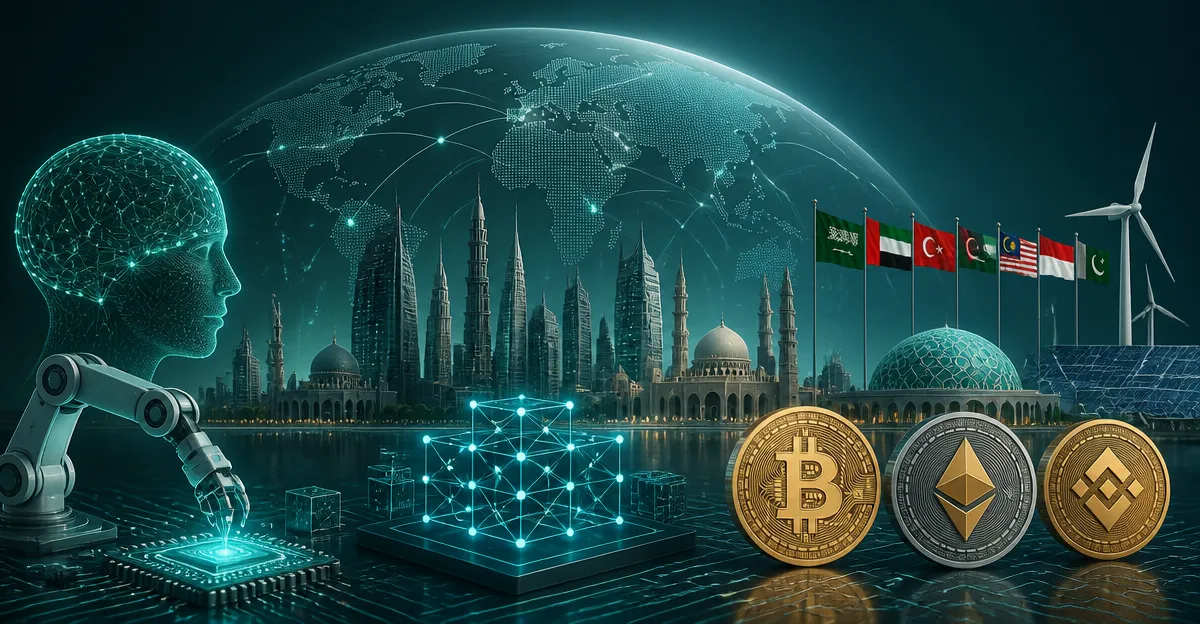
October 6, 2026, (Inside AI) — Muslim-majority nations are racing to move from technology consumers to producers, with Pakistan emerging as a test case for whether regulation and grassroots adoption can translate into real innovation. The Chairman of the Pakistan Virtual Asset Regulatory Authority (PVARA) argues that the Muslim world must shift from using tools built elsewhere to building the systems behind them. That means understanding, improving, and creating new products around existing technology, not rejecting it.
The stakes are high. From artificial intelligence to crypto, Muslim countries have embraced digital tools at record speed. But the infrastructure, models, and platforms they rely on remain concentrated in a handful of global firms. The question now is whether these nations can convert their large youth populations and growing capital pools into research, entrepreneurship, and production.
History offers a guide. The word "algorithm" comes from the Latinized name of Muhammad ibn Musa al-Khwarizmi, a ninth-century scholar who worked in Baghdad during the Islamic Golden Age. His mathematical work later influenced modern computing. Yet the technologies built around his ideas are now developed mainly outside the Muslim world. That gap defines the current challenge.
During the Golden Age, scholars translated Greek, Indian, and Persian texts, then studied, challenged, and expanded that knowledge. Knowledge did not arrive as a finished product. It became the foundation for new discoveries. That same approach could matter as AI, blockchain, and digital finance reshape the global economy.
Read: China AI Opens New Pakistan Tech Cooperation Under CPEC 2.0
Artificial intelligence could help close the gap. AI tools now allow small teams to write software, analyze information, and test ideas at lower cost. They do not replace skilled engineers, universities, or research institutions, but they make existing talent more productive. This matters for Muslim countries with young populations and growing tech sectors.
However, access to AI does not guarantee technological independence. The most advanced models still require massive computing power, data, and capital. Those resources remain concentrated among a few companies and countries. The challenge is to build local capabilities around AI by training researchers, funding technical startups, and improving computing infrastructure.
Pakistan illustrates the difference between adoption and production. The country ranked third in Chainalysis' 2025 Global Crypto Adoption Index, behind India and ahead of several major economies. That ranking shows strong grassroots demand. But using digital assets is not the same as building the infrastructure behind them.
Pakistan has started addressing that gap. It introduced the Virtual Assets Act 2026 and established a formal framework for the sector. PVARA has created licensing and regulatory processes covering governance, cybersecurity, and client asset protection. The regulator has also opened routes through regulatory sandboxes and the NOC-to-licence process, giving businesses a clearer path to test and develop products.
Other Muslim-majority markets show similar trends. The UAE has become a major digital asset hub, with Chainalysis recording more than $56 billion in crypto value received during its latest reporting period. The country's crypto economy grew 33%, showing how regulation and infrastructure can attract international businesses and capital. Indonesia ranked seventh in the 2025 adoption index, Bangladesh 13th, and Türkiye 14th. Demand for digital assets is already spread across several Muslim-majority economies.
Moving from consumption to production requires a different approach. Universities need to produce researchers as well as graduates. Investors need to support technical companies that may take years to mature. Governments need to create room for experimentation while maintaining safeguards. Most importantly, young people need to see technology as something they can build.
Read: South Korea to Launch $3.5 Billion Frontier AI Model Program in 2027
A startup does not need to invent an entirely new technology to be innovative. It can take existing technology and solve a local problem better. Over time, those solutions can become products for international markets. This is how technology ecosystems grow.
The Muslim world does not need to recreate the Islamic Golden Age. It needs to learn from what made that period productive: curiosity, openness, and the ability to turn knowledge into new work. Muslim countries already have large technology markets, young populations, and growing pools of capital. They also have increasing access to AI, blockchain, and other emerging technologies. The challenge is connecting those resources to research, entrepreneurship, and production.
Pakistan's crypto sector shows that the first steps are underway. Adoption is strong, and the country now has a formal regulatory structure. If Muslim countries can develop their own AI systems, financial infrastructure, software companies, and research institutions, their role in the technology economy will change. They will no longer be defined mainly by how quickly they adopt new technology. They will also be judged by how much technology they create, improve, and export to the rest of the world.