October 8, 2026, (Inside AI) — Generative AI was supposed to level the playing field. Instead, new research suggests it is widening the gap between top sales performers and everyone else.
Interviews with eight C-level revenue executives from the Bain Capital Ventures CRO Advisory Board, a survey of 236 sales professionals at Stripe and Checkr, and more than a dozen advisor meetings reveal a stark pattern. Managers assigned higher-value tasks to 44% of top-quartile reps after AI adoption, compared with just 12% of bottom-quartile reps. Managers were also 16 percentage points more likely to report quality improvements for top performers.
The findings challenge the assumption that AI acts as a great equalizer, handing templates and coaching to lower performers. In sales, where jobs bundle routine tasks with high-judgment work, the opposite appears true. Top performers use AI to amplify existing strengths, not just save time.
This matters because firms are making hiring, training, and team design decisions based on assumptions about who benefits from AI. If the gains accrue disproportionately to those already ahead, companies risk deepening talent gaps while believing they are closing them.
Why Autodidacts Outperform
The mechanism is not simply time savings. Higher-performing reps did report greater time savings, but a more important factor emerged: AI literacy. In the survey, each one-point increase in self-rated AI literacy on a 1-to-5 scale was associated with a 0.71-point average increase in reported benefits.
AI literacy here is not trust in the technology. It is the ability to use existing tools, learn new ones, evaluate outputs, check errors, and know when a human should remain in control. Top performers do not wait for company training. They experiment, iterate, compare outputs with peers, and share what works.
One rep at Checkr built a negotiation copilot before such tools became widely available. According to Checkr COO Lindsey Scrase, this kind of creative, account-specific use distinguished the best from the rest. Checkr reps now generate personalized prospect messaging, run workflows that track large books of business, and surface customer signals that measurably improve pipeline generation and customer experience.
At Brex, an employee built an AI tool over a weekend because it seemed useful. The company later rolled it out more broadly. These autodidacts do not wait for permission or formal programs.
According to Kevan Yalowitz, Accenture's Global Industry Lead for Software and Platforms, A-players can learn and navigate a rapidly changing AI environment, whereas others require structured training and support. That makes screening for adaptability imperative.
One leader offered particularly sharp guidance: ask candidates to share the AI session they used to prepare for the interview. That shifts the focus from tool familiarity to curiosity and self-directed learning.
The entry-level pipeline faces its own dilemma. Sales development representative roles are repetitive and rules-based, making them natural targets for automation. But they also feed into account executive positions. Brex CRO Garrett Marker chose to redesign the role, automating 20-40% of manual work so ambitious SDRs could take on full-cycle deals. Those who met existing targets while closing deals were automatically promoted. The redesigned role attracted stronger talent and increased internal promotions.
The Build Versus Buy Calculation
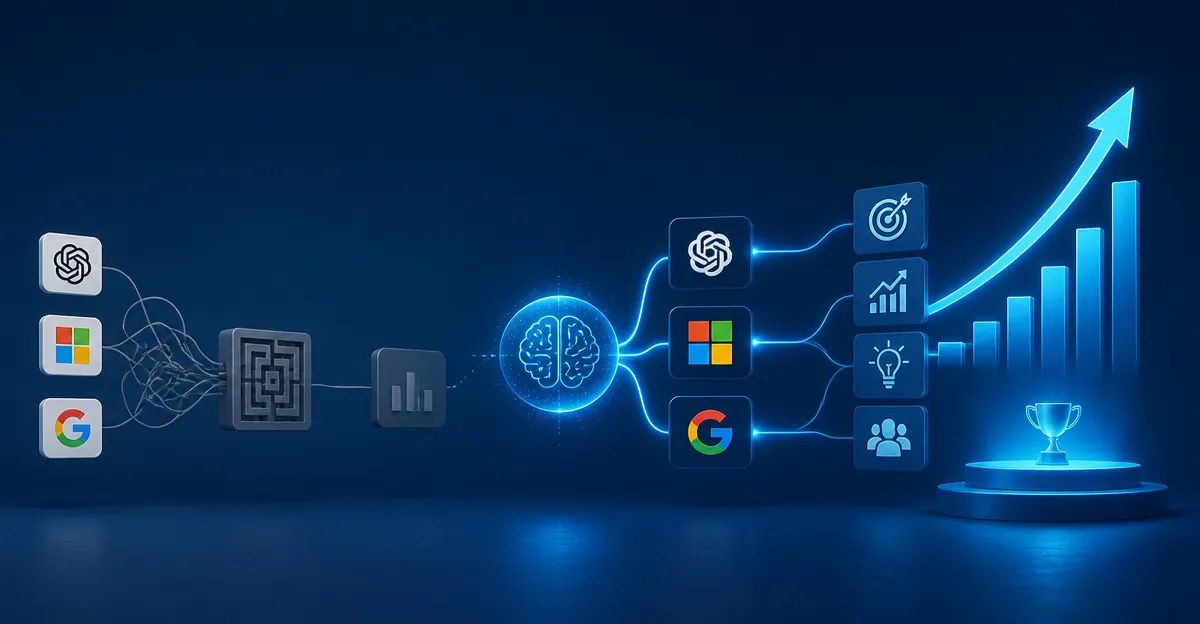
Tool choice is not neutral. Companies are rationalizing vendors and rebuilding interfaces. In the older model, reps switched between Salesforce, Gong, Outreach, ZoomInfo, spreadsheets, Slack, and dashboards. Now leaders are creating a coherent operating layer that aggregates CRM data, transcripts, product usage, and contractual information into one interface.
Checkr evaluated roughly 20 vendors for an AI command-center layer. Stripe's former CRO and current Vice Chair, Eileen O'Mara, said Gong is strong for call recording and next-best action, and Stripe would not build that itself. But Stripe does build when tasks require sensitive data, product complexity, or domain-specific logic.
Jeanne Grosser, COO of Vercel, told the researchers that strong agent performance depends on a well-structured data layer encoding company-specific definitions of customers, segments, and potential. Yalowitz added that total cost of ownership for in-house building includes platform fees, token costs, development resources, and ongoing maintenance that must be evaluated case-by-case.
The operating model that emerges is a hybrid. Companies should centralize the context layer: data, permissions, approved knowledge bases, evaluation tests, production-grade agents, tool registries, and guardrails. But they should decentralize discovery. Top performers build local tools, hold weekly AI show-and-tell sessions, share prompts, and use vibe-coding tools such as Lovable to prototype applications that central teams can refine and roll out.
The tension between AI as a skill-gap closer or a skill-gap widener is not unique to sales. It likely plays out in consulting, customer success, and knowledge work broadly. The managerial task is deciding where AI should automate, where it should augment, and what should remain human. Firms that treat AI as a universal productivity boost may find they have optimized for the wrong outcome.