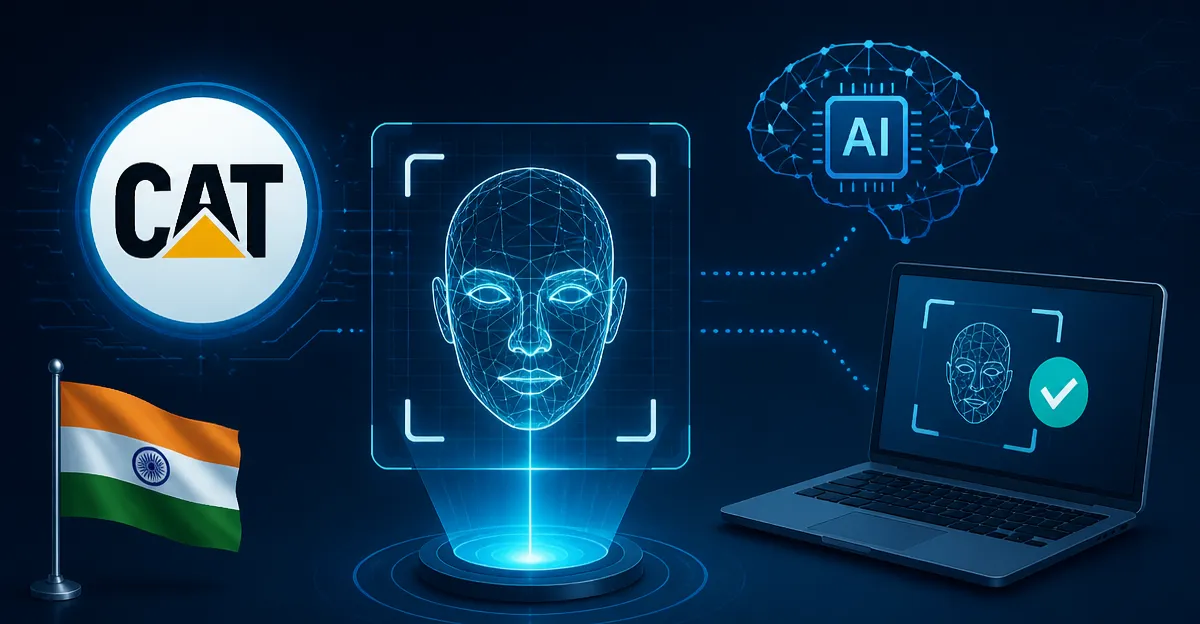
November 13, 2026, (Inside AI) — Candidates taking the Common Admission Test (CAT) 2026 on November 29 will face an AI-based facial recognition check at exam centres, marking the first use of such technology in the exam's history. IIM Indore, which is conducting CAT 2026, will roll out the system across all test venues, according to director Himanshu Rai. The move aims to strengthen identity verification for the roughly 2.89 lakh registered candidates.
The facial recognition system will compare a live image of each candidate with the photograph submitted during the application process. Rai emphasized that the technology will serve only this matching purpose and that no database of candidates will be stored. Physical verification of admit cards will continue alongside the AI check, ensuring that technical glitches do not prevent entry. "So, students need not to worry about denial of entry into the centres due to any glitches or the AI system failing to recognise the candidate's face," Rai said.
This initiative is part of a broader push to integrate AI into the examination process and IIM Indore's academic framework. "At IIM Indore, we are progressively integrating AI into our academic framework to ensure that students are equipped to understand and adapt to the rapidly evolving technological landscape. AI has become an integral part of most courses across our programmes," Rai noted. The institute is currently testing the technology to assess accuracy and identify necessary modifications before the exam.
The decision to adopt facial recognition for CAT 2026 was made by the CAT Committee, which oversees all aspects of the exam. "Decisions concerning the conduct, processes and technological interventions for CAT are taken by the CAT Committee...So, it is not an independent decision of a particular institution," Rai clarified. This governance structure ensures that such changes are considered collectively by the participating IIMs.
Read: Meta Expands AI Age Detection
Facial recognition technology is increasingly being used in high-stakes examinations worldwide to prevent impersonation and fraud. However, concerns about accuracy, bias, and privacy persist. The decision to avoid storing any database may alleviate some privacy worries, but the testing phase will be crucial to ensure reliability. With 2.89 lakh candidates, even a small error rate could affect hundreds of students, making the backup physical verification essential.
Read: Australia AI Safety Regulator
As CAT 2026 approaches, candidates should be prepared for the new AI check but can take comfort in the continued manual verification. The exam remains a critical gateway to India's premier management institutions, and the integration of AI reflects a growing trend in the education sector. IIM Indore's move could set a precedent for other high-stakes exams in the country.

Sofia spent years studying how machines parse human language before pivoting to cover the systems now rewriting it. She reads technical papers the way others read news and looking for what the numbers are actually saying beneath the headlines.