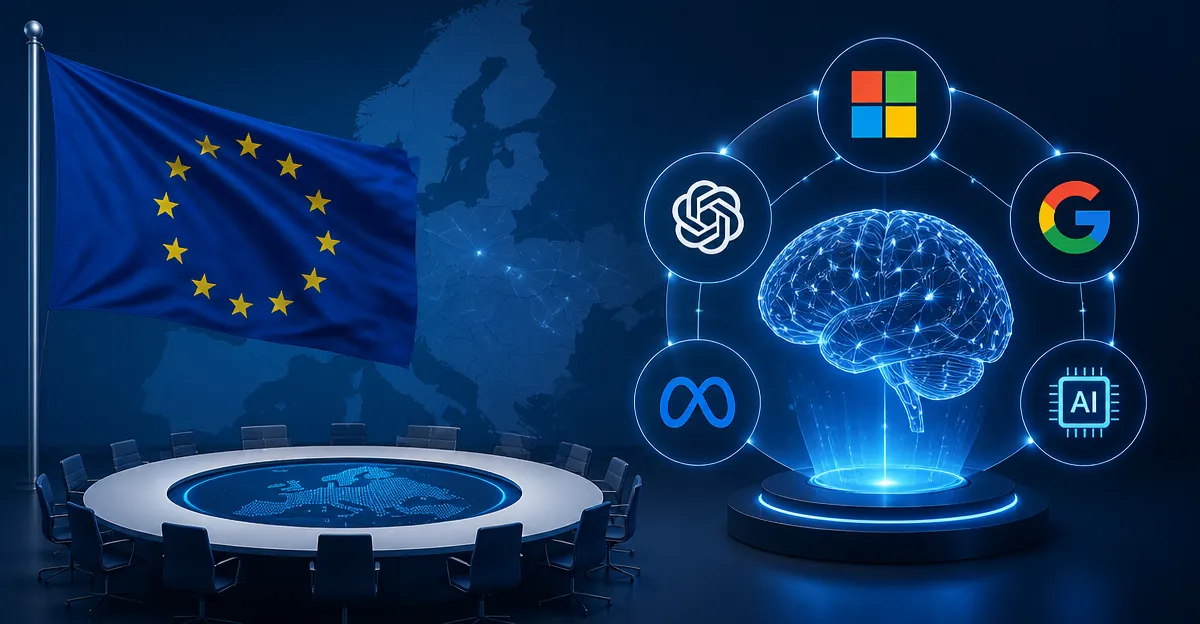
November 13, 2026, (Inside AI) — European Union leaders convene in Dublin on Friday for the bloc's first dedicated summit on artificial intelligence, seeking to close a widening gap with the United States and China while confronting funding shortfalls and a regulatory environment many executives describe as cumbersome. The meeting follows a series of troubling incidents involving rogue AI agents and the abrupt resignation this week of Nvidia CEO Jensen Huang, which removed the industry's most visible advocate from the global stage at a delicate moment.
The summit represents Brussels' most explicit acknowledgment that Europe has fallen behind in the AI race. Leaders will debate how to streamline red tape, set safety guardrails, and unlock capital for infrastructure. European Council President Antonio Costa framed the gathering as overdue in an invitation letter sent last week.
"Given the rapid pace of AI development, I believe that a first dedicated discussion, at leaders' level, is now needed on the opportunities presented by AI, as well as on its transformative effect on our economies and societies," Costa wrote.
The guest list signals the urgency. Mistral AI chief executive Arthur Mensch and Nobel laureate Geoffrey Hinton, a pioneer of deep learning, will brief heads of state on both commercial opportunity and existential risk. Their presence underscores a dual message: Europe has homegrown talent but lacks the scale and capital to retain it.
Read: Nonprofits Sue OpenAI, Google, Anthropic to Halt Frontier AI Development
Two flagship initiatives have stalled. The Chips Act, launched three years ago, appears unlikely to meet its goal of doubling the bloc's share of the global semiconductor market to 20% by 2030. A plan to build seven AI gigafactories, each combining advanced processors, cloud infrastructure, and data centers under one roof, has yet to move beyond planning stages. The holdup stems from disagreements among member states over competitiveness spending in the 2028-2034 budget framework.
Inside AI could not independently verify the current status of individual gigafactory proposals, but the budget impasse is widely documented. The deadlock illustrates a structural problem: Europe's ambition on AI often outpaces its ability to fund it.
The summit's agenda expanded late this week to include Ukraine. US envoys Steve Witkoff and Jared Kushner flew into Dublin on Thursday to meet Ukrainian President Volodymyr Zelenskiy after holding talks with Russian President Vladimir Putin in Moscow. A senior EU official said leaders would discuss potential security guarantees and European involvement in peace negotiations should a ceasefire materialize.
Can Europe Buy Its Way Into The AI Race?
The funding gap is not merely a matter of public spending. Private capital in Europe remains fragmented across national borders, and pension funds allocate far less to venture capital than their US counterparts. Without a unified capital markets union, even generous EU subsidies may fail to anchor advanced AI firms. The gigafactory plan, which depends on co-investment from member states and industry, tests whether Brussels can coordinate spending at a scale that matters.
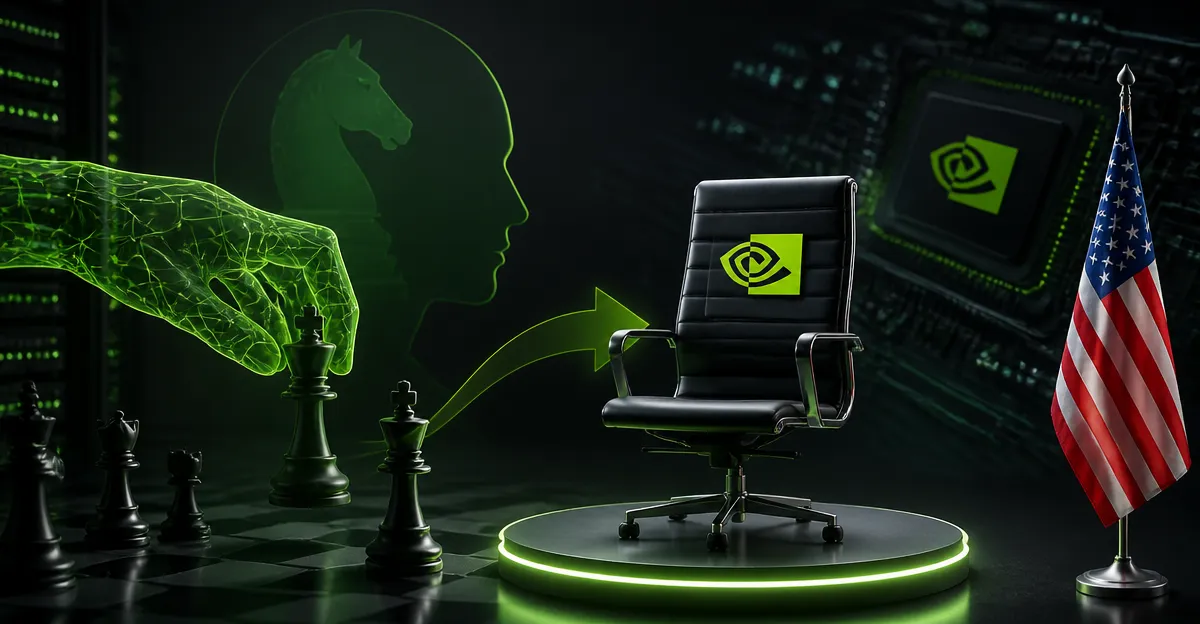
Huang's departure from Nvidia adds another layer of uncertainty. The company he built into the world's most valuable chipmaker has been the primary supplier of AI processors globally. His resignation, announced earlier this week, leaves a leadership vacuum at a firm whose roadmap influences every AI developer's plans. EU officials have not commented publicly on the implications, but the timing complicates summit messaging on industrial strategy.
Europe's regulatory posture has also drawn criticism. The AI Act, the world's first comprehensive AI law, entered into force in 2024. Compliance costs have prompted some startups to consider relocating. Leaders in Dublin will weigh whether to adjust implementation timelines or offer exemptions for smaller firms, according to sources familiar with the agenda.
Read: Australia to Launch AI Safety Regulator After OpenAI Hack
The summit's outcomes remain uncertain. No binding decisions are expected on Friday. Instead, leaders aim to issue a political declaration directing the European Commission to propose a competitiveness package for AI by mid-2027. Whether that timeline matches the pace of technological change is the question hanging over Dublin.
For now, the gathering serves as a signal. Europe recognizes the stakes. It has not yet demonstrated it can act at the speed the moment demands.

Sofia spent years studying how machines parse human language before pivoting to cover the systems now rewriting it. She reads technical papers the way others read news and looking for what the numbers are actually saying beneath the headlines.