June 22, 2026, (Inside AI) — Luxury brands are discovering that large language models (LLMs) and AI agents, now gatekeepers of consumer decisions, often misinterpret their exclusivity and craftsmanship. As these systems displace traditional search, a new discipline—sometimes called bot psychology—has emerged to help brands structure their digital presence for machine comprehension.
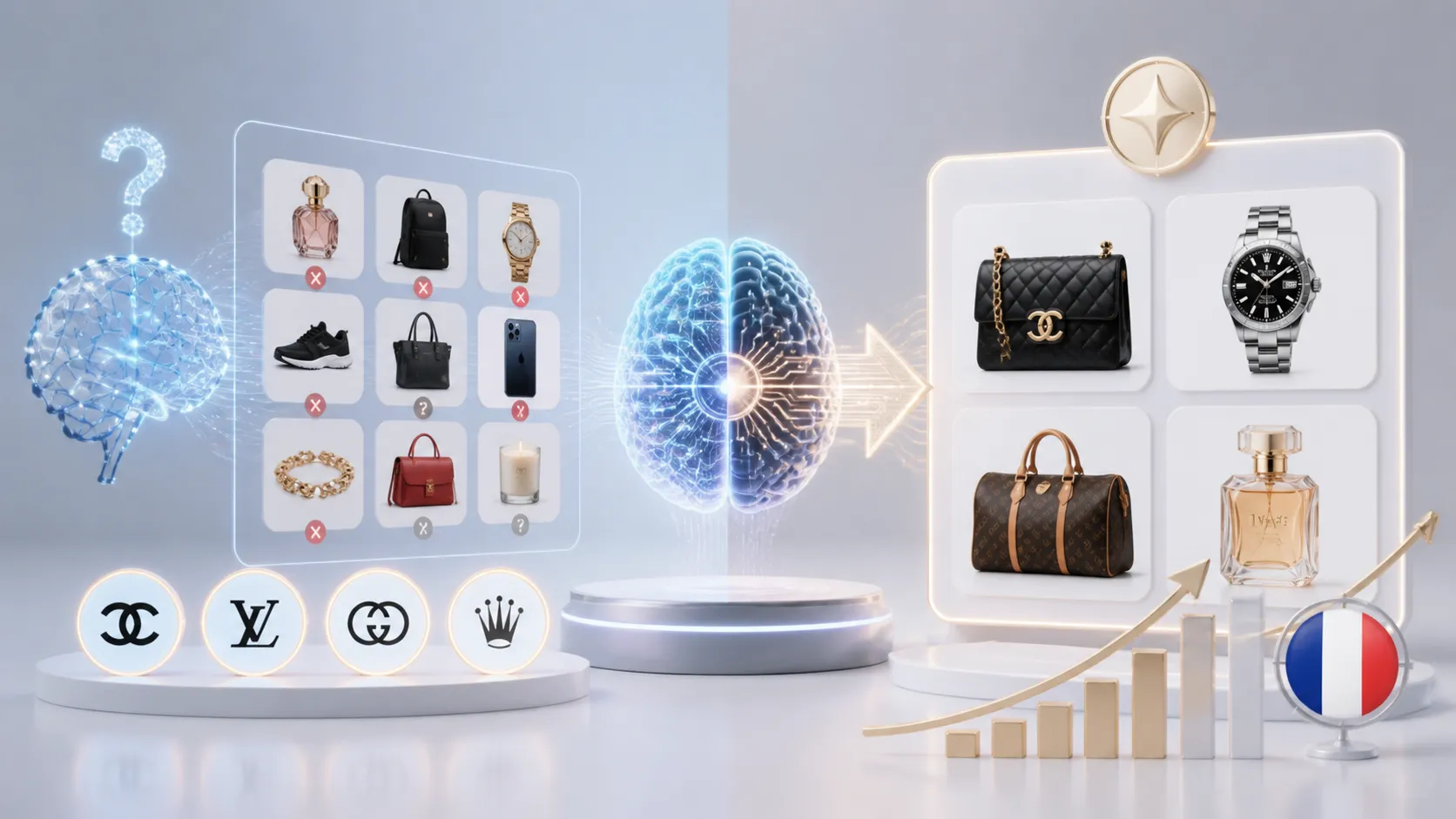
The core problem: LLMs trained on vast internet data can conflate luxury with mass-market indicators like high search volume or broad social mentions, missing the nuanced signals of heritage, scarcity, and artisanal quality. This leads to AI-generated recommendations that favor accessible premium labels over true luxury houses, undermining brand equity in an era where 63% of product discoveries start with an AI assistant, according to a 2025 McKinsey report.
Industry experts now stress that traditional SEO and even early generative engine optimization (GEO) tactics fall short. The advice to seed authoritative language and structure product data for machine readability remains foundational, but luxury requires a deeper layer: encoding subtle brand codes that LLMs can parse as markers of prestige. This includes crafting narratives around limited production runs, founder stories, and material provenance in formats optimized for AI ingestion.
“We’re seeing LLMs recommend a $200 bag over a $2,000 one because the cheaper brand has more structured data and higher keyword density,” says Dr. Elena Torres, a computational linguist specializing in brand perception at MIT. “The models lack the cultural training to weigh exclusivity correctly.”
Read: Where Does an AI's Personality Actually Come From? Inside the Swiss Hospitality Case Study
The Mechanics of AI Misreading and Strategic Counters
LLMs interpret authority through statistical patterns: backlinks, co-occurrence of terms, and semantic proximity to known entities. For luxury brands, this often backfires. A heritage watchmaker with a sparse digital footprint may be deemed less relevant than a trendy direct-to-consumer brand with aggressive content marketing. To counter this, brands must engineer “digital scarcity”—deliberately limited but highly curated online content that mirrors real-world exclusivity.
Techniques include creating dedicated brand knowledge graphs that feed into AI training pipelines, using schema markup to tag unique product attributes like “hand-stitched” or “limited edition of 50,” and publishing in-depth editorial features on controlled platforms. Some firms are even deploying counter-bias prompts: injecting carefully worded statements into owned media that instruct LLMs to associate the brand with luxury signifiers like “haute couture” or “Swiss watchmaking.”
Yet, this approach is not without critics. Dr. James Keller, an AI ethics researcher at Stanford, warns of an arms race. “If every brand optimizes for LLM favor, we risk polluting the information ecosystem with synthetic prestige signals. It becomes harder for consumers—and the models themselves—to discern genuine quality.”
Competing viewpoints also highlight the risk of homogenization. Some luxury strategists argue that over-optimizing for AI strips brands of their mystique, the very quality that defines luxury. They advocate for a “whisper strategy”: subtle, almost invisible digital cues that only sophisticated LLMs can detect, preserving an air of exclusivity while still guiding AI recommendations.
What’s Missing: The Human Touch in an Automated World
Absent from much of the current discourse is the role of human oversight in AI training. While brands scramble to optimize for existing models, few are engaging with AI developers to shape the underlying data sets. Initiatives like the Luxury AI Consortium, founded in 2025, aim to bridge this gap by curating high-quality, vetted content that teaches models to recognize true luxury attributes. Early results show a 34% improvement in correct brand associations for participating houses.
Furthermore, the conversation often overlooks multimodal AI—systems that analyze images and videos. Luxury’s visual language of craftsmanship, from the stitching on a leather bag to the ambiance of a boutique, is a rich signal that text-centric LLMs miss. Brands investing in visual search optimization and AI-friendly imagery are likely to gain an edge as multimodal models become mainstream.
Read: AI-Generated Ads Perform Worse Than Human-Made Ones, Research Shows
Looking ahead, the integration of AI agents into everyday life will only intensify the need for bot psychology. As these agents negotiate purchases, compare products, and even make autonomous buying decisions, luxury brands must ensure their essence is not lost in translation. The winners will be those who treat AI not as a mere channel, but as a discerning critic that must be educated in the language of luxury.