June 23, 2026, (Inside AI) — The era of no-code AI has officially arrived, transforming software creation from a specialized craft into a universal capability. As of early 2026, anyone without a technical background can build, deploy, and manage custom AI agents using natural language and visual tools, marking a fundamental shift in who can harness artificial intelligence.
The change has been swift. Just a year ago, building local agents still required Python coding and frameworks like LangChain. Now, a proliferation of platforms and protocols has democratized access, compressing the learning curve from months to minutes. Industry estimates now count roughly 90,000 active AI platforms, with thousands of new tools emerging weekly.
This acceleration raises an urgent question for programmers: if everyone can build AI, what skills still confer an edge? The answer lies not in coding syntax, but in mastering the new literacy of AI orchestration—prompting, product selection, workflow automation, and protocol integration.
The New Coding Is Prompt Engineering
Every AI interaction begins with a prompt, and the gap between average and advanced users hinges on prompt design. Two frameworks now dominate. The first, TCRF, structures prompts around Task, Context, Role, and Format—for example, instructing an AI to draft a professional yet warm email as an HR manager, with specific paragraph counts and tone.
The second, TCREI, introduced by Google, extends this with Evaluate and Iterate steps. After generating output, the AI self-assesses against criteria like clarity or persuasiveness, then rewrites an improved version. These frameworks turn prompting from an art into a repeatable engineering discipline, enabling non-coders to extract precise, high-quality results.
Navigating a Fragmented Product Landscape
The market remains anchored by the “Big 4” cloud agents—OpenAI’s ChatGPT, Google’s Gemini, Anthropic’s Claude, and X’s Grok. Specialized tools like Perplexity for research and Cursor or GitHub Copilot for coding serve narrower needs. For free experimentation, HuggingFace Spaces offers a cloud sandbox.
Yet a decisive shift toward local models is underway, driven by demands for data privacy, cost control, and low latency. Standalone products like Claude-Cowork (desktop) and Claude-Code (terminal), alongside open-source options such as OpenClaw and Hermes, pair with LLM managers like Ollama. Running these locally requires at least 16 GB of RAM and an 8 GB GPU, or a unified memory pool of 24 GB.
Anthropic’s family illustrates the tiered approach: Claude (web) for casual chat, Claude-Cowork for sandboxed desktop automation, and Claude-Code for developers wielding full terminal access. Choosing the right tool for the task is now a core competency.
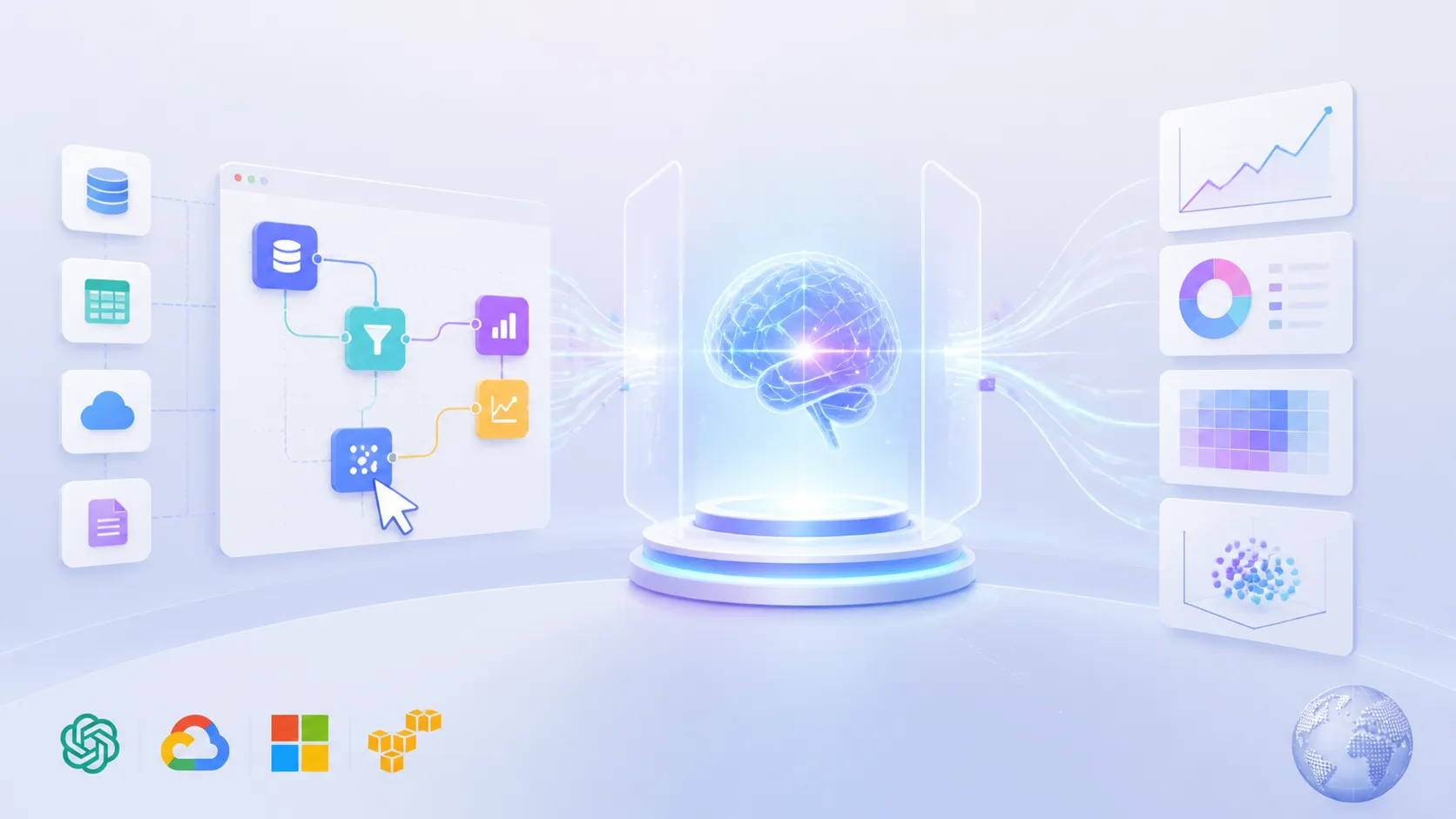
Connecting agents to real-world systems relies on the Model Context Protocol (MCP), an open standard from Anthropic that lets AI communicate with external apps and data. Over 30,000 MCP servers exist, built on platforms like n8n (local) and Zapier (cloud). Anyone can create and publish these “skills,” turning custom automations into shareable modules.
Workflows have evolved from reactive Q&A to proactive delegation. Agents now ping users when tasks are done, autonomously researching, executing, and deploying results. The mantra: everything that doesn’t require physical action can be automated. Users are learning to describe daily workflows in plain language—research a topic, populate a spreadsheet, email it—or to sketch app ideas like a mobile investment dashboard, then let AI build them.
The path to relevance in this no-code era is clear: automate recurring tasks with tools like Claude-Cowork, graduate to Claude-Code for app development, or use local alternatives if hardware permits. Successful projects can be packaged into MCP servers for wider use. The underlying skills of reasoning, integration, and automation will endure, even as specific products rise and fall.