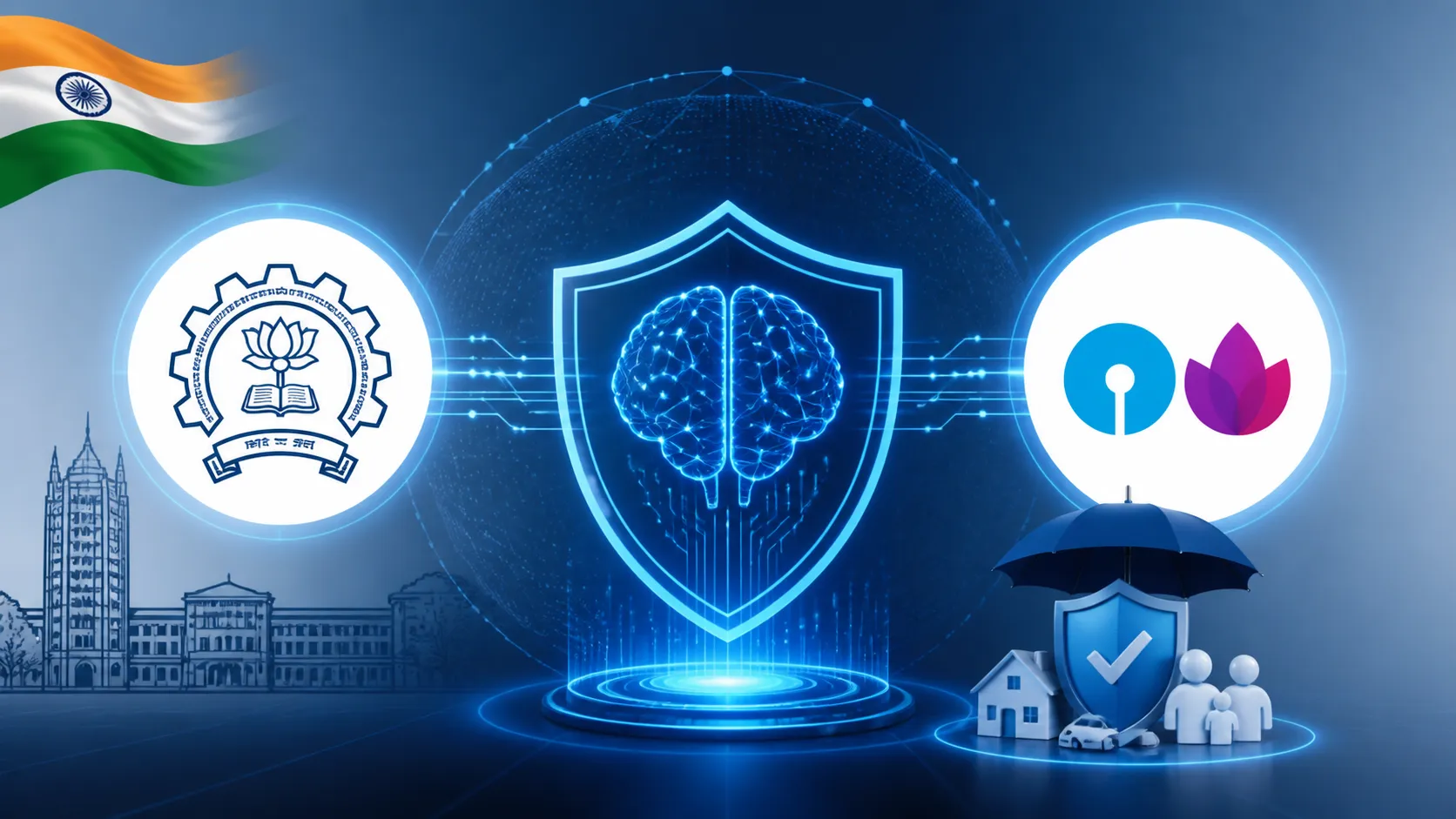
June 30, 2026, (Inside AI) — The Indian Institute of Technology Bombay (IIT Bombay) and SBI Life Insurance have launched the Bharat AI & Cyber Innovation Hub for Insurance, a joint research center to build indigenous AI and cybersecurity tools for India’s insurance sector.
The hub will develop AI-powered cyber defense systems owned and operated within India, aligning with the government’s Atmanirbhar Bharat push for technological self-reliance. SBI Life highlighted that India’s insurance premium market is projected to grow 6.9% annually until 2030, making robust data protection essential as adoption widens.
Research will span artificial intelligence, cybersecurity, quantum technologies, and digital insurance systems. Beyond technology, the partnership covers executive education, talent development, strategic consulting, and innovation incubation, bridging academia and industry.
A core goal is to create homegrown cyber defense capabilities, reducing reliance on imported frameworks while strengthening institutional capacity against evolving financial sector threats. The hub will also train students and researchers on real-world challenges, translating research into deployable solutions.
Read: Why India’s Engineering Education Needs a Reset in the AI Era
IIT Bombay stated the hub aims to model future partnerships between higher education and regulated industries, accelerating research-led innovation in critical sectors.
The Atmanirbhar Angle in Insurance Cybersecurity
India’s insurance digitization has surged, but cybersecurity frameworks often depend on foreign technology. The hub directly tackles this gap by designing sovereign AI defenses tailored to local regulatory and threat landscapes.
SBI Life’s involvement signals industry urgency. With premium growth outpacing global averages, insurers face mounting pressure to secure sensitive customer data against ransomware, fraud, and state-sponsored attacks. The hub’s quantum research component suggests long-term preparation for post-quantum encryption risks.
However, questions remain about implementation timelines and scalability. While IIT Bombay’s technical expertise is undisputed, translating lab prototypes into enterprise-grade systems requires sustained funding and regulatory alignment. Previous academic-industry hubs in India have struggled with commercialization bottlenecks.
Building a Talent Pipeline Through Real-World Problems
The hub’s education component addresses India’s acute shortage of AI and cybersecurity professionals. By embedding students in live insurance challenges, the initiative creates a direct talent pipeline—a model proven effective at institutions like Carnegie Mellon’s CyLab.
Read: Anthropic Blackout Exposes Strategic AI Dependence for India and Allies
Yet, competing viewpoints caution that industry-funded research can skew academic priorities toward short-term commercial goals. The hub’s governance structure remains undisclosed, leaving open whether independent security research will coexist with proprietary development.
IIT Bombay’s overseas sub-campus announcement earlier this year hints at broader internationalization, but the Bharat Hub remains firmly domestic. Its success may hinge on how well it navigates India’s complex data protection laws and insurance regulatory sandboxes.