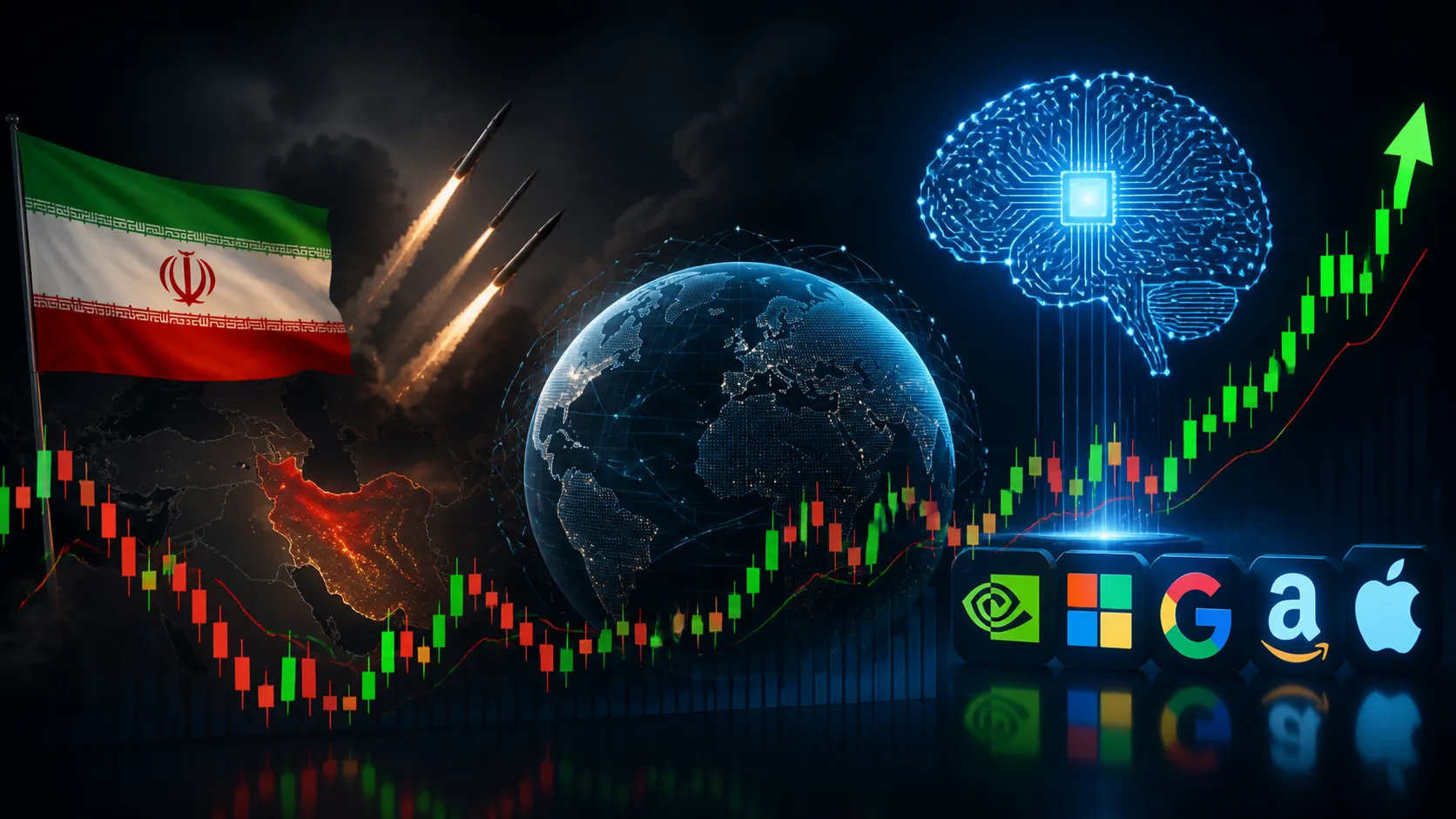
June 30, 2026, (Inside AI) — Global markets have absorbed a staggering $7 trillion gain in the first half of 2026, despite a $9 trillion plunge in March triggered by the Iran war, which sent oil to $120 a barrel. The MSCI All-Country World Index jumped nearly 10%, its best second quarter since 2020, while South Korea’s market doubled. Yet the so-called “Magnificent Seven” tech giants all underperformed the broader index, and gold tumbled over 12% in June.
The rally’s engine has been an AI boom concentrated in Asian markets, but the Bank for International Settlements warns that disappointing AI returns could spark global strife. Currency chaos adds another layer: the yen hit a 40-year low despite 11.7 trillion yen in intervention, and the dollar’s 3% rise defied death-of-the-dollar talk.
AI’s Scorching Rally Masks Fault Lines
South Korea’s KOSPI surged 100%, dwarfing the S&P 500’s 14% gain and the Nasdaq’s 20% jump. The Nasdaq welcomed Elon Musk’s $2 trillion SpaceX, yet every Magnificent Seven member lagged the MSCI world index. The BIS cautioned that overhyped AI expectations could destabilize markets if returns fail to materialize.
Charlie Robertson, chief economic adviser at Equity Bank, called the resilience astounding.
“We have had one of the greatest geopolitical shocks that it has been possible to imagine and it has still not undermined global markets,” he said.
Standard Chartered’s Patrick Dupont-Liot noted an “undertone of risk,” citing unpredictable U.S. policies. The AI frenzy may face a test: a wave of IPOs could mark “peak AI” by year-end, Robertson warned.
Currencies and Bonds Signal Deeper Tremors
The yen’s plunge is a global risk point, said State Street’s Michael Metcalfe.
“It is all about what happens to Japanese fixed-income demand if you have a crisis in the yen,” he said, flagging a potential repatriation shock.
Japan’s 10-year yields hit record peaks, while U.S. 30-year yields rose to their highest since 2007. Britain’s borrowing costs spiked to multi-decade highs amid fiscal jitters. Gold’s 12% June drop, its worst month since October 2008, reversed a doubling since early 2025. Venezuelan bonds soared 55% after the U.S. capture of President Nicolás Maduro, despite a nine-year payment freeze.
Looking ahead, markets brace for a new British prime minister, a hawkish Fed chief Kevin Warsh, and Trump’s midterm push. Dupont-Liot captured the mood:
“None of us has a crystal ball, we don’t know what’s going to really happen, but we do know that Trump has not ceased to surprise us since he has come into office.”