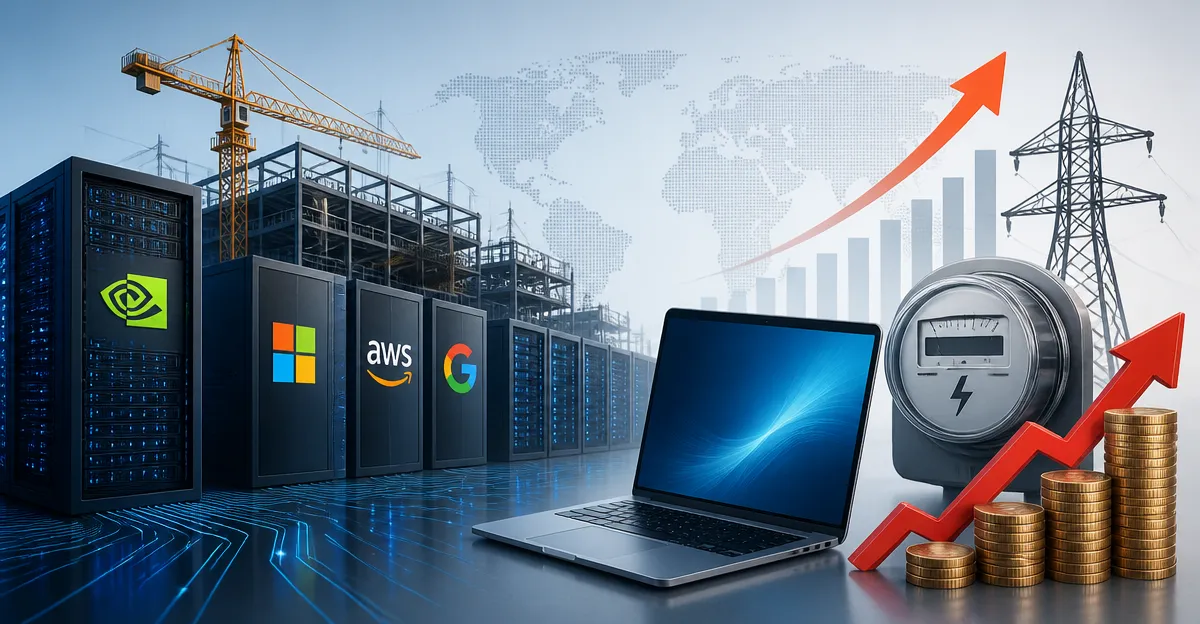
July 13, 2026, (Inside AI) — The massive expansion of artificial intelligence infrastructure is driving up costs for consumer electronics and electricity, posing a fresh inflation challenge for the U.S. economy. A surge in data center investments—expected to exceed $700 billion this year—is straining semiconductor supplies and power grids, pushing prices higher for laptops, smartphones, and utility bills.
Four tech giants—Alphabet, Amazon, Meta Platforms, and Microsoft—are forecast to pour $720 billion into data centers in 2026 alone. This unprecedented buildout has created a supply crunch for memory chips, with JPMorgan Chase economists estimating that some chip costs could jump as much as 400% between 2024 and the end of this year.
The ripple effects are already visible on store shelves. Apple recently hiked prices for laptops and iPads by 15% to 25%, pushing a top-line MacBook to $1,999 from $1,699. The company directly blamed AI-driven demand.
"The rapid expansion of AI data centers has created an extraordinary surge in demand for memory and storage," Apple said in a statement. "We have never seen a component price increase this much, this quickly."
Microsoft also announced a $100 price increase for its Xbox console by August 1, citing higher memory chip costs. Sony, Dell, and HP have similarly raised prices, signaling a broad-based consumer electronics inflation wave.
Analysts at Evercore ISI warned that a "wave of AI-related cost pressures spilling over into consumer prices is still in the early stages of building."
Electricity prices are climbing in tandem. Data centers are absorbing a growing share of new electrical capacity, forcing utilities to invest in expensive grid upgrades. The government's consumer price index showed electricity costs rose 5.9% in May compared to a year earlier, outpacing overall inflation of 4.2%.
Economists at Goldman Sachs project electricity prices will rise 6% this year and next, with an above-average 3% increase still expected in 2028. This persistent pressure complicates the Federal Reserve's inflation fight.
Core inflation, which excludes food and energy, stood at 3.4% in May using the Fed's preferred gauge. Many economists now think AI spending could add roughly a half-percentage point to core prices by year-end, potentially offsetting cooling rental costs and fading tariff impacts.
The timing is delicate. Inflation has remained above the Fed's 2% target for over five years, and a series of temporary shocks—from tariffs to energy spikes—has kept it sticky. Abiel Reinhart, an economist at J.P. Morgan, noted the cumulative risk.
"In isolation one or two such shocks is perhaps transitory, something they're willing to live with," Reinhart said. "A sustained series of shocks, or a wider range of shocks, becomes more concerning to them."
Fed officials are taking notice. John Williams, president of the Federal Reserve Bank of New York and vice chair of the rate-setting committee, cautioned that if AI investment creates a sustained demand-supply imbalance, the central bank may need to act.
"If this creates a sustained impulse to demand relative to supply in inflation, I do think that's the kind of situation where you don't look through this," Williams said Thursday.
Minutes from the Fed's June meeting revealed that many other policymakers share these concerns. New Chair Kevin Warsh, who took over May 22, has expressed a long-term view that AI could boost efficiency and lower inflation, but he acknowledged near-term demand pressures in July 1 remarks without quantifying the impact.
The electricity dimension adds another layer. Unlike semiconductor prices, which could peak and decline, power demand from AI is expected to keep utility costs elevated through 2028 or beyond. This structural shift challenges the Fed's typical playbook of looking through temporary price swings.
Some economists are blunt about the current trajectory. "We do know what effect AI is having on inflation now, and it is inflationary, not deflationary," Dario Perkins of TSLombard wrote this week.
The June inflation report, due Tuesday, will offer fresh clues. While gasoline prices likely fell after a U.S.-Iran ceasefire, renewed fighting clouds the outlook. For consumers already stretched by years of elevated prices, the AI boom is translating into tangible cost hikes—and the bill may keep growing.