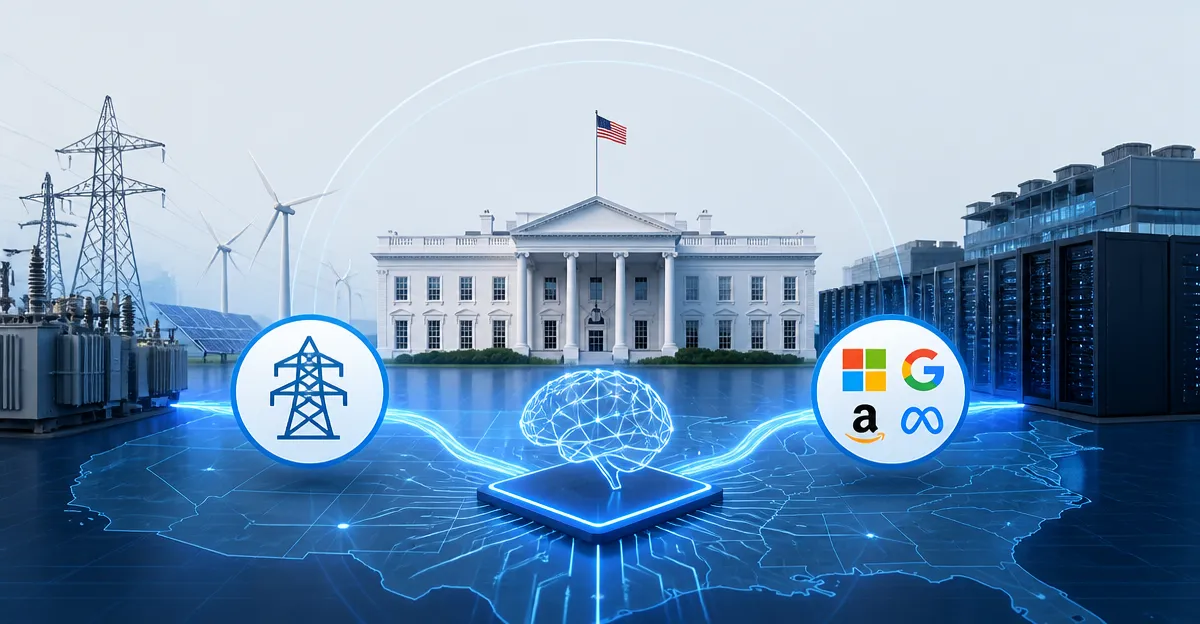
July 13, 2026, (Inside AI) — The White House is orchestrating a new voluntary pact between electric utilities and data center developers, aiming to shield households and businesses from bearing the costs of surging AI-driven electricity demand. Three sources familiar with the plans confirmed the initiative, which builds on an earlier pledge signed by major tech firms.
An event to announce the expanded commitment is expected within weeks. The guest list remains in flux, but it will likely include utility companies, data center operators, and governors from states facing infrastructure pressures. The core goal: prevent ratepayers from subsidizing grid upgrades for AI expansion.
This push comes as the Trump administration accelerates AI infrastructure growth while seeking to avoid political fallout from rising energy bills. The administration insists that winning the global AI race requires rapid expansion of generation and transmission, but not at consumers’ expense.
The Ratepayer Shield: From Tech Pledge to Grid-Wide Pact
Earlier this year, Amazon, Google, Meta, Microsoft, OpenAI, Oracle, and xAI signed a “Ratepayer Protection Pledge” at a White House ceremony. They committed to financing electricity infrastructure for their AI projects—covering new generation, grid upgrades, and even unused reserved capacity—rather than passing costs to existing customers.
Read: New York Enacts First Statewide Pause on AI Datacenters
The new event aims to broaden those commitments. By bringing utilities and data center builders to the table, the White House hopes to create a framework where the entire supply chain shares financial responsibility. A source noted the pledge could include mechanisms for transparent cost allocation and binding commitments to prevent cost-shifting.
Yet, details remain scarce. Critics argue that without enforceable regulations, such pledges risk being symbolic. Consumer advocates point to states like Virginia and Ohio, where data center growth has already sparked debates over rate hikes. The pledge’s effectiveness will hinge on whether it includes concrete, measurable actions.
Administration officials have framed the initiative as reassurance that AI investment and lower energy costs can coexist. But industry analysts note a tension: data centers are projected to consume up to 9% of U.S. electricity by 2030, up from 4% today. The required grid upgrades could cost billions, and someone must pay.
Grid Realities and the Limits of Voluntary Action
The surge in AI power demand has already prompted warnings from regulators and lawmakers. In some regions, utilities have proposed new rate structures that could shift costs to residential users. The White House’s voluntary approach contrasts with calls from some state regulators for mandatory cost-allocation rules.
Historically, large industrial customers often negotiate special rates, leaving residential users to cover fixed grid costs. The AI boom risks exacerbating this dynamic. A 2025 study by the Lawrence Berkeley National Laboratory found that data center growth could increase residential electricity bills by 1-3% annually in high-growth areas without protective measures.
The new pledge could include commitments from utilities to absorb some upfront costs or from tech companies to fund dedicated renewable projects. However, the voluntary nature raises questions. Without enforcement, companies may prioritize speed over cost-sharing, especially in competitive AI markets.
Governors from states like Texas and Georgia, where data center construction is booming, are expected to attend. Their involvement signals the political stakes: rising energy costs could erode public support for AI development. The administration hopes the pledge will serve as a model for public-private cooperation.
Read: New York, Amsterdam, and Dublin Restrict Data Centers Amid AI Boom
As the event approaches, the White House faces pressure to deliver more than a photo op. The pledge’s success will be measured by whether it prevents rate hikes in the coming years—a test that will unfold long after the ceremony ends.