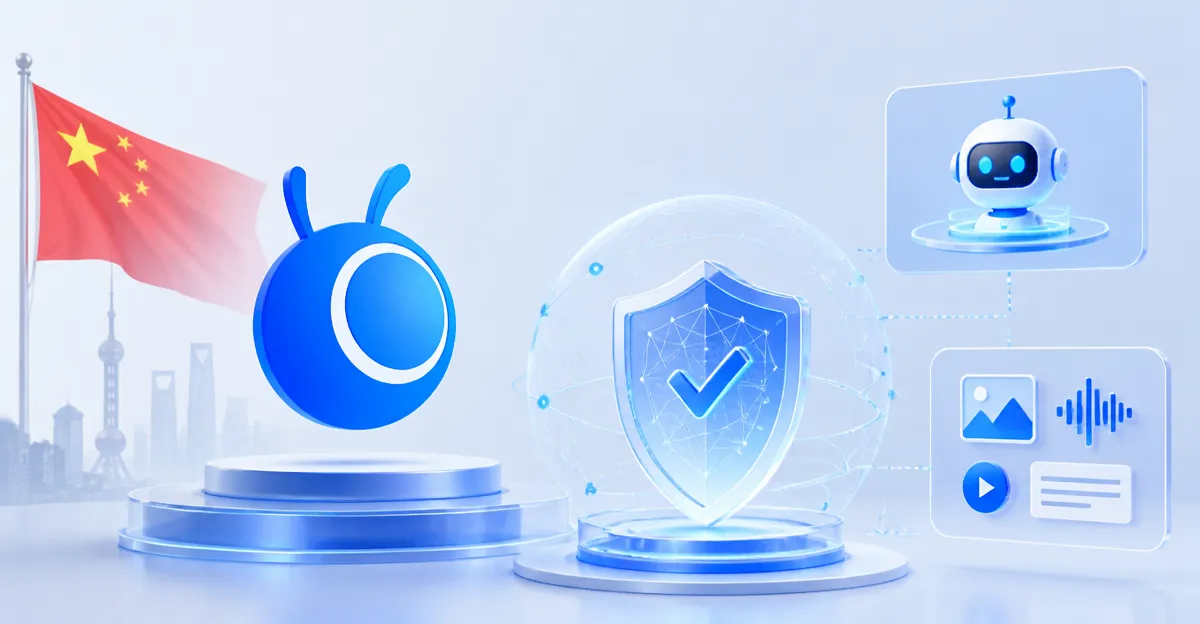
July 13, 2026, (Inside AI) — Ant Group’s AI Safety Lab has publicly released SingGuard-NSFA, an open-source safety guardrail model built specifically for autonomous AI agents. The lab also revealed technical details of SingGuard, a broader multimodal safety model. SingGuard-NSFA intercepts threats like prompt injection, sensitive data theft, malicious code execution, resource abuse, and permission misuse before an agent can act.
The release marks a significant escalation in the race to secure agentic AI systems. As enterprises hand over more autonomy to AI—booking meetings, writing code, accessing databases—the attack surface widens dramatically. Ant Group’s move addresses a gap that many safety researchers have been warning about: reactive filters are too slow for agents that act in milliseconds.
SingGuard-NSFA classifies risks across 7 major categories, 28 subcategories, and 185 specific scenarios. It supports 133 languages and was evaluated on nearly 100,000 samples. The model comes in four sizes—0.8B, 2B, 4B, and 9B parameters—and delivers a risk judgment in roughly 50 milliseconds, according to Ant Group.
“Agent safety isn’t just about blocking bad outputs anymore,” said Dr. Li Wei, head of Ant Group’s AI Safety Lab, in a statement. “We need models that understand intent, context, and the chain of actions an agent might take. SingGuard-NSFA is designed to sit at the decision point, before the agent executes.”
The open-sourcing of the model’s weights and evaluation framework on platforms like Hugging Face signals a strategic push to make agent safety a community-driven standard. This contrasts with proprietary solutions from major cloud providers, which often lock safety tooling behind API walls.
Why Agent Safety Demands a New Architecture
Traditional content safety models focus on text-in, text-out filtering. But agents operate in a loop: they perceive, plan, and use tools. A prompt injection might not look malicious on its own—until it’s combined with a tool call that exfiltrates data. SingGuard-NSFA is trained to evaluate the full action context, including the agent’s planned steps and the tools it intends to invoke.
Ant Group’s taxonomy includes nuanced threats like “permission misuse,” where an agent with legitimate access exceeds its mandate. For example, a customer service agent might be tricked into issuing a refund far beyond its authorized limit. The model’s latency—50 milliseconds—is critical for real-time interception without degrading user experience.
Competing efforts, such as NVIDIA’s NeMo Guardrails and Microsoft’s Prompt Shields, offer similar protections but often require cloud connectivity or are tightly coupled with specific orchestration frameworks. SingGuard-NSFA’s small footprint (starting at 0.8B parameters) allows on-device or on-premise deployment, appealing to regulated industries like finance and healthcare.
The Multilingual and Multimodal Frontier
Alongside the agent-focused model, Ant Group disclosed SingGuard, a multimodal safety system that handles text, images, and potentially other modalities. Details remain sparse, but the move aligns with industry trends: as models like GPT-5 and Gemini process mixed inputs, safety systems must evaluate cross-modal risks—such as images containing hidden text instructions for jailbreaking.
The 133-language support is notable. Most safety tools are English-centric, leaving gaps in languages with different linguistic structures or cultural contexts. Ant Group’s fintech background—operating across Southeast Asia and beyond—likely drove this breadth. However, independent benchmarks are needed to verify performance across low-resource languages.
Critics point out that open-sourcing safety models is a double-edged sword. Adversaries can study the guardrails to craft evasion techniques. Ant Group argues that transparency enables faster community hardening, a philosophy echoed by organizations like the Frontier Model Forum.
The release comes as regulators globally tighten requirements for AI agent accountability. The EU AI Act’s provisions on high-risk systems and China’s own generative AI regulations demand robust risk management. Ant Group’s models could serve as reference implementations for compliance, though official endorsements have not been announced.
Looking ahead, Ant Group plans to expand the evaluation suite and integrate feedback from early adopters. The lab is also researching guardrails for multi-agent systems, where risks compound across interacting agents. As autonomous agents move from demos to production, the safety infrastructure built today will determine whether they become indispensable tools or liabilities.