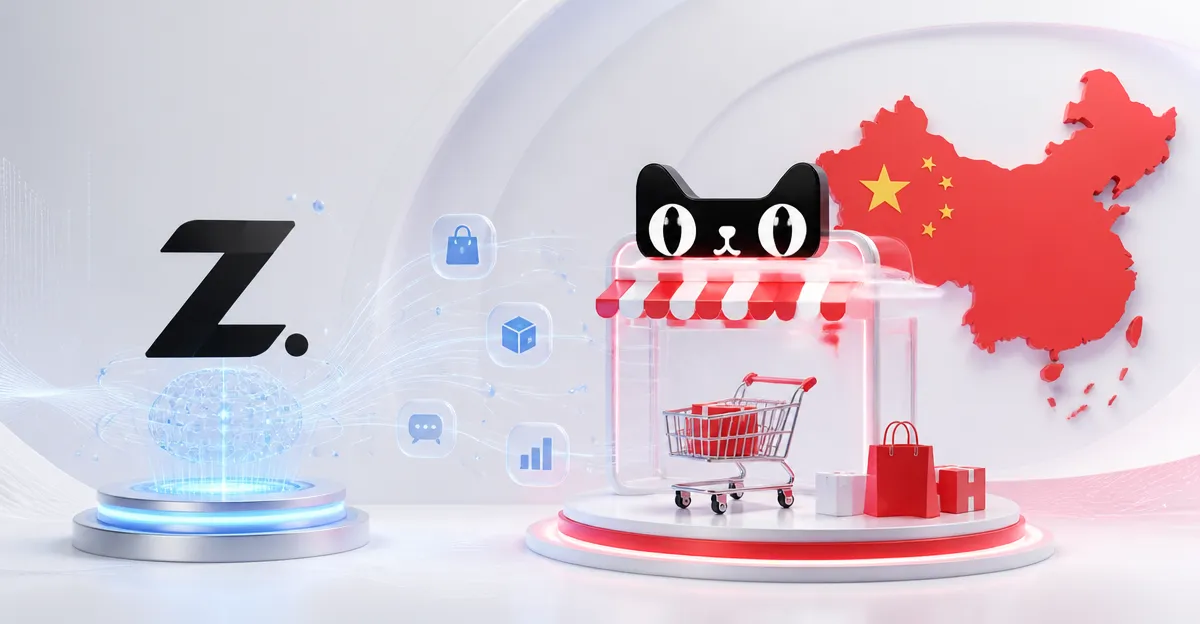
September 2, 2026, (Inside AI) — Chinese AI developer Zhipu has launched its first official store on Tmall, marking a significant step in commercializing AI services through mainstream e-commerce. The store, operating under the overseas brand Z.ai, lets users buy Coding Plan subscriptions directly through Taobao’s standard checkout process.
What happened: Zhipu opened a flagship store on Tmall, Alibaba’s major online marketplace. Consumers can now purchase AI coding subscriptions just like any other product, using familiar shopping and payment flows. The store currently offers three individual plans: Lite, Pro, and Max.
Why it matters: This move places paid AI services on a platform used by hundreds of millions of Chinese shoppers. It lowers the barrier to adoption by removing the need for separate billing systems or international credit cards. Zhipu also hinted at discounts during major shopping festivals like Singles’ Day, aligning AI subscriptions with China’s promotional retail culture.
The storefront signals a shift in how AI companies reach consumers. Instead of relying solely on developer portals or enterprise sales, Zhipu is tapping into the trust and convenience of established e-commerce infrastructure. This could accelerate subscription growth among individual developers, students, and small teams.
Read: GLM-5.2 FP8, NVIDIA-Nemotron-Nano-12B-v2, and GLM-OCR Now Available on Amazon SageMaker JumpStart
From Developer Tools to Shopping Cart
Zhipu is one of China’s leading AI model developers, known for its GLM series of large language models. The company has expanded internationally under the Z.ai brand, offering coding assistants and other AI tools. The Tmall store represents a direct-to-consumer strategy rarely seen in the AI sector.
Historically, AI subscriptions have been sold through official websites or app stores. By entering Tmall, Zhipu is treating its Coding Plan like a physical product. Users can compare plans, read reviews, and complete purchases within a familiar interface. This reduces friction and builds consumer confidence.
The Lite, Pro, and Max tiers likely cater to different usage levels. While pricing details were not disclosed in the initial announcement, tiered plans are common in the industry. They typically vary by token limits, response speed, and access to advanced features.
Zhipu’s move may pressure competitors like Baidu, Alibaba Cloud, and Moonshot AI to explore similar retail channels. If successful, it could redefine how AI services are marketed and sold in China’s massive digital economy.
E-Commerce Meets Subscription Economy
Tmall’s infrastructure supports subscription billing, refunds, and customer service. This gives Zhipu a ready-made operational backbone without building its own payment and support systems. It also provides access to Alibaba’s vast user base and marketing tools.
Discounts during shopping events could drive impulse purchases. A developer who hesitates at full price might subscribe during a flash sale. This mirrors how Chinese consumers buy software, online courses, and digital memberships during festivals.
However, challenges remain. E-commerce platforms take a commission on sales, which could squeeze margins. There is also the risk of brand dilution if AI subscriptions are perceived as commodity goods. Zhipu must differentiate its offerings through performance and unique features.
Read: Claude Code Auto Mode Becomes Default for Pro, Max, and Team Plans
Industry analysts note that China’s AI market is highly competitive. Domestic players like DeepSeek and Qwen have gained attention for cost-effective models. Zhipu’s retail push could be a defensive move to capture consumer mindshare before rivals do the same.
The company has not disclosed sales targets or expansion plans. But the Tmall store is a clear signal that AI services are becoming mainstream consumer products, not just enterprise tools.