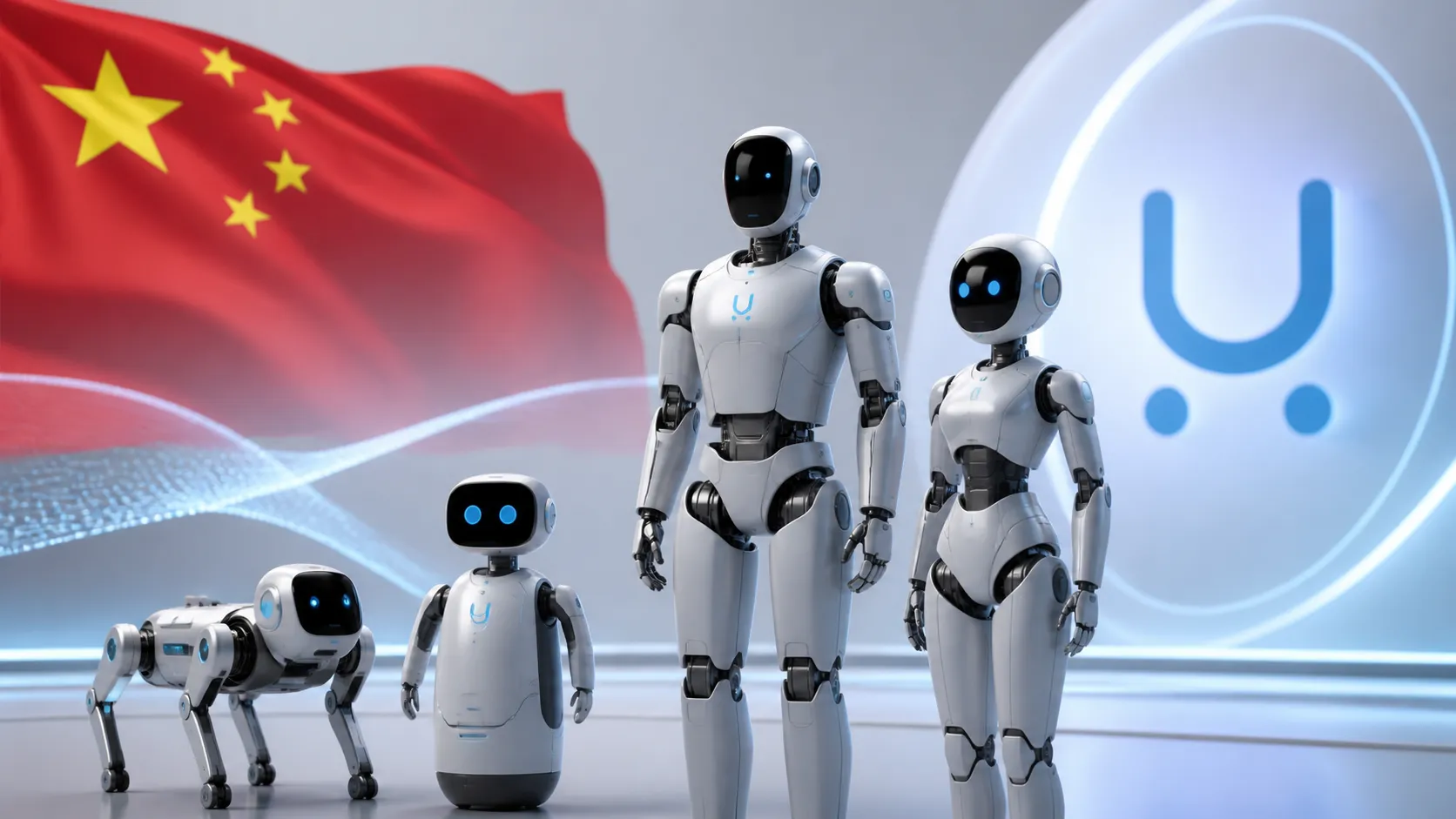
July 2, 2026, (Inside AI) — Chinese robotics firm UBTech has launched a new line of ultra-realistic humanoid robots designed for companionship and emotional support. The robots, available in male and female versions, are powered by an AI system that recognizes and responds to human emotions. Top-end models are priced at up to 990,000 yuan ($145,835).
The announcement, made on Tuesday in Beijing, immediately ignited debate on Chinese social media. Users speculated about the rise of AI-powered “cyber boyfriends” and “cyber girlfriends,” reflecting both fascination and unease with emotionally intelligent machines.
UBTech’s robots represent a significant leap in human-robot interaction. The AI system processes facial expressions, vocal tone, and contextual cues to simulate empathy. This positions the company at the intersection of social robotics and affective computing, a field long plagued by the “uncanny valley” effect.
Industry analysts note that UBTech’s pricing strategy targets affluent early adopters. At nearly $146,000, the robots are luxury items, not mass-market products. This contrasts with competitors like SoftBank’s Pepper, which was priced under $2,000 but discontinued due to limited utility.
Read: China’s ByteDance and Alibaba Disable AI Agents Over New Emotional AI Rules
The launch also raises questions about data privacy. Emotion-sensing AI requires continuous monitoring of users’ behavioral patterns. UBTech has not disclosed how it handles sensitive emotional data, a concern amplified by China’s strict cybersecurity laws.
Some researchers warn that such robots could exacerbate social isolation. A 2025 study in the Journal of Human-Robot Interaction found that prolonged use of companion robots reduced real-world social skills in elderly subjects. UBTech claims its robots are meant to supplement, not replace, human connections.
Historically, companion robots have struggled to gain traction. Sony’s Aibo robot dog saw niche success, but emotional AI has often overpromised. UBTech’s attempt to humanize robots echoes Hanson Robotics’ Sophia, which was criticized as a gimmick. Yet, advances in large language models now enable more natural conversations.
UBTech, known for its Walker series of humanoid robots, has partnerships with Chinese tech giants. The company’s stock rose 2.3% on the Shenzhen exchange following the announcement. Analysts see the move as a bid to diversify beyond industrial applications.
The robots’ lifelike appearance relies on advanced silicone skin and micro-actuators. UBTech claims they can mimic over 60 facial expressions. This technical feat is paired with a cloud-connected AI that learns user preferences over time, raising the specter of algorithmic attachment.
Competing viewpoints are stark. Proponents argue that companion robots could address loneliness epidemics in aging societies. Critics see a dystopian commodification of intimacy. Dr. Li Wei, a sociologist at Tsinghua University, said,
Read: China’s Bold Plan to Embed AI in Every Home and Shop
“We must ask whether these machines heal emotional wounds or simply profit from them.”
UBTech’s launch follows similar efforts in Japan and the U.S., but its emotional AI focus is distinct. The company plans to roll out the robots in select Chinese cities this year, with no international release date announced.