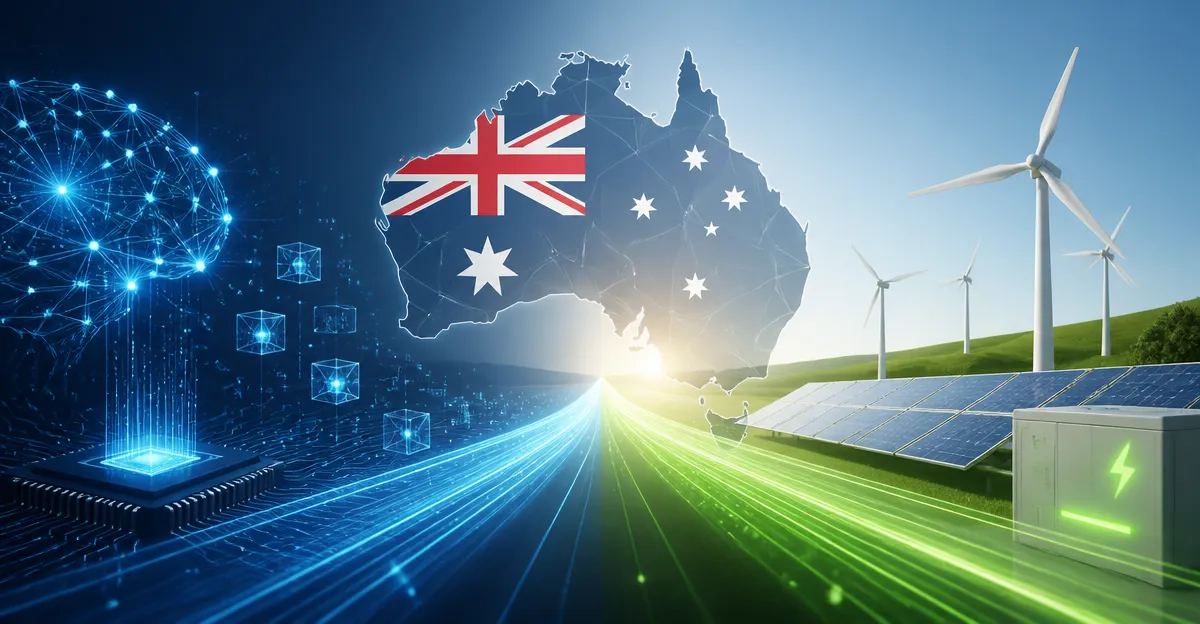
July 14, 2026, (Inside AI) — Prime Minister Anthony Albanese will frame artificial intelligence as a societal inflection point comparable to the renewable energy shift in a major speech this week, but will stop short of detailing copyright reforms that creative industries have demanded.
The address, set for Wednesday in Sydney, comes as newly released government documents reveal AI firm Anthropic cited Australia’s policy uncertainty as a barrier to investment, specifically around copyright liability.
Albanese is expected to emphasize safety, community trust, workforce disruption, defense applications, and energy-hungry datacentre infrastructure. Labor sources say the speech is part of a whole-of-government push after months of internal debate and lobbying.
The prime minister will not provide an update on copyright reforms to protect artists and media companies, despite pressure from rights holders and warnings from tech giants that clarity is needed for investment.
Polling underscores public wariness. A Guardian Essential poll in May found 36% of voters see more risk than opportunity in AI, while 41% see both equally. Only 22% view AI as more opportunity than risk.
An invitation to the speech says Albanese will discuss “the challenges and opportunities” of AI and “the responsibility this creates for government,” adding that Australia can “bring our enduring values of fairness and opportunity to this task.”
Documents obtained under freedom of information laws show Treasury officials warned Treasurer Jim Chalmers that Anthropic would complain copyright rules were “impeding the development of data centres” in Australia ahead of an April meeting with CEO Dario Amodei.
Briefing notes predicted Anthropic would claim investment “is contingent on clarity of copyright settings” and that they wanted “certainty over their liability to rights holders.” Officials noted Anthropic said a “long tail” of smaller rights holders “impedes efforts to identify and purchase licencing rights.”
They recommended Chalmers “strongly encourage” Anthropic to engage with rights holders and the attorney general’s department “to ensure creative and media industries are fairly compensated for the use of their material in AI training within Australia’s robust copyright framework.”
Separately, Industry Minister Tim Ayres was urged to tell Anthropic that “it is essential that benefits accrue to Australians and the Australian economy from AI investments.” FoI documents for Ayres’ meeting—where Albanese was also to join—state the government “want an enduring collaboration with Anthropic.”
Assistant Minister Andrew Charlton and Ayres have led policy development, with Health Minister Mark Butler saying the speech would be “a blend” of guardrails and principles around safety, data, and privacy. “Are we harnessing all of the opportunities with every wave of technology? But are we also making sure that everyone gets the benefits, not just a few?” Butler said.
The government has ruled out including AI companies in its News Bargaining Incentive, which forces social media platforms to strike deals with news outlets or pay a levy. Senior ministers insist creative industries will not be sold out.
Labor insiders compared AI policy challenges to those of social media, arguing proactive planning is better than waiting for disruption. The speech is expected to address datacentre siting, energy use, and community division seen overseas.
Albanese’s framing echoes the early days of renewable energy policy, where government intervention aimed to shape markets and secure public acceptance. But without concrete copyright action, critics say the speech risks being long on vision and short on the legal certainty investors and creators need.