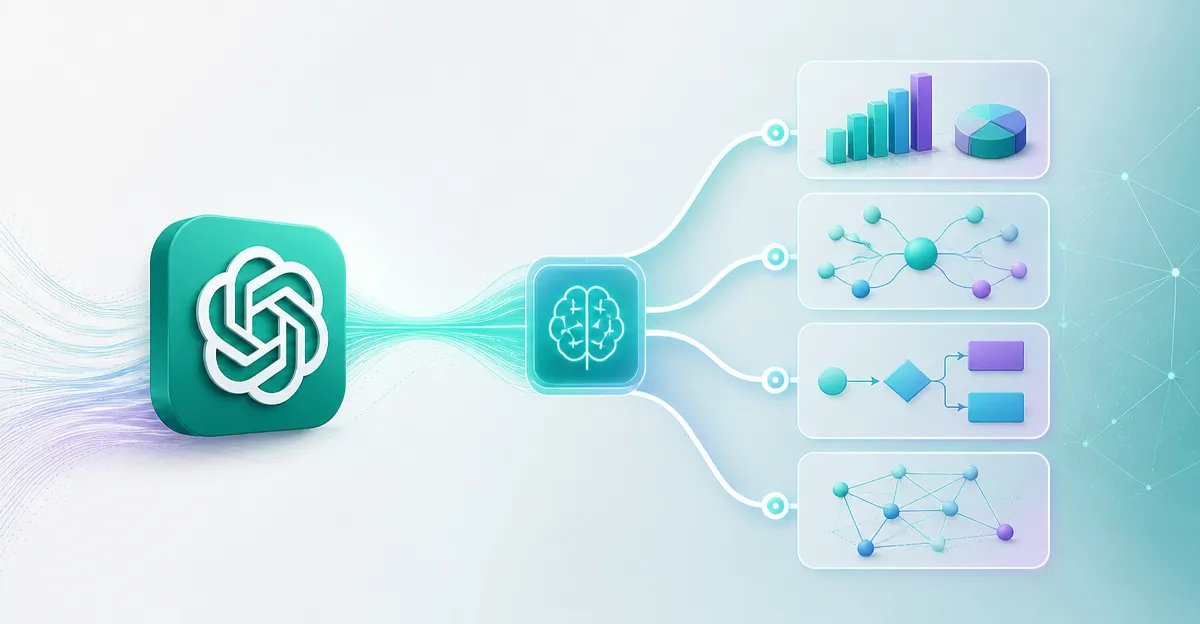
July 14, 2026, (Inside AI) — Amazon Web Services has integrated OpenAI’s privacy-filter model into its SageMaker JumpStart hub. The model identifies and masks personally identifiable information in text. It is a bidirectional token-classification system built for high-throughput data sanitization.
The move gives AWS customers a one-click deployment path for an enterprise-grade PII detection tool. It flags account numbers, addresses, emails, names, phone numbers, URLs, dates, and secrets. The model operates in a single forward pass, making it fast and context-aware.
This launch matters because privacy engineering is now a boardroom priority. Regulations like GDPR and the EU AI Act impose steep fines for mishandled personal data. Companies training large language models on messy datasets need robust scrubbing before any prompt touches a model. OpenAI’s privacy-filter aims to fill that gap directly inside AWS infrastructure.
Privacy-filter is not a generative model. It is a specialized token classifier that scans text and labels PII spans. Its bidirectional architecture means it looks at both left and right context for each token, improving accuracy on ambiguous terms. For example, the word “Washington” could be a person’s name or a location; context resolves the difference.
The model is tunable, allowing teams to adjust sensitivity thresholds for different compliance regimes. A healthcare application might require stricter detection than a marketing analytics pipeline. AWS says the model can run on-premises, addressing data residency requirements that keep sensitive information inside a company’s own walls.
Deployment is streamlined through SageMaker JumpStart’s interface. Users navigate to the Models section of SageMaker Studio or use the SageMaker Python SDK. A few clicks provision the model inside a customer’s AWS account. This lowers the barrier for organizations that lack deep machine learning operations expertise but still need enterprise data protection.
This integration also signals a pragmatic turn in the OpenAI-AWS relationship. While much attention goes to large language models like GPT, this collaboration focuses on infrastructure-level safety tools. It mirrors a broader industry shift where AI safety is not just about alignment but about practical data governance. Microsoft offers similar PII detection in Azure AI Language, and Google Cloud’s DLP API has long provided de-identification services. AWS now has a direct answer from a leading AI lab.
However, the announcement leaves key questions unanswered. AWS did not disclose the model’s accuracy benchmarks on standard PII datasets like CoNLL-2003 or OntoNotes 5.0. Without public metrics, enterprises cannot compare it against established tools. The model’s language support is also unclear. PII detection in English is well-trodden; performance on morphologically rich languages like Finnish or Turkish often degrades. AWS’s documentation may reveal these details, but the launch blog post omits them.
Another gap is the handling of indirect identifiers. A date of birth combined with a ZIP code can re-identify individuals even when direct names are removed. It is unknown whether privacy-filter addresses quasi-identifiers or only explicit PII categories. Privacy engineers often need k-anonymity or differential privacy guarantees, which this model may not provide.
Despite these unknowns, the integration is a win for AWS customers already invested in SageMaker. They can now add a purpose-built PII scrubber without leaving their virtual private cloud. This keeps data processing within a controlled environment, a critical requirement for regulated industries like finance and healthcare.
OpenAI developed privacy-filter as part of its broader safety portfolio, which includes moderation endpoints and content filters. The model’s design for high throughput suggests it targets batch processing of large document stores rather than real-time chat filtering. That fits SageMaker’s typical use cases for model inference on stored data.
Looking ahead, expect AWS to add more specialized models from third-party labs. The JumpStart hub already hosts models from Stability AI, Hugging Face, and Meta. As AI regulation tightens, privacy-preserving tools will become as essential as the generative models themselves. This launch is a small but telling piece of that evolving puzzle.