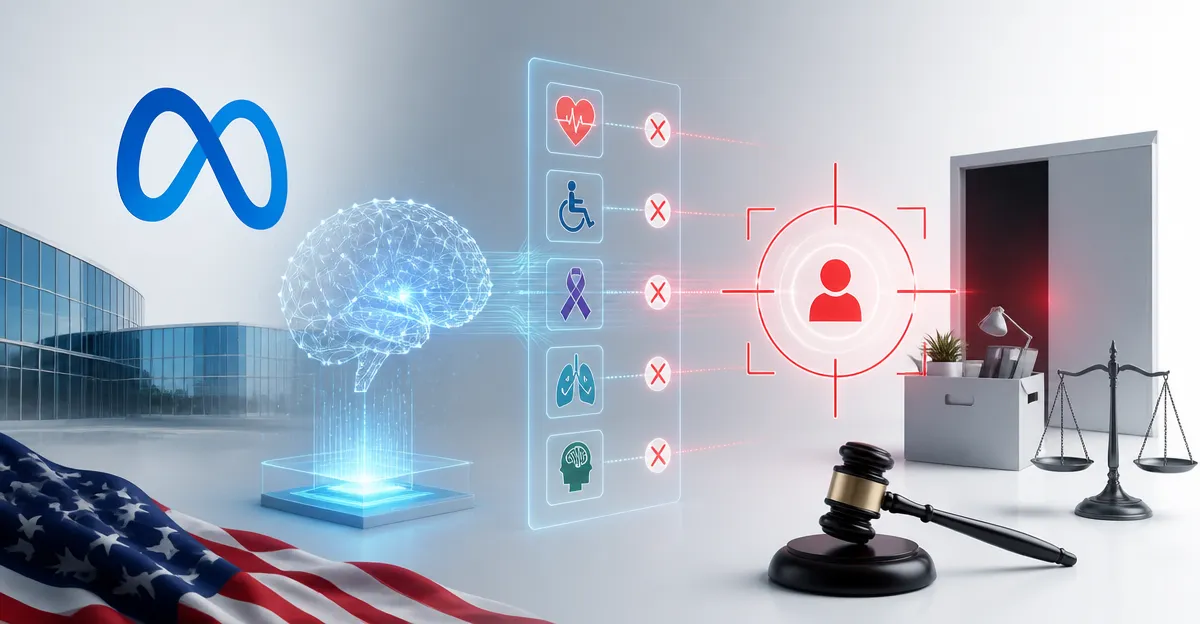
July 14, 2026, (Inside AI) — Twenty-six former employees of Meta Platforms have filed a lawsuit alleging the company used AI-powered software to disproportionately target workers with disabilities and those on medical leave during mass layoffs.
The complaint, reported by Reuters, claims Meta’s AI tools were designed to identify and select individuals for termination based on protected characteristics, potentially violating employment and disability laws. The lawsuit was filed in a U.S. federal court, though the specific jurisdiction was not immediately disclosed.
Meta did not immediately respond to a request for comment. The case raises fresh questions about algorithmic bias in workforce decisions, an area where regulators and researchers have long warned of hidden discrimination.
Algorithmic Layoffs: How AI May Have Shaped Meta’s Workforce Cuts
According to the former employees, Meta’s AI system analyzed employee data—including performance metrics, leave records, and accommodation requests—to rank workers for layoffs. The lawsuit argues this process systematically disadvantaged those with medical conditions, effectively automating bias.
Legal experts note that if the allegations are proven, Meta could be in breach of the Americans with Disabilities Act and similar state laws. The use of AI in hiring and firing has been under scrutiny since at least 2020, when the U.S. Equal Employment Opportunity Commission began investigating discriminatory algorithms.
Meta has previously touted its responsible AI frameworks, but this lawsuit suggests a gap between policy and practice. The company laid off over 20,000 employees in multiple rounds starting in late 2022, with CEO Mark Zuckerberg citing a “year of efficiency.”
“Employers cannot hide behind a black-box algorithm to justify discriminatory decisions,” said a plaintiff’s attorney, speaking on condition of anonymity due to the ongoing litigation. “If the AI is trained on biased data or programmed with flawed criteria, it becomes a tool for exclusion.”
Broader Implications for AI-Driven HR Tech
The case echoes growing concerns about AI in human resources. A 2023 study by the Brookings Institution found that automated hiring tools often replicate historical biases, disproportionately filtering out candidates with disabilities. The European Union’s AI Act, set to take full effect in 2026, classifies AI systems used in employment as high-risk, requiring rigorous conformity assessments.
In the U.S., New York City’s Local Law 144 already mandates bias audits for automated employment decision tools. However, federal legislation remains stalled, leaving a patchwork of state regulations. This lawsuit could accelerate calls for stricter oversight.
Industry analysts point out that AI-driven layoff models are often built on cost-optimization logic, which may inadvertently penalize employees with higher healthcare costs or accommodation needs. Without transparent auditing, such systems can perpetuate systemic discrimination.
The plaintiffs are seeking unspecified damages and an injunction against Meta’s use of such AI tools. The outcome could set a precedent for how tech companies deploy AI in workforce management, especially during restructuring.
As the legal battle unfolds, it underscores a critical tension: the drive for efficiency through AI versus the fundamental rights of workers. For now, Meta’s silence leaves many questions unanswered.