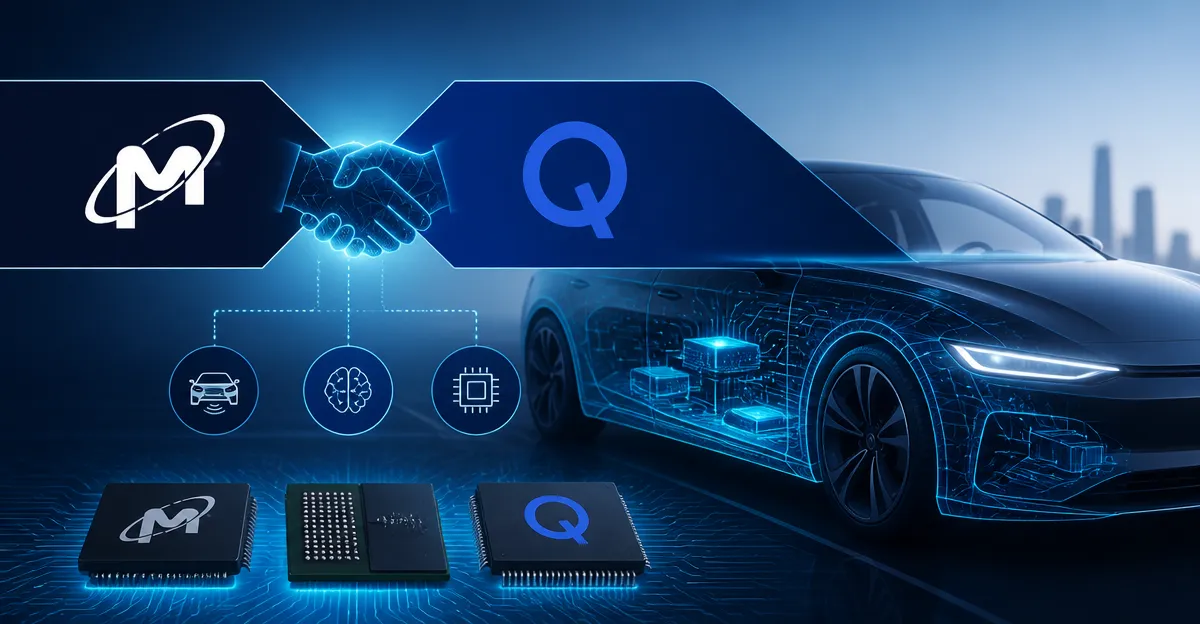
July 16, 2026, (Inside AI) — Micron Technology has locked in long-term supply agreements with several major automotive suppliers, including Qualcomm and Harman, to provide memory and storage components for AI-powered vehicles. The deals, announced Thursday, also cover auto parts makers Visteon, JOYNEXT, DENSO, Astemo, and Hyundai Mobis.
The agreements aim to give automakers stable access to critical chips that enable advanced driver-assistance systems, digital cockpits, and other AI-driven features. By securing pricing and supply, Micron and its partners can better plan production and invest in next-generation vehicle platforms.
These pacts come as the chip industry scrambles to expand manufacturing capacity to meet surging demand for memory chips, fueled by AI adoption across data centers, consumer electronics, and automobiles. Micron, the only U.S.-based maker of high-bandwidth memory chips used alongside Nvidia’s AI processors, has benefited from the boom, allowing it and rivals SK Hynix and Samsung Electronics to charge premium prices.
“As vehicles become increasingly software-defined, automakers need technology platforms that bring together high-performance compute, connectivity, memory and storage,” said Cristiano Amon, president and CEO of Qualcomm.
Read: CoreWeave Explores Memory Chip Hedging
Micron CEO Sanjay Mehrotra said in June that the company had signed 16 strategic customer agreements, expecting that data center-driven growth will be increasingly complemented by AI-enabled features in smartphones, high-end PCs, automotive applications, and robotics. The automotive deals underscore how deeply AI is reshaping the vehicle supply chain, turning cars into rolling data centers that require massive memory bandwidth.
The agreements signal a strategic shift in the automotive chip market. Historically, automakers relied on just-in-time procurement and short-term contracts, but the chip shortage of 2021–2022 exposed vulnerabilities. Now, carmakers and suppliers are locking in multiyear commitments to avoid future disruptions. Micron’s move mirrors broader industry trends—last year, Infineon and NXP also struck long-term deals with tier-1 suppliers.
However, some analysts caution that these agreements could reduce flexibility if demand shifts. “Long-term contracts are a double-edged sword,” said semiconductor analyst Mark Li of Bernstein. “They provide stability but can lock companies into volumes that may not match actual market conditions.” Others point out that AI features in vehicles are still nascent, and consumer uptake remains uncertain.
Micron’s automotive revenue has grown steadily, hitting $1.6 billion in fiscal 2025, up 30% year-over-year. The company expects the automotive memory market to reach $10 billion by 2030, driven by Level 3+ autonomy and immersive in-cabin experiences. Competitors are not standing still: Samsung recently unveiled its own automotive-grade memory lineup, while SK Hynix is investing heavily in on-device AI memory.
The deals also highlight the geopolitical dimension of chip supply. With most advanced memory production concentrated in South Korea, Micron’s U.S. manufacturing base offers a diversification play for automakers wary of supply chain risks. The company’s Boise, Idaho, fab expansion, backed by CHIPS Act funding, is set to come online in 2027, potentially giving it a further edge.
Still, the agreements do not cover the most advanced AI processors—those remain dominated by Nvidia and Qualcomm’s Snapdragon Ride platform. Micron’s role is to provide the memory and storage that feed data to those processors. As vehicles generate terabytes of data daily from sensors and cameras, fast, reliable memory becomes critical for real-time decision-making.
Read: Soitec Locks Multi-Year Wafer Deals
In a related development, Micron also announced a collaboration with Harman to integrate its memory into next-gen audio and infotainment systems, leveraging AI for personalized sound zones and voice assistants. This signals that AI’s reach in vehicles extends beyond safety to comfort and entertainment.








