September 4, 2026, (Inside AI) — Nvidia has agreed to acquire AI platform Hugging Face for nearly $13 billion, marking one of the chipmaker’s largest strategic moves ever. The deal reshapes the AI software landscape and signals a deeper push into model hosting and developer tools.
The acquisition gives Nvidia control of a platform hosting over 1 million models, 400,000 datasets, and 250,000 apps. Hugging Face has become a central hub for open-source AI, used by companies like Microsoft, Amazon, and Google. The purchase price reflects the platform’s strategic value in the AI stack.
Industry analysts say the move positions Nvidia beyond hardware into the software layer where AI models are trained, fine-tuned, and deployed. Nvidia already offers CUDA, its proprietary software ecosystem that locks developers into its chips. Adding Hugging Face extends that moat into the model-sharing ecosystem.
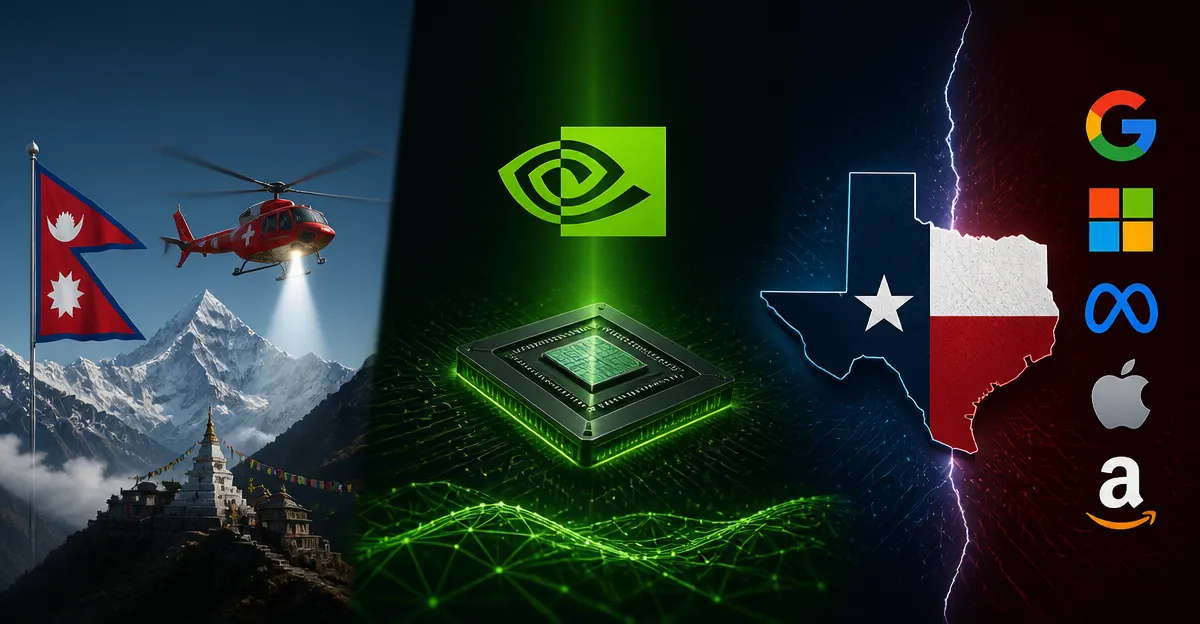
The deal comes as Republican leaders in Texas turn against AI data centers they once supported. Local officials cite grid strain, water use, and tax incentives that now look costly. The reversal highlights a growing tension between AI infrastructure buildout and community acceptance.
Hugging Face was founded in 2016 by Clément Delangue, Julien Chaumond, and Thomas Wolf. It raised over $400 million from investors including Lux Capital and Sequoia. Its valuation had climbed to $4.5 billion in a 2023 funding round. The $13 billion price tag represents a nearly 3x premium.
Nvidia’s data center revenue hit $115 billion in fiscal 2025, driven by demand for H100 and Blackwell GPUs. The Hugging Face purchase could accelerate enterprise adoption of Nvidia’s full-stack AI offerings, from chips to cloud services.
In other developments, two men were pulled alive from a flooded tunnel in Nepal nine days after a deadly flood. The U.S. investigates an airstrike that Iranian officials say hit a wedding party. Analysis points to an American munition. These stories reflect broader geopolitical and humanitarian pressures shaping global markets.
The Texas backlash against data centers mirrors debates in Virginia, Iowa, and Ireland, where power constraints and water scarcity have slowed AI infrastructure projects. Grid operators warn that AI demand could outpace supply by 2030 without major investment.
Nvidia has not commented on integration plans for Hugging Face. Sources familiar with the matter say the platform will continue operating under its brand, with Delangue staying as CEO. The deal is expected to close in Q1 2027, pending regulatory review.
For AI developers, the acquisition raises questions about neutrality. Hugging Face has positioned itself as an independent hub for open models. Some researchers worry Nvidia could prioritize its own hardware or restrict access to competing chips. Others see the deal as a boost for open-source AI funding.
The transaction also underscores a broader consolidation wave in AI. Databricks acquired MosaicML for $1.3 billion in 2023. Snowflake bought Neeva. Nvidia’s move is the largest AI platform acquisition to date, surpassing Microsoft’s $10 billion investment in OpenAI.
Texas officials have not proposed specific legislation yet, but several counties have paused permits for new data centers. ERCOT, the state grid operator, projects AI load growth of 15% annually through 2030. Water consumption for cooling is another flashpoint in drought-prone regions.