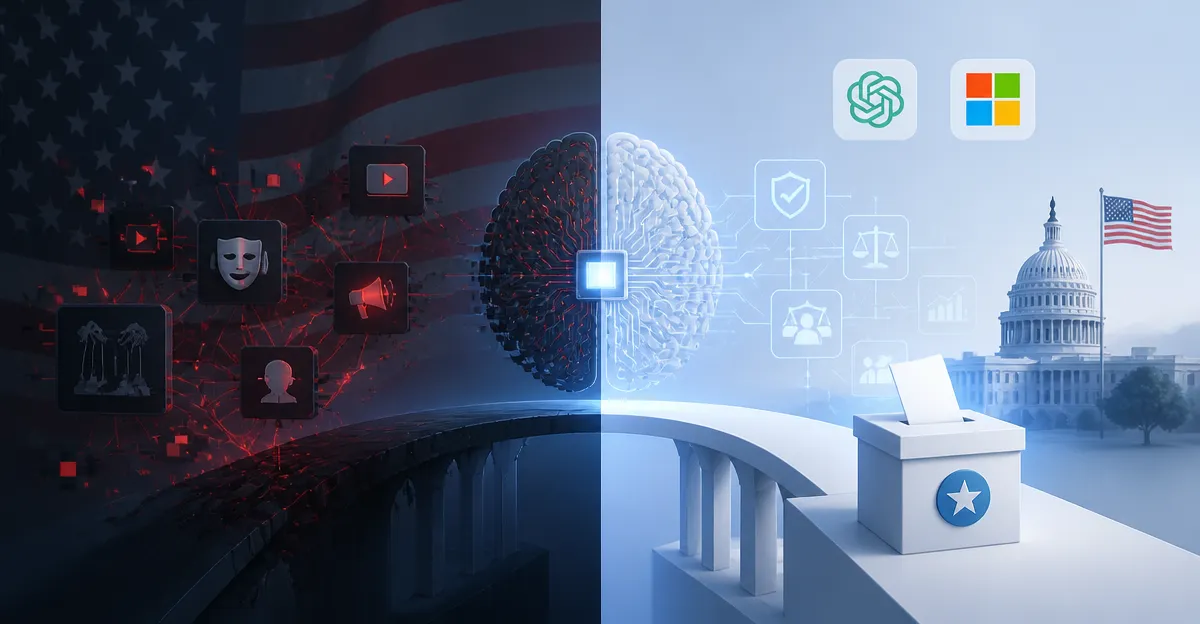
August 31, 2026, (Inside AI) — American political campaigns are using artificial intelligence to worsen voter experiences. Deepfakes spread lies. The White House posts AI-generated propaganda. Voters report rising anxiety about AI’s role in the country.
Yet candidates are overlooking a proven opportunity. AI can help them listen more deeply to voters, engage constituents inclusively, and build policy platforms that reflect public input. Examples from Japan, Scotland, and US institutions show how this works.
The core problem is that US campaigns use AI the same way they used web ads 30 years ago: broadcasting a candidate’s message to millions. That one-to-many approach is uninspiring. AI enables one-to-one connections at scale, or many-to-many deliberation among voters.
One promising application is broad listening. These tools collect public input in formats richer than survey checkboxes. They capture nuance, context, and voter reasoning through extended conversations.
Read: Silicon Valley Pours Hundreds of Millions into Super Pacs to Sway AI Regulation Elections
Japan’s Team Mirai party built an AI interviewer that cultivates constituent input on policy. Voters explore specific issues through chatbot conversations. The party scaled this across legislative topics by integrating the tool with an AI-powered bill portal.
Team Mirai calls itself a utility party, developing tools for any Japanese party to use. Voters have exchanged more than 300,000 messages across 16,000 AI interviews. Adoption grew because users see evidence the party is listening and might act on their input.
Party members have cited AI interviews during legislative committee hearings. They published syntheses of voter input and amended their policy platform based on user feedback. Team Mirai won 12 seats in the Diet, following the civic hackers of Taiwan’s gov zero movement.
Scotland’s CrownShy nonprofit is building Comhairle, a platform for digital town halls. It combines AI interviewing tools with software for synthesizing viewpoints, hosting virtual assemblies, and sharing video testimonials. Legislatures and campaigners can organize digital consultations at scale.
Both Team Mirai and CrownShy tools are open-source. They are funded by political parties but built to improve democratic processes, not for partisan advantage.
US candidates have access to similar tools. Stanford-affiliated deliberation.io facilitates structured dialogues among thousands of participants. It was piloted for public listening sessions by Washington DC. MIT-affiliated Cortico surfaces under-heard community perspectives from recorded conversations and organizes listening sessions at libraries nationwide.
The nonprofit-built Talk to the City analyzes large datasets of stakeholder input. Startup Remesh offers a commercial tool that generates recommendations from dialogue, tested in policy development scenarios.
Read: Hungary Election Study Finds AI Chatbot Voting Advice Inaccurate and Unreliable
This civic technology tradition is strong in the US. Two decades ago, Code for America and the Obama 2008 campaign drove innovation so effectively that Congress funded the US Digital Service. The Trump administration repurposed it as the US Doge Service in 2025.
A signal of change came this spring from Higher Ground Labs. The Democratic-aligned campaign tech investment firm launched a fund targeting AI-Native Campaign Systems and community-led messaging platforms that surface authentic, bottom-up insights from real conversations.
AI Skeptics Versus Boosters Miss the Middle Ground
Polarization is separating US parties into AI skeptics and AI boosters. Voters and politicians should separate AI technology from its profiteers. Big tech money should leave politics. AI companies must be held accountable for harm, taxed on revenues, and perhaps nationalized if the AI bubble bursts.
But congressional candidates seeking authentic connection and differentiation should use AI responsibly. Broad listening and deliberation tools pioneered abroad could make US politics more transparent, responsive, and community-driven.
The impact of AI on campaigning does not have to be all bad. Candidates who adopt these tools now may gain a genuine advantage in the midterms.