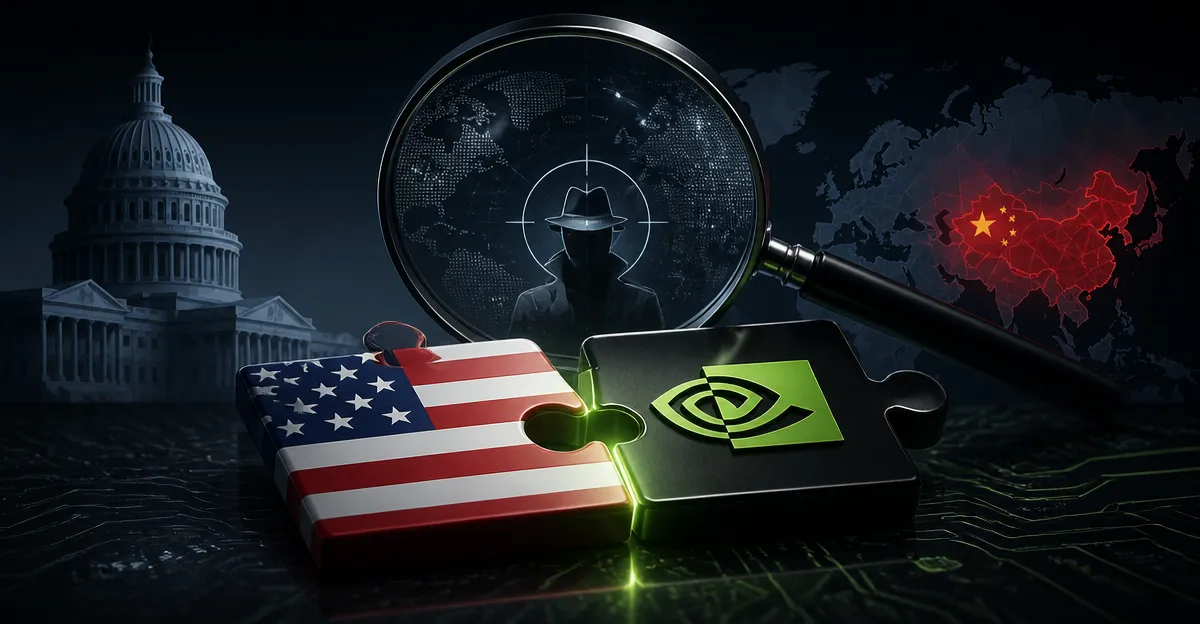
November 10, 2026, (Inside AI) — Nvidia's board has launched an independent investigation into whether CEO Jensen Huang was the target of a foreign intelligence operation, following a New York Times report that he had a close relationship with a Chinese businesswoman suspected of passing information to the Chinese government. The probe, confirmed by the company, immediately cast a shadow over Huang's extensive ties to President Donald Trump and raised questions about national security, export controls, and the intersection of AI chip diplomacy with personal relationships.
The woman, identified in media reports as Alice Huang, also known as Huang Le, allegedly had an intimate relationship with Jensen Huang. Nvidia's board is examining whether any company information was compromised. Huang has acknowledged the relationship to the board and employees and has said he will cooperate with the investigation. Nvidia shares fell to a seven-month low on Monday as the news broke.
The timing is particularly sensitive. Huang has become one of the most influential voices in the debate over U.S. export controls on advanced AI chips to China. He has publicly argued for rolling back restrictions, and the Trump administration has shown openness to his lobbying. In April 2025, the administration backed off plans to restrict exports of certain Nvidia AI chips to China after Huang attended a dinner at Trump's Mar-a-Lago club. In December 2025, Trump said the U.S. would allow Nvidia to export its H200 processors to China and collect a 25% fee on such sales. The same month, a Reuters reporter saw Huang's full name pop up on Trump's phone.
Huang's access to the White House has been extraordinary. He flew with Trump to China on Air Force One in May, the first visit by a U.S. president to China in nearly a decade. He attended a state dinner for Chinese President Xi Jinping in September. Nvidia committed $25 million for Trump's planned White House ballroom, according to media reports. In October, Trump awarded Huang the nation's highest honor for scientific achievement. On the same day, the president disclosed buying up to $1.6 million and selling up to $1 million in Nvidia stock during the summer. White House spokesperson Davis Ingle said third-party financial institutions independently manage the president's portfolio.
The New York Times reported that Trump was briefed on Huang's relationship with the woman and that she was giving information to the Chinese government, and chose not to act on the information. The White House and Nvidia's communications team did not immediately respond to requests for comment on their relationship.
Washington's Uncomfortable Questions
The controversy has prompted calls for congressional scrutiny. Senator Chris Coons, a Delaware Democrat, posted on X: "I'm pushing to investigate Jensen Huang and Nvidia to determine whether our national security was compromised. We need answers about the relationship between AI billionaires and the Trump administration, who's making these decisions, and who's really got their hand on the wheel."
The board's investigation will likely focus on whether Huang disclosed the relationship appropriately and whether any sensitive commercial or technological information was exposed. If the board finds no compromise, it may conclude that continuity is more important for the company's interests. But if a security lapse is identified, pressure on Huang would rise substantially, especially if the investigation finds he knowingly concealed it.
Washington faces its own set of difficult questions: Who knew what, when, and what did they do with the information? Was Huang warned? Was Nvidia warned? Did U.S. officials assess whether sensitive commercial or technological information could have been compromised? And why was there no earlier public action or congressional notification if the concerns were considered serious?
Huang's advocacy for rolling back export controls will now be viewed in a different light. The debate over China's access to Nvidia's most advanced AI chips is already intertwined with espionage allegations, and the administration's receptiveness to Huang's lobbying may face new scrutiny.
Trump told reporters on Sunday night he had not spoken to Huang about the allegations, calling Huang an "honorable guy." "I hope everything's fine," he said. "He's done such an incredible job."
The investigation comes at a critical moment for Nvidia, which has become the world's dominant supplier of AI chips and a central player in the U.S.-China tech rivalry. The company's board must now balance the need for accountability with the risk of destabilizing a leadership team that has driven Nvidia's rise. The outcome will have implications not only for Huang's future but also for how Washington navigates the complex relationship between national security and the AI industry's most powerful figures.

Sofia spent years studying how machines parse human language before pivoting to cover the systems now rewriting it. She reads technical papers the way others read news and looking for what the numbers are actually saying beneath the headlines.