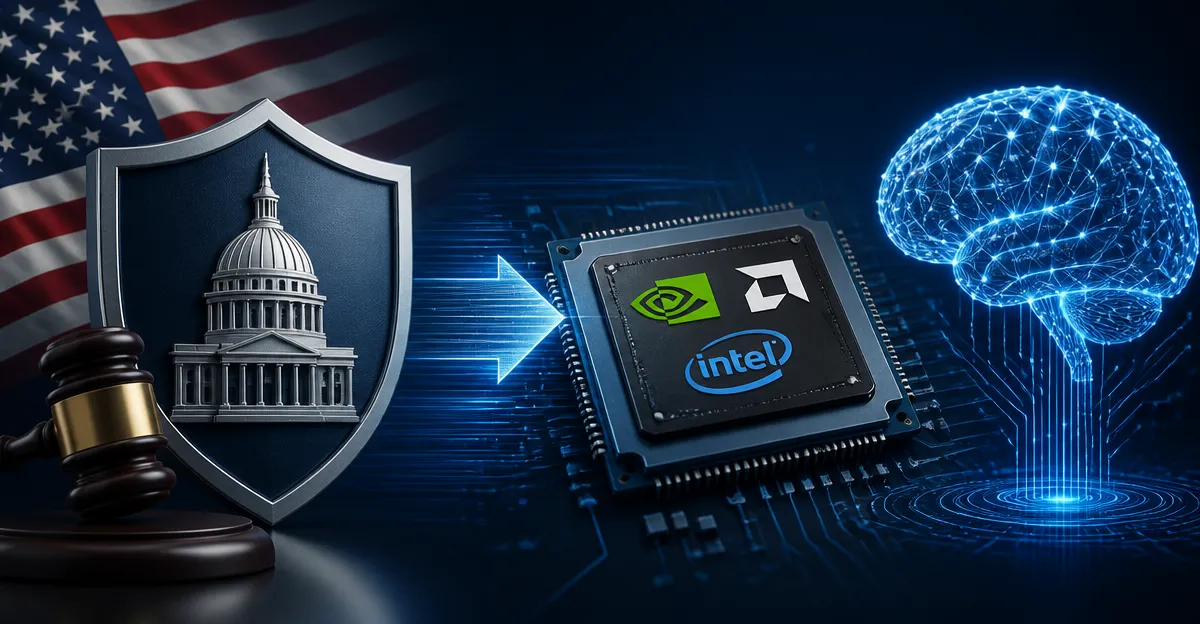
July 14, 2026, (Inside AI) — The U.S. Commerce Department is preparing new regulatory actions on artificial intelligence and semiconductors, a senior official confirmed Tuesday. Jeffrey Kessler, who oversees export controls, told a hearing that the Trump administration will not replace the Biden-era AI diffusion rule, which caps AI chip shipments to certain countries.
The AI diffusion rule, finalized in January 2025, restricts exports of advanced AI chips to nations like China, Russia, North Korea, and Iran. It also imposes licensing requirements for sales to over 100 other countries, aiming to prevent adversaries from accessing cutting-edge technology. Kessler’s remarks signal continuity in U.S. policy, even as new measures loom.
“Action regulating artificial intelligence and semiconductors is coming,” Kessler said, without offering specifics. His statement suggests the Commerce Department is drafting additional controls, possibly targeting emerging AI technologies or expanding semiconductor restrictions. The announcement comes amid global jostling over AI supremacy and chip supply chains.
The Enduring Shadow of the Diffusion Rule
The AI diffusion rule was a cornerstone of the Biden administration’s tech containment strategy. It created a three-tier system: Tier 1 allies face no restrictions; Tier 2 countries like India and Israel are subject to caps; and Tier 3 adversaries are effectively banned. The rule was widely criticized by industry groups like the Semiconductor Industry Association, which warned it could cede markets to Chinese competitors.
Kessler’s confirmation that the Trump administration will retain the framework is notable. President Trump had previously signaled a more transactional approach to trade, but continuity here may reflect bipartisan consensus on countering China’s tech rise. However, the promise of new action hints at an evolving posture—perhaps tightening enforcement or adding AI models to control lists.
What’s Next for AI and Chip Controls
Details on the forthcoming regulations remain scarce. Analysts speculate they could involve restrictions on AI software, cloud services, or investment in foreign AI firms. The Commerce Department’s Bureau of Industry and Security (BIS) has been steadily expanding its entity list, and AI chips from Nvidia and AMD have been a focal point. Any new rules would likely build on the October 2022 export controls that first targeted advanced logic and memory chips.
Kessler’s remarks were made during a hearing, but the specific venue was not disclosed. Reuters reported the story, citing Kessler directly. The official’s tone suggested urgency, though no timeline was provided. Industry watchers expect a proposed rule within months, given the rapid pace of AI development.
The global chip landscape is already strained. The U.S. has pressured allies like the Netherlands and Japan to restrict exports of chipmaking equipment. Meanwhile, China is pouring billions into domestic semiconductor production. The diffusion rule’s caps—which limit most countries to 1,700 advanced GPUs annually—could push nations toward Chinese alternatives like Huawei’s Ascend chips.
Kessler’s statement also raises questions about AI safety and ethics. While the diffusion rule focuses on national security, new regulations could address dual-use AI models or autonomous systems. The European Union’s AI Act, passed in 2024, set a global precedent for risk-based regulation. The U.S. has yet to pass comprehensive AI legislation, leaving executive actions as the primary tool.
For now, the tech industry awaits clarity. Companies like Microsoft and Google have invested heavily in AI infrastructure abroad, and tighter controls could disrupt their plans. The Commerce Department’s move underscores a pivotal moment: as AI capabilities accelerate, governments are scrambling to write the rules of the road.








