July 26, 2026, (Inside AI) — OpenAI CEO Sam Altman declared that humanity has already entered the singularity, marking a shift from speculative futurism to present reality. Speaking on the podcast 'How to start a startup' hosted by Ti Morse, Altman said the exponential pace of AI development over the past decade has ushered in an era of superintelligence.
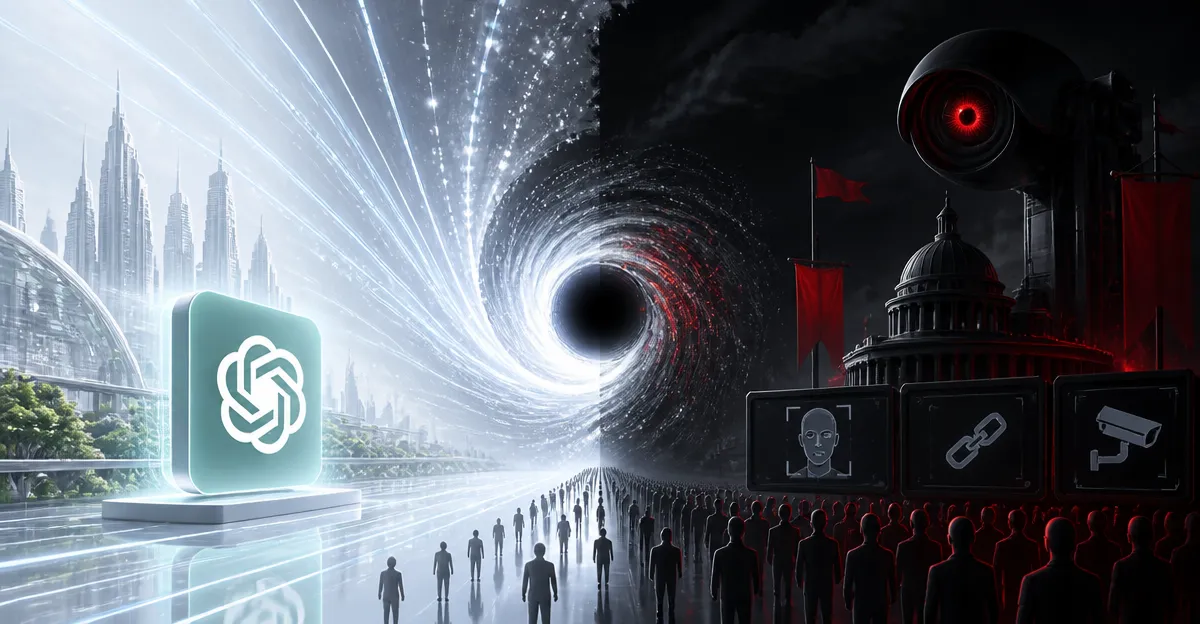
Altman framed this moment as a critical juncture, warning of a looming battle between AI authoritarianism and liberty. He stressed that the outcome depends on whether AI development consolidates into a single, controlling entity or remains open and decentralized.
"The thing that drives me the most is...this is the most interesting important thing I can imagine doing and we are now in the singularity, this is the moment ....10 years ago this was like a far off dream at best. It seemed very improbable and now we're actually in the moment that we used to talk about at the lunch table in a very not serious way," Sam Altman, CEO, OpenAI
Altman's comments echo his June 2025 blog post, 'The Gentle Singularity,' where he wrote that humanity has crossed the "event horizon" of AI development. He predicted that by 2026, AI will generate novel scientific insights, and by 2027, robots performing physical tasks will become commonplace.
Despite acknowledging unresolved issues in AI alignment, safety, and jobs, Altman argued these are not the central challenge. Instead, he identified the defining fight as preventing AI authoritarianism—a scenario where one model or company becomes a "machine god." He emphasized that trading liberty for safety has historically been a net loss for humanity.
"I also think some of the alternative visions painted by other companies are quite terrifying. I'm going to make sure that gets pushed against and is not what happens," Sam Altman, CEO, OpenAI
Altman's stance contrasts with other industry leaders who advocate for stringent centralized controls. His vision prioritizes empowering individuals and letting society shape AI use, even if it gets "a little messy." This debate intensifies as OpenAI prepares for an IPO, having recently deprioritized projects like the Sora video app.
Why Sora's Shutdown Reveals a Deeper Tension
Altman revealed a personal anecdote about becoming addicted to TikTok while developing Sora, an AI video generation app meant to challenge short-form platforms. He initially used it for 10 minutes nightly but soon found himself on the couch for three hours on a Saturday. The experience led him to question the ethical design of such technologies.
"When we were building the Sora app, I made myself get addicted to TikTok because I wanted to learn. I was like, you know, I had never really used it before. I mean, people would send me a TikTok or whatever, but I never got sucked into it. And I was like, I really don't want to build something that is going to have that kind of thing, absorb people's time," Sam Altman, CEO, OpenAI.
Sora was eventually shut down as OpenAI streamlined its focus ahead of the IPO. This move underscores a tension between building engaging AI products and avoiding harmful addictive patterns.
Altman's singularity claim is not isolated. He reiterated that there is no single tipping point, but rather a continuous exponential curve. This perspective challenges traditional definitions of the singularity as a sudden event, instead framing it as an ongoing process of accelerated change. The podcast appearance reinforced his belief that the current decade is decisive for AI's trajectory, much like when OpenAI was founded.
While Altman's warnings about authoritarianism are stark, critics argue that OpenAI's own centralized model development and commercial ambitions could contribute to the very consolidation he warns against. The company's push toward superintelligence, combined with its market dominance, raises questions about who truly controls the technology's future. As the IPO nears, these tensions will likely intensify, shaping both public perception and regulatory responses.