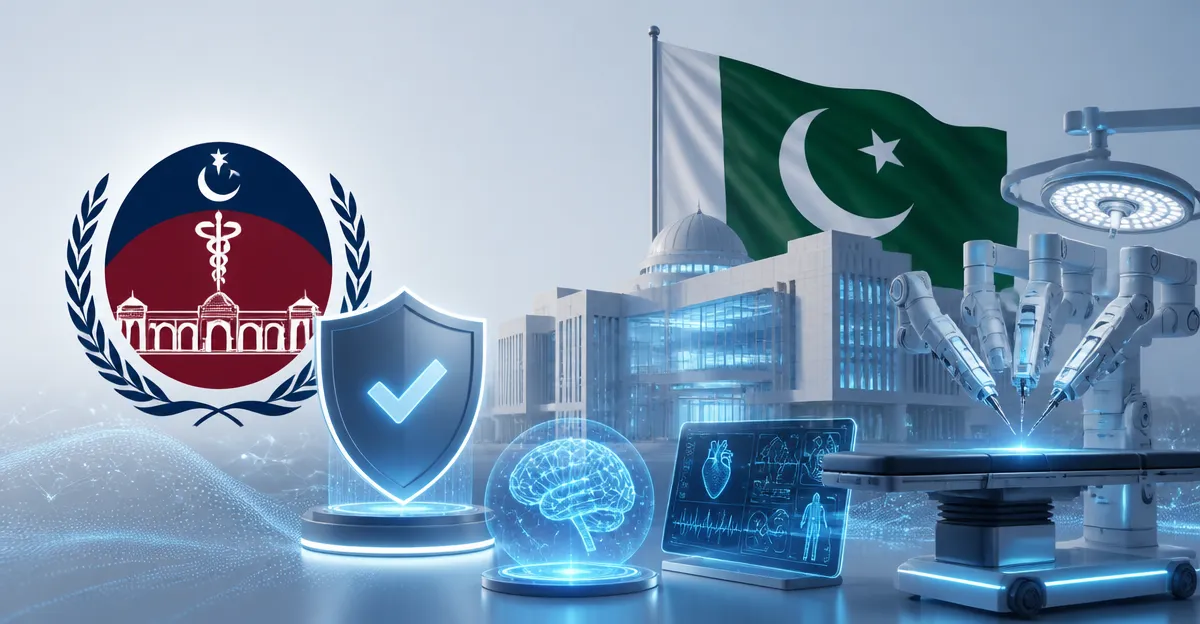
September 30, 2026, (Inside AI) — A public medical university in Pakistan's capital has approved a new center of excellence for artificial intelligence and robotic surgery. The decision came during a syndicate meeting on Tuesday at Shaheed Zulfiqar Ali Bhutto Medical University (SZABMU) in Islamabad.
The center, named the Centre for AI, Robotics, Health Intelligence and Policy Innovation (CARHIPI), will focus on robotic-assisted surgery, AI applications in medicine, digital diagnostics and precision healthcare. It will also offer research opportunities, advanced training and international partnerships.
The syndicate also approved an international medical college and a College of Pharmacy, and was informed that several PhD and specialized programs had been approved in surgery, medicine, cardiology, pharmacy, physiology, public health, molecular biology and operative prosthodontics.
The meeting was chaired by Vice Chancellor Prof Dr Tanwir Khaliq. Attendees included Senator Fawzia Arshad, MNA Dr Tariq Fazal Chaudhry, Higher Education Commission (HEC) Executive Director Prof Dr Ziaul Haq, Quaid-i-Azam University Acting Vice Chancellor Prof Dr Zafar Nawaz Jaspal, and SZABMU Registrar Prof Dr Syed Tanseer Asghar.
Read: Karnataka Plans India’s First Public AI University and Green Data Centres
The proposal for CARHIPI was presented by Prof Dr Syed Tanseer Asghar, who is also a surgeon. The center is expected to serve as a hub for advanced surgical training and medical research.
Prof Khaliq said the international medical college initiative would help position SZABMU as a regional hub for medical education and strengthen its international academic links. The college will primarily cater to overseas Pakistanis, children of expatriates, foreign nationals and international students.
"The syndicate approved the Centre for AI, Robotics, Health Intelligence and Policy Innovation (CARHIPI) as the university's first centre of excellence for AI-enabled robotic surgery and digital disease management," according to a statement from the university.
The approval comes as AI adoption in healthcare accelerates globally. Robotic-assisted surgery, in particular, has moved from experimental to mainstream in many high-income countries. Systems like Intuitive Surgical's da Vinci have performed millions of procedures worldwide. AI-driven diagnostics are also gaining regulatory clearance. The U.S. Food and Drug Administration has authorized hundreds of AI-enabled medical devices, many for radiology and cardiology.
For Pakistan, the move signals a push to build domestic capacity in these fields. The country's healthcare system faces severe shortages of specialists, especially in surgery and diagnostics. A 2022 World Health Organization report noted that Pakistan has fewer than 10 surgeons per 100,000 people, well below the global average. AI and robotics could help bridge some gaps, but only if training and infrastructure keep pace.
CARHIPI's focus on policy innovation is notable. Many developing countries adopt medical AI without clear regulatory frameworks. The center could help shape guidelines for safety, data privacy and clinical validation. That would be a step beyond pure technology adoption.
Read: AI's Measurable Impact on Global Challenges Documented in Decade Review
The international medical college and College of Pharmacy approvals suggest a broader strategy. SZABMU aims to attract foreign students and expand its academic footprint. The College of Pharmacy will offer Pharm-D and postgraduate research programs. These moves could generate revenue and raise the university's global profile.
However, turning approvals into functioning centers takes time. Funding, faculty recruitment and equipment procurement remain challenges. The syndicate's decisions are conceptual for the medical college. CARHIPI's operational timeline is unclear. Inside AI could not independently verify the budget or launch date.
Similar initiatives in the region have had mixed results. Some AI health centers in India and China have thrived with strong government backing. Others have struggled with siloed data and resistance from clinicians. SZABMU's success will depend on execution and sustained investment.
The syndicate meeting also highlighted collaboration with the Higher Education Commission. HEC's involvement could unlock federal funding and policy support. That is a positive signal for long-term viability.
For now, the approvals mark a strategic bet on technology and internationalization. If realized, CARHIPI could become a regional reference point for AI in surgery and diagnostics. It could also train a new generation of Pakistani clinicians in digital health. The next steps will be watched closely by peers and policymakers alike.