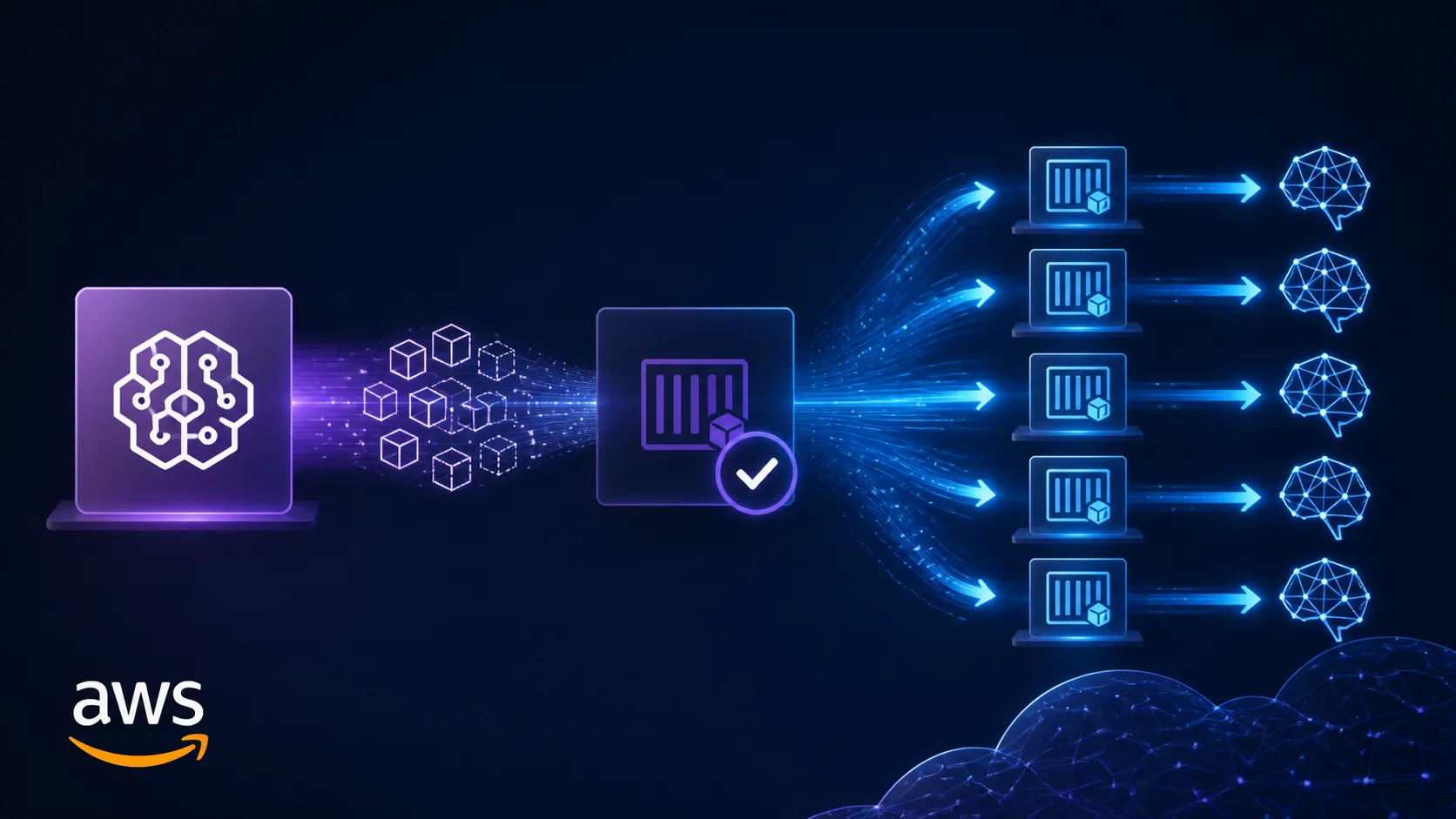
July 1, 2026, (Inside AI) — Amazon SageMaker AI now automatically caches container images, slashing generative AI inference scale-out times by up to 50%. The feature pre-pulls images so new instances skip lengthy downloads from Amazon ECR.
Generative AI models often rely on container images exceeding 10 GB. Until now, every fresh instance during a scale-out event had to retrieve the full image, causing cold-start delays of several minutes. The new caching mechanism eliminates that wait.
Ankur Mehrotra, General Manager of Amazon SageMaker, detailed the improvement in an AWS launch blog. He stated:
“When your endpoint scales out, the service pre-caches your container image so new instances can start serving traffic faster, without waiting for large container images to be pulled from Amazon ECR.”
Read: AWS P-EAGLE Breaks Speculative Decoding Bottleneck with 1.69x Speedup on SageMaker
The capability requires no customer action. SageMaker automatically caches the image URI configured in an endpoint or inference component. It supports accelerator instance types, single-model endpoints, and inference component-based endpoints.
This launch completes a trifecta of scaling optimizations. Sub-minute concurrency metrics now detect load up to 6x faster. Instance-store container caching speeds scaling on existing instances. Together, they form a comprehensive suite for generative AI workloads.
Container image caching is available across all AWS commercial regions where SageMaker Inference operates. The move addresses a persistent friction point in deploying large models, where image pull latency can undermine autoscaling responsiveness.
Industry observers note that similar caching strategies have been adopted by other cloud providers, but SageMaker’s integration removes operational overhead. The automatic nature aligns with AWS’s broader push toward serverless and managed AI services.
The announcement comes as enterprises increasingly demand low-latency inference for applications like chatbots and real-time recommendations. Every second of delay can impact user experience and revenue.
For deep technical details, the launch blog offers configuration guidance and performance benchmarks. AWS encourages users to test the feature with their existing endpoints to measure improvement.
Read: AWS SageMaker AI Adds Serverless Fine-Tuning for Google Gemma 4 Models