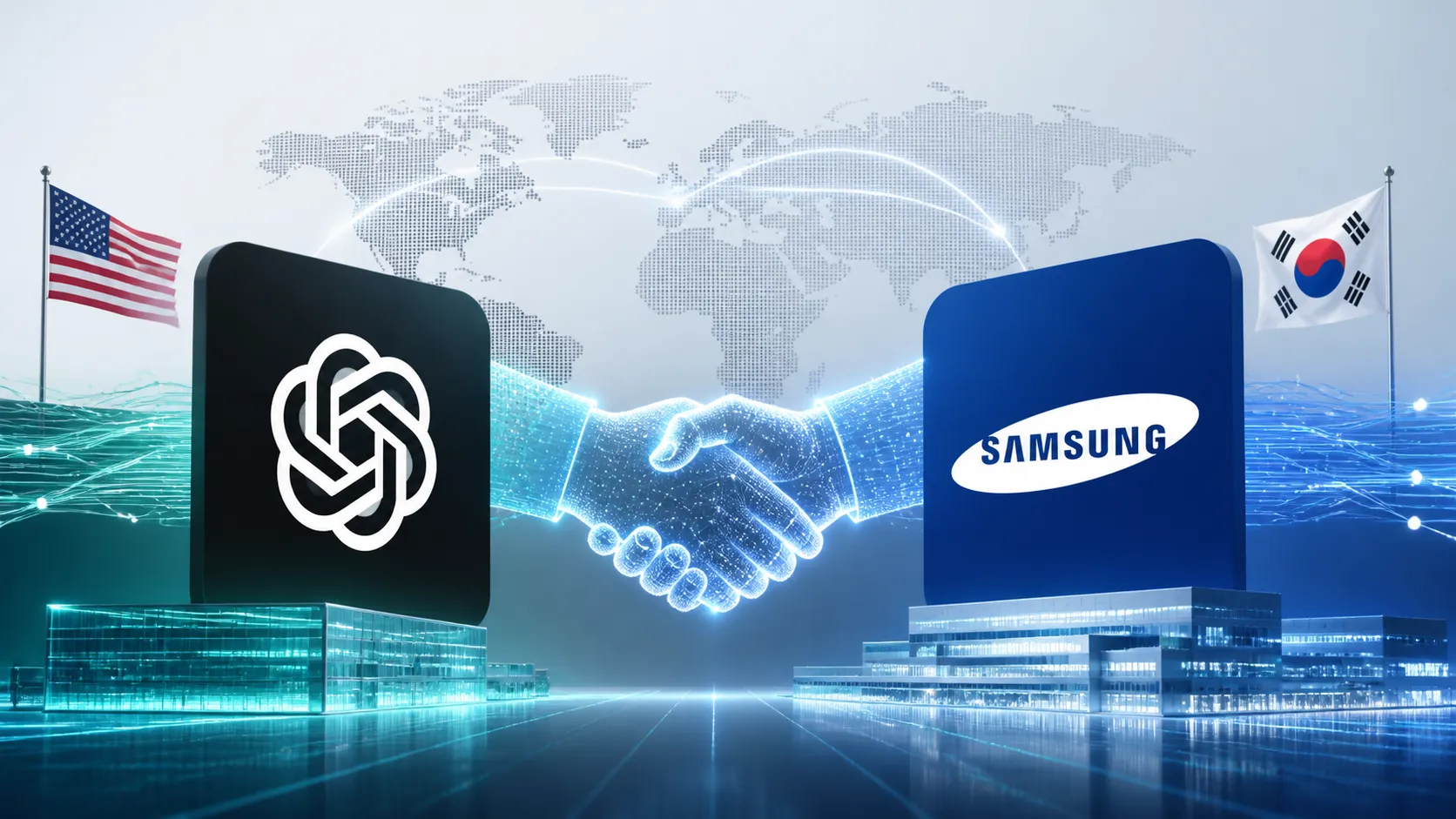
June 23, 2026, (Inside AI) — Samsung Electronics has signed a landmark deal with OpenAI to deploy ChatGPT Enterprise and Codex across its global workforce, extending a partnership that previously centered on semiconductor manufacturing. The agreement, disclosed this week, will bring generative AI tools to employees in all divisions, from software engineering to marketing and manufacturing.
The move embeds AI deeper into Samsung’s operations as the South Korean giant seeks to boost productivity and product development. Samsung has already promoted consumer-facing Galaxy AI features through its One UI platform, but this internal rollout targets business units directly.
ChatGPT Enterprise and Codex will assist with coding, writing, debugging, workflow organization, and team collaboration. OpenAI says Codex has evolved far beyond a coding assistant, now serving over 5 million users worldwide with nearly 800% growth in usage since February 1.
Samsung’s adoption aligns with a wider trend in South Korea. LG Electronics has already integrated OpenAI solutions, and Seoul National University recently launched ChatGPT Edu for about 47,000 students and staff. The country’s rapid AI uptake reflects a strategic push to modernize industries and education.
Read: Google Reveals 11 Ways Gemini Boosts Workplace Productivity in 2026
Industry analysts see the Samsung-OpenAI deal as a critical test of enterprise AI at scale. While productivity gains are touted, experts caution that measuring real impact requires tracking metrics like code quality, employee satisfaction, and time-to-market—not just adoption numbers.
OpenAI has not disclosed financial terms, but the deal likely deepens its enterprise foothold in Asia. Samsung’s semiconductor division already works with OpenAI on chip design, and this expansion could lead to tighter integration between AI models and Samsung’s hardware.
Security and data privacy remain open questions. Samsung briefly banned ChatGPT in 2023 after an internal data leak, though it later reversed the policy. The company now says enterprise-grade controls will govern the new deployment, but details are scarce.
Competing AI providers, including Google and Microsoft, are also vying for enterprise clients in South Korea. Samsung’s choice of OpenAI may pressure rivals to offer deeper integrations or localized models.
Read: How a Researcher Uses Codex and ChatGPT to Search for New Antimicrobial Molecules
The deal underscores a pivotal moment for workplace AI. As generative tools move from pilot projects to company-wide rollouts, the success or failure of such implementations could shape enterprise adoption for years to come.