September 15, 2026, (Inside AI) — U.S. House Speaker Mike Johnson said on Tuesday that the United States cannot afford a moratorium on artificial intelligence development, warning that any pause would hand a competitive edge to China. He also argued that AI companies should regulate themselves rather than wait for government mandates.
Johnson made the remarks to reporters in Washington, positioning AI policy as a national security issue rather than a purely technological one. His comments come as the Trump administration prepares for a high-stakes meeting with Chinese President Xi Jinping later this month, where AI is expected to be a central topic.
The Speaker's stance puts him at odds with a growing faction of lawmakers and safety advocates who have called for stricter oversight of advanced AI systems. It also signals that the Republican-led House will likely resist new regulatory frameworks as the technology races forward.
"They can self-regulate. They don't need the government to tell them to slow it down. If they want to slow it down, they should," Johnson told reporters.
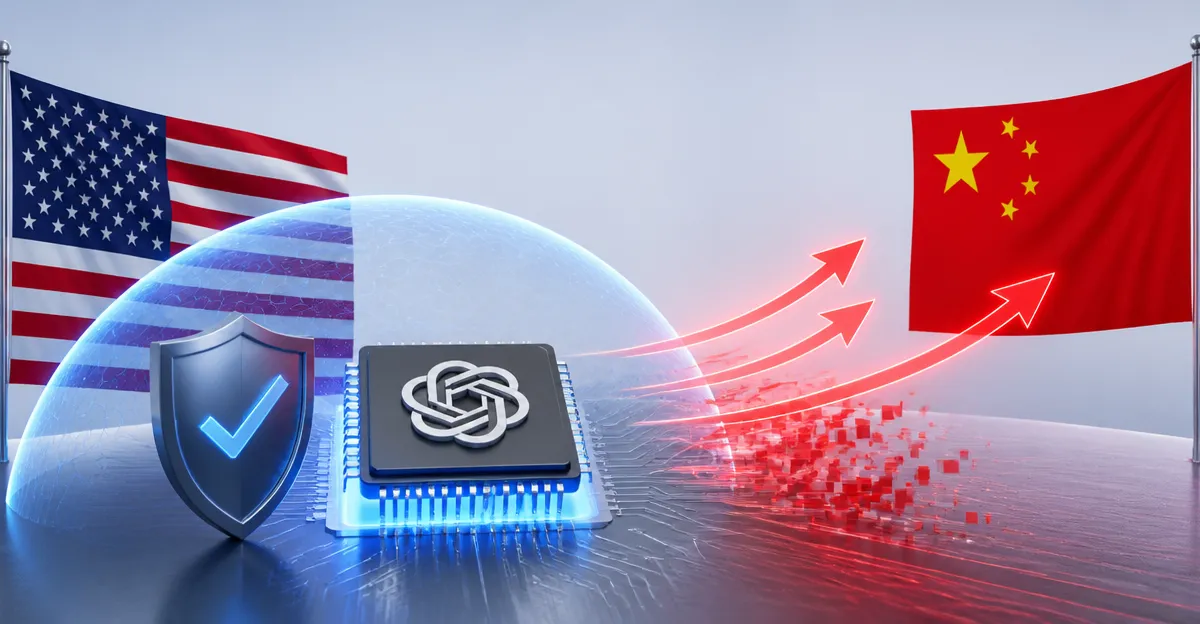
"We cannot have a moratorium on the development of AI, Ok? Because then we will lose our edge to China, and that has serious national security implications for every American family."
Johnson's argument echoes a broader debate in Washington over how to balance innovation with safety. The U.S. has already imposed export controls on advanced semiconductors to China, citing security concerns. But domestic regulation of AI models has stalled in Congress, with competing bills failing to gain traction.
White House Meeting Signals Executive Push
Johnson said he spoke with President Donald Trump on Monday night and that they are summoning executives from major AI providers to the White House within the next week. He described the gathering as an important meeting but did not name the companies or executives involved.
The move suggests the White House is taking a hands-on approach to AI policy, potentially bypassing legislative gridlock. Trump has previously signaled openness to AI development, often framing it as a race against China.
Johnson rejected the idea of a transnational agency to regulate AI, arguing that such a body would slow U.S. innovation. Instead, he outlined a set of guardrails that he said should be balanced and thoughtful.
"I think you need independent auditors. I think you need transparency from the people who are developing this. I think there's some really important ideas that can be guardrails," he said.
Those comments align with a voluntary approach favored by many industry leaders. Companies like OpenAI, Google DeepMind, and Anthropic have published safety frameworks and pledged to submit to third-party audits. However, critics argue that self-regulation lacks enforcement and can be undermined by competitive pressures.
Johnson's remarks also come amid heightened geopolitical tensions. The U.S. and China have been locked in a technology competition that spans chips, quantum computing, and AI. Both nations have accused each other of unfair practices, and the Biden administration's export controls remain largely in place.
When Trump and Xi meet later this month, AI is expected to be on the agenda. Johnson said he is sure the two leaders need to keep tabs and make commitments to one another, though he did not specify what those commitments might entail.
The Speaker's position could shape the legislative agenda in the coming months. With the 2026 midterms approaching, AI policy is emerging as a campaign issue. Some Republicans have embraced a deregulatory stance, while Democrats have pushed for stronger oversight.
Industry groups have largely welcomed Johnson's comments. NetChoice, a trade association representing major tech companies, has argued that existing laws can address many AI risks. Consumer advocates, however, warn that self-regulation has failed in other sectors, from social media to financial services.
Johnson's call for independent auditors and transparency may offer a middle ground. But without legislation, it remains unclear how those principles would be enforced. The White House meeting next week could provide more clarity on the administration's plans.
For now, Johnson's message is clear: the U.S. cannot afford to slow down. Whether that approach leads to safer AI or a more dangerous race remains an open question.