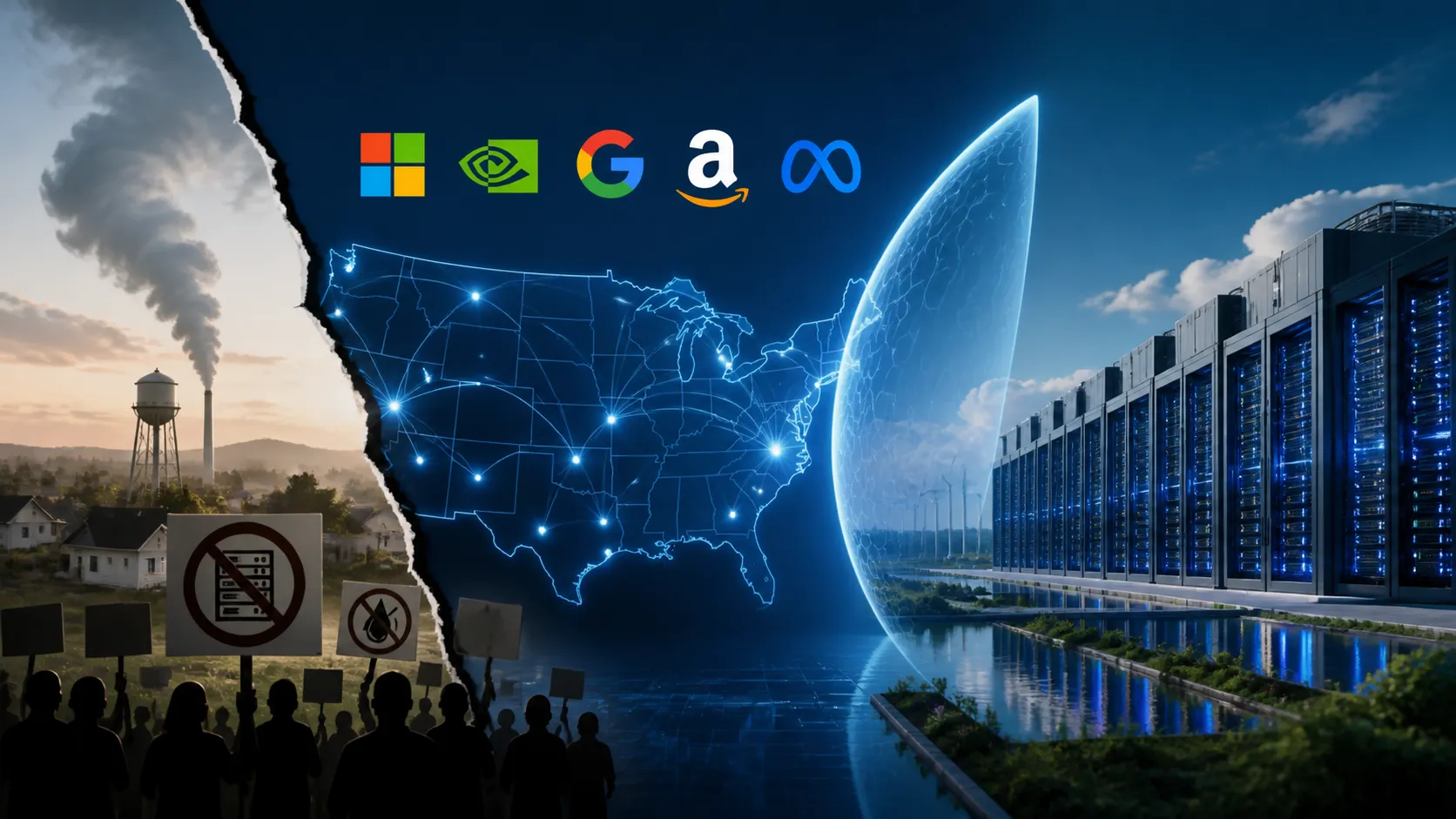
June 15, 2026, (Inside AI) — A surge of local opposition is reshaping the U.S. artificial intelligence landscape, as communities from Arizona to New York push back against the data centers powering the AI boom. Voters and lawmakers are demanding greater transparency, cost-sharing, and environmental safeguards, challenging the industry’s breakneck expansion.
The Ground Shifts Beneath the AI Economy
The conflict marks a pivotal turn. No longer confined to boardrooms or chip export debates, AI’s future now hinges on county hearings and water district rulings. Data centers, once invisible utilities, are now seen as industrial giants that strain power grids, drain aquifers, and spark tax fairness questions.
Arizona’s legislature recently suspended a sales tax exemption for data center developers for three years, a move projected to save the state $57 million through 2029. The decision signals a broader reckoning over who foots the bill for AI’s infrastructure.
Electricity Demands Redraw the Map
Energy consumption lies at the heart of the backlash. A Department of Energy-backed report from Lawrence Berkeley National Laboratory found data centers consumed 4.4% of U.S. electricity in 2023, a figure that could soar to 12% by 2028. Goldman Sachs Research warns that power demand may double from 31 gigawatts in 2025 to 66 gigawatts in 2027, yet only half the planned capacity might come online on time.
Read: South Korea Reverts to Nuclear Energy to Fuel Massive AI and Chip Fabs
The U.S. Federal Energy Regulatory Commission has opened a proceeding on how large users like data centers connect to the grid and allocate costs. Meanwhile, the California Little Hoover Commission cautioned that AI facilities could hike household electricity bills, urging tech companies to cover grid upgrades instead of residents.
Local Ballots Become Battlegrounds
Resistance is spreading through direct democracy. In Monterey Park, California, voters this month approved a ban on data centers. Seattle’s city council enacted a one-year moratorium on new projects, citing water use and economic impacts. In New York, lawmakers passed a similar freeze for large facilities, pending a governor’s decision.
Public sentiment is stark. A Gallup poll found 71% of Americans oppose a data center in their area, while a Pew Research Center survey revealed more negative than positive views on environmental and cost impacts.
Water Scarcity Fuels Western Friction
In arid regions, water has become a flashpoint. The Stratos project in Utah’s Box Elder County was scaled back after clashes over water rights and local governance. Reports highlight data centers expanding into water-stressed areas like California, where opaque disclosure rules mask actual usage.
Supporters argue data centers are vital for economic growth, creating construction jobs and tax revenue. Critics counter that many projects rely on public incentives, offer few permanent jobs, and burden essential resources.
Read: China’s AI Data Centre Green Power Plan Hits Forecasting and Grid Hurdles
Transparency remains a core grievance. Residents and lawmakers in multiple states complain that deals are struck without full disclosure of power and water demands. As federal officials frame data centers as strategic assets for national security, many communities see them as heavy industry that could upend local life. The AI expansion now depends as much on local consent as on chips and capital.