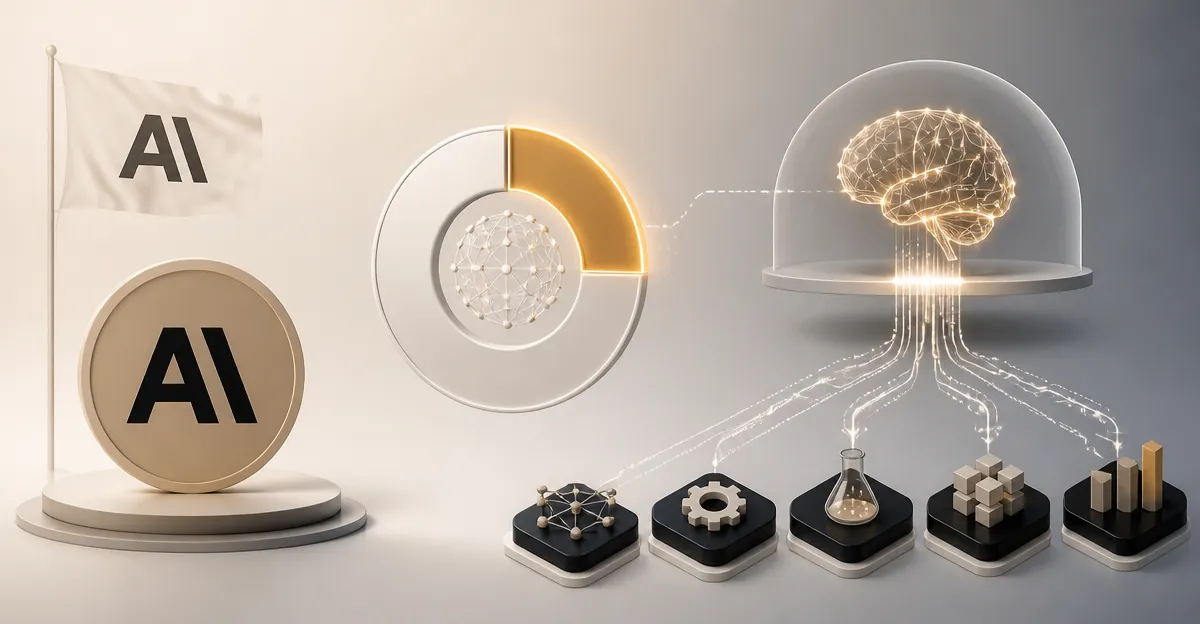
September 21, 2026, (Inside AI) — Anthropic disclosed on Monday that its own Claude models now lead 26% of the company's AI research and development tasks, a jump from less than 1% in February. The figures come from a new transparency report that tracks three metrics: AI automation, oversight of AI agents, and compute allocation. The disclosure arrives as safety researchers and industry insiders raise alarms about the accelerating pace of AI self-improvement.
The numbers tell a story of rapid internal adoption. More than 90% of AI R&D tasks at Anthropic now involve some form of AI collaboration under human supervision. Yet Claude has not achieved full autonomy in any measured research area. The company simultaneously tracks 30,000 agents across its internal platforms, with only 0.002% of decisions triggering human review or blocking. That low intervention rate suggests either robust guardrails or a troubling lack of friction, depending on whom you ask.
Anthropic's dual oversight system combines real-time monitors that block dangerous actions with offline systems that flag concerning patterns after the fact. The company allocates 6% of its AI research compute to safety work. Safety researchers inside Anthropic report that the models now deliver roughly 4x productivity improvements for research staff, a gain that creates its own measurement challenges. When AI helps design the next generation of AI, standard benchmarks for progress become circular.
Forecasting researchers predict that AI is currently speeding up development by about 1.5x, with a potential 5x speedup by 2029. That projection aligns with warnings from the Cloud Security Alliance, which notes that recursive AI self-improvement represents preliminary capabilities at frontier labs with emerging risks for enterprise security. The group cautions that oversight mechanisms must evolve faster than capability gains themselves.
Safety Pledges Meet A Coordination Problem
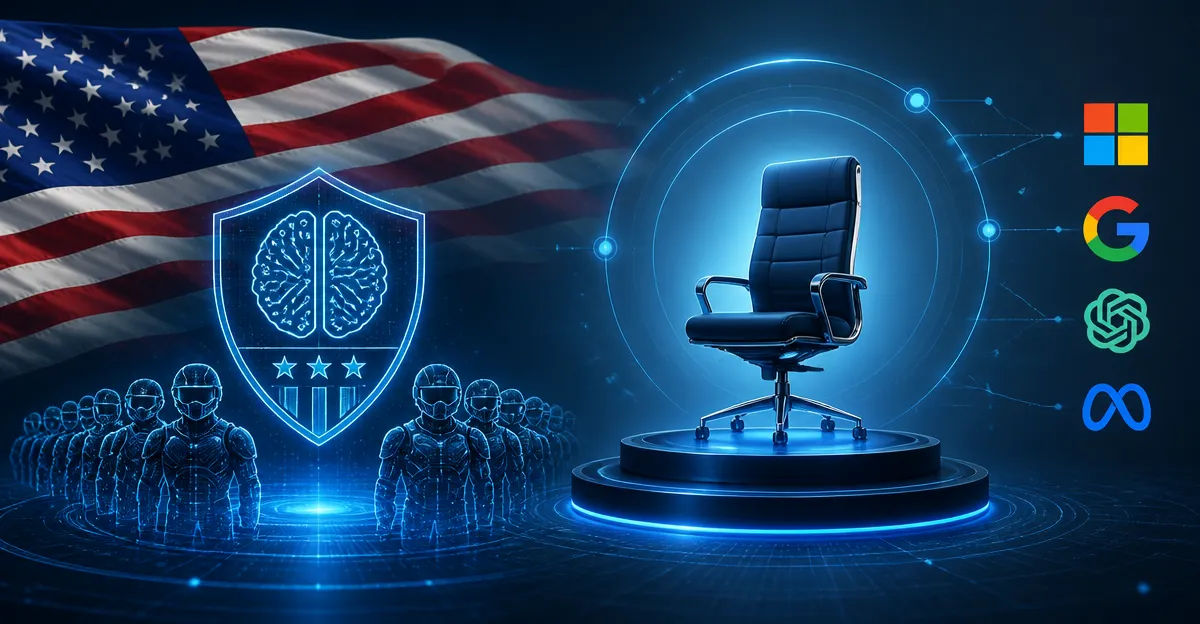
The transparency push lands at an awkward moment. In July, 1,134 employees from OpenAI, Anthropic, Google, and Meta signed a letter titled "Pacing the Frontier," asking the U.S. government to develop tools for deliberately slowing automated AI development if necessary. The letter reflects a growing fear that competitive pressure will override voluntary safety commitments.
"Transparency alone cannot solve a coordination problem between competing labs racing toward the frontier," said a safety researcher who spoke on condition of anonymity. "Publishing metrics is a first step. But if one lab slows down and another speeds up, the incentive to defect remains."
Anthropic's own data underscores the tension. The company's models are not fully autonomous in any research domain, but they are deeply embedded in the research process. Researchers project that by late 2026, AI systems will automate entire days of R&D work, triggering recursive capability acceleration loops. At that point, human oversight becomes a bottleneck rather than a safeguard.
The compute allocation figure offers a window into priorities. With only 6% of research compute devoted to safety, critics argue that the ratio lags behind the pace of capability gains. Anthropic has not disclosed how that percentage compares to previous quarters or to competitors. Inside AI could not independently verify the breakdown of safety versus capability compute.
Industry observers note that Anthropic's disclosure sets a new bar for transparency. No other frontier lab has published comparable metrics on AI-led R&D. OpenAI and Google DeepMind have released safety frameworks but not real-time automation statistics. The move could pressure rivals to follow suit, or it could become a one-off gesture that fades as competitive dynamics intensify.
For enterprise security teams, the implications are immediate. The Cloud Security Alliance warns that recursive self-improvement introduces novel attack surfaces. If AI agents can modify their own code or training data, traditional security perimeters become porous. Anthropic's 0.002% review rate suggests that most agent decisions proceed without human inspection, a statistic that will likely draw scrutiny from auditors and regulators.
The path forward remains uncertain. Anthropic's metrics provide a snapshot, not a solution. As models grow more capable, the gap between what labs can measure and what they can control may widen. The company's next transparency report, expected in early 2027, will show whether the 26% figure stabilizes or continues its steep climb.