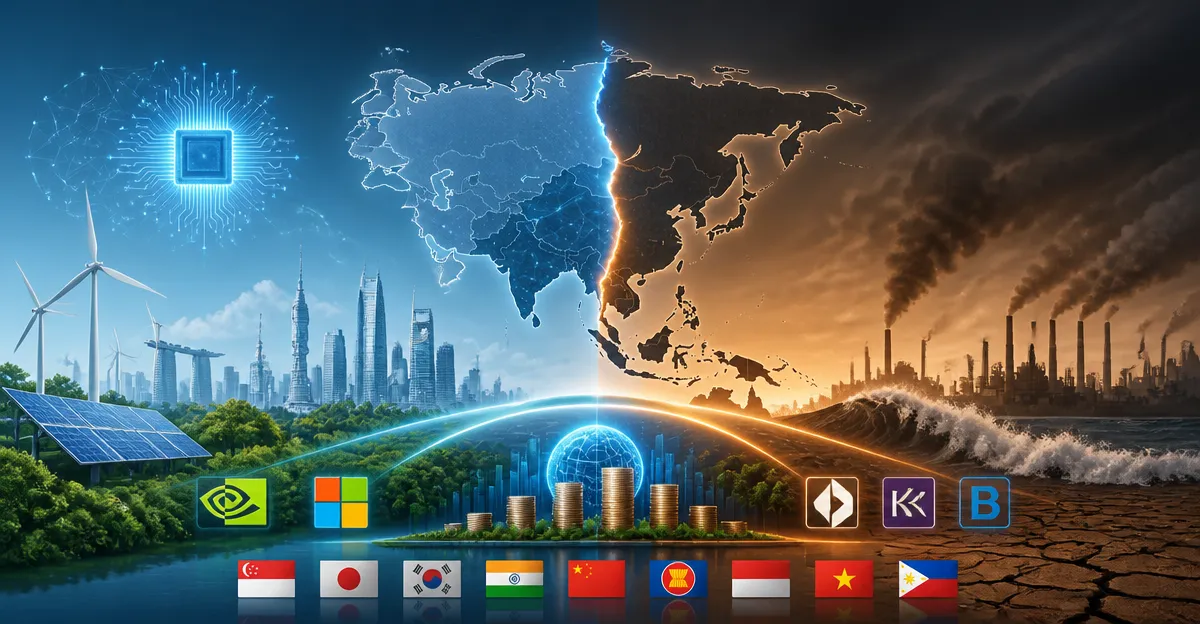
October 18, 2026, (Inside AI) — Asia's economic resilience is being tested by an energy supply shock and a cost-of-living crisis, but the region's ability to absorb these pressures is diverging sharply, according to discussions at the recently concluded International Monetary Fund (IMF) meetings in Bangkok. The talks highlighted how private capital, artificial intelligence (AI) adoption, and climate risks are creating new winners and losers across the region.
The IMF meetings, which bring together finance ministers and central bankers from around the world, ended with a clear message: Asia's growth remains solid, but the benefits are increasingly uneven. Some countries are leveraging technology and private investment to cushion the blow, while others struggle with limited fiscal space and structural weaknesses.
At the heart of this divergence is the rapid adoption of AI, which is reshaping productivity and investment flows. Countries with robust digital infrastructure and skilled workforces are attracting private capital and integrating AI into their economies faster. This is widening the gap with those lagging in technology adoption. Climate change adds another layer of risk, with extreme weather events threatening agricultural output and infrastructure in vulnerable nations.
The IMF has repeatedly warned that without coordinated policy action, these disparities could deepen. In its latest regional outlook, the fund noted that while Asia remains the global growth engine, the pace of expansion varies widely. Advanced economies like Japan and South Korea are investing heavily in AI and green technologies, while emerging markets such as India and Vietnam are attracting manufacturing shifts but face challenges in scaling up digital infrastructure.
Read: Frugal AI Hub's Serish Gandikota: Why Silicon Valley's AI Playbook Is Failing the World
“Asia's resilience is commendable, but it masks growing fractures,” said Kristalina Georgieva, Managing Director of the IMF, in a closing statement. “We must ensure that the benefits of growth and technology are shared broadly.”
The role of private capital in exacerbating these divides is a key concern. Investors are flocking to sectors and countries with clear AI strategies and climate resilience plans, leaving others behind. This “capital flight to quality” is a double-edged sword: it fuels innovation and efficiency in recipient countries but starves others of much-needed investment.
Climate change is also a multiplier of risk. The IMF meetings heard how extreme weather is disrupting supply chains and driving up food and energy prices, hitting the poor hardest. Countries with limited fiscal buffers are finding it harder to respond, leading to calls for greater international support and debt relief.
As Asia navigates these crosscurrents, the policy choices made now will determine whether the region can achieve inclusive and sustainable growth. The IMF has urged countries to invest in digital skills, strengthen social safety nets, and accelerate climate adaptation. But with global financial conditions tightening and geopolitical tensions rising, the window for action is narrowing.
Inside AI's analysis: The intersection of AI, climate, and private capital is creating a new axis of inequality in Asia. While AI can drive productivity and climate solutions, its benefits are concentrated among those with access to capital and skills. Without deliberate policies to democratize technology and finance, the region's resilience will remain fragile, and the gap between frontrunners and laggards will only widen.
Read: CalPERS, Global Pension Funds Ramp Up AI Governance Scrutiny
Looking ahead, the IMF's spring meetings in 2027 will likely revisit these themes, with a focus on how AI governance and climate finance can be leveraged to reduce disparities. For now, Asia's diverging fortunes serve as a cautionary tale for the global economy.