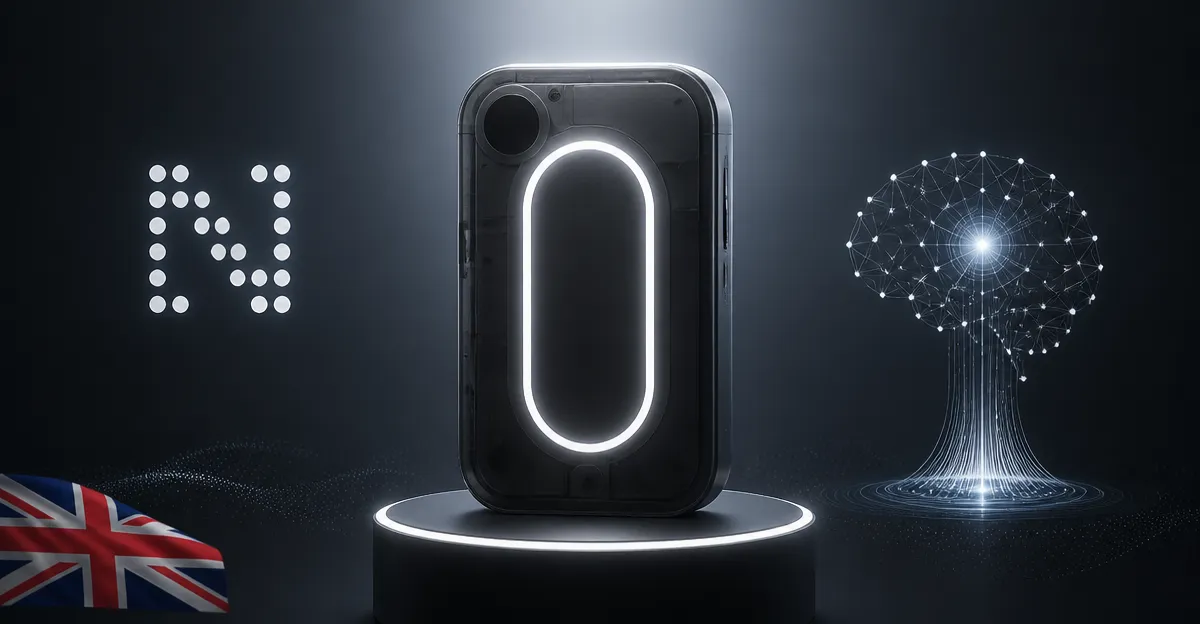
November 5, 2026, (Inside AI) — Nothing, the London-based smartphone maker known for its transparent designs, will launch its first AI-native device in December, CEO Carl Pei announced on Wednesday. The device, which may be called Nothing (R), is screenless and built around a processing unit that runs AI models locally. Pei disclosed the plans in a post on X, attaching an image of a pager and hinting at a form factor that could reshape personal computing.
The launch marks one of the most ambitious attempts yet to move beyond the smartphone as the primary AI interface. It also arrives as the industry debates whether dedicated AI hardware can succeed where apps have dominated for nearly two decades. Nothing's move will test whether a screenless, productivity-focused device can overcome the failures that have plagued similar efforts.
Pei has positioned the device as a productivity tool first. "It might be a form factor nobody has imagined yet, or three of today's devices collapsing into one," he said. He added that he wants to build the "iPhone of AI" and that the device will initially focus on helping people get "real things done."
Details remain scarce. Nothing has not confirmed whether users will interact via voice, physical controls, or a combination. The company has not released images or specifications. What is clear is that the device will not rely on a screen, a departure from the touchscreen-centric design of modern smartphones.
Read: Amazon Launches Bee Frontier Wearable and Eclipse AI Devices
The announcement reflects a broader shift in Silicon Valley. As AI systems grow more capable, startups and established tech firms are exploring devices that act as AI agents, understanding user intent and taking actions on their behalf. This vision treats apps as temporary vessels for services, not the final destination. Pei himself predicted the decline of apps at a tech conference in March 2026. "In terms of AI in software, I think people should understand that apps are going to disappear," he said. "So, if you're a founder or a startup and your app is where the core value lies, that will be disrupted whether you like it or not."
Nothing has built a reputation for distinctive hardware since its first phone in 2021. The company has sold millions of devices and carved a niche with transparent backs and glyph lighting. But the AI hardware market has proven treacherous. In 2024, Rabbit released the R1, a handheld AI assistant with a screen, touch controls, and voice commands. It drew negative reviews for limited functionality, security flaws, and poor performance. Humane's AI Pin, a screenless wearable, fared worse and was eventually acquired by HP.
Those failures have not deterred new entrants. OpenAI and former Apple design chief Jony Ive are reportedly working on an AI device. Google and Meta have invested heavily in AI glasses. The common thread is a belief that smartphones, optimized for apps, are ill-suited for AI agents that need to see, hear, and act in the real world.
Nothing's screenless approach could sidestep some pitfalls. Without a display, the device may avoid the awkwardness of a tiny touchscreen and the battery drain of constant visual output. But it also raises questions about usability. How will users confirm actions, read messages, or consume media? Pei's reference to a pager suggests a minimalist interface, perhaps relying on audio and haptics.
The December launch will be closely watched. Nothing has not disclosed pricing, availability, or technical specifications. The company also has not said whether the device will run third-party AI models or its own. Pei's post did not address these gaps, leaving the industry to speculate.
Read: AI glasses brand NIMO secures angel funding at RMB 1.5 billion valuation
For now, the device remains a promise. Nothing has a track record of shipping products on time, but the AI hardware category has yet to produce a breakout hit. The company's success may depend on whether it can deliver a seamless experience that justifies carrying a second device. Pei's ambition is clear, but the execution will determine if Nothing (R) becomes a template or a cautionary tale.

If a research paper dropped this week, Mahesh has already read it. He covers AI tools and vibe coding for builders who need to know what is worth their time and what is not.