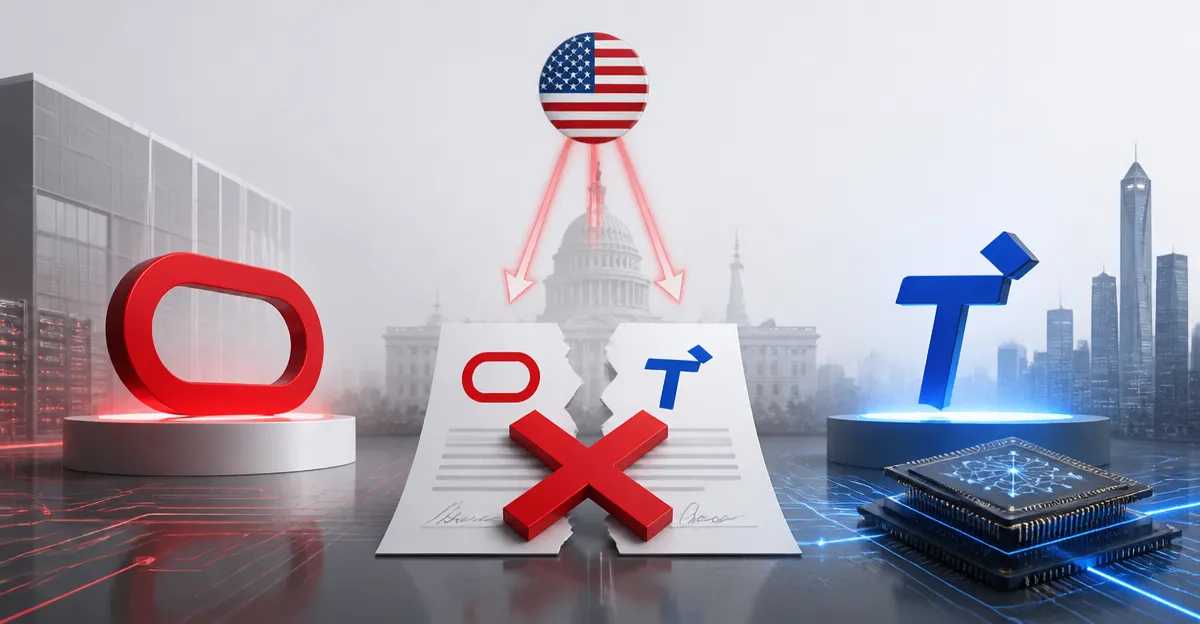
November 5, 2026, (Inside AI) — Oracle has scrapped a five-year agreement to lease advanced AI chips to Tencent, valued at approximately $7 billion, following pressure from the Trump administration, according to sources. The deal would have provided Tencent with access to around 100,000 advanced AI chips across Oracle data centers in Southeast Asia.
US officials raised concerns about the arrangement with Oracle, sources said. Tencent also received visits from senior officials in Guangdong who asked it to support Chinese chips. The reported cancellation underscores the intensifying technological rivalry between Washington and Beijing and the compliance challenges facing global cloud providers.
Washington's Shadow Over Cloud Deals
The cancellation highlights the US government's growing scrutiny of AI infrastructure deals that could bolster China's technological capabilities. The Trump administration has prioritized restricting China's access to cutting-edge semiconductors, citing national security risks. Oracle, a major cloud and enterprise software provider, has significant data center operations in Southeast Asia, a region seen as a strategic buffer for US technology firms.
The pressure on Oracle is part of a broader pattern. In recent months, US officials have intensified checks on cloud providers to ensure they do not circumvent export controls. The Bureau of Industry and Security (BIS) has been drafting rules to require cloud companies to report foreign clients using US AI chips for training large models. This deal would have been a notable exception, allowing Tencent, a Chinese tech giant, to access advanced AI chips through a US intermediary.
Tencent's reported interest in leasing 100,000 AI chips signals its ambition to scale AI research and cloud services. However, the company faces pressure at home as well. Guangdong officials' visits suggest Beijing is pushing domestic firms to reduce reliance on American technology. China has been investing heavily in its semiconductor industry, aiming to achieve self-sufficiency in AI chips by 2025. The cancellation may accelerate Tencent's pivot to domestic suppliers like Huawei or Cambricon, though these alternatives may not match the performance of US chips.
The $7 billion deal would have been a significant revenue stream for Oracle, which has been expanding its cloud infrastructure to compete with Amazon Web Services and Microsoft Azure. Oracle's AI chip leasing business is part of its strategy to monetize its growing GPU inventory. The cancellation could prompt Oracle to seek other clients in Southeast Asia, where demand for AI compute is rising.
This is not the first time US-China tensions have disrupted tech deals. In 2020, the US forced TikTok to divest from its US operations, and in 2022, it imposed sweeping export controls on advanced chips to China. The Biden administration continued these policies, and the Trump administration has doubled down. The cancellation of the Oracle-Tencent deal is a stark reminder that geopolitical considerations now override commercial interests in the AI chip market.
The news comes amid reports that the US is considering further restrictions on AI chip exports to China, including tightening rules on cloud access. The Commerce Department is reportedly evaluating whether to close loopholes that allow Chinese firms to access US technology through third countries. Oracle's decision may preempt regulatory action, but it also raises questions about the effectiveness of export controls. If Chinese firms can lease chips through overseas data centers, the impact of restrictions may be limited.
Oracle and Tencent have not commented on the report. The White House also declined to comment. The cancellation is likely to be discussed at the upcoming US-China tech dialogue, where both sides are expected to address trade and technology issues.
Read: Nvidia CEO Jensen Huang Defends Megaspeed Dealings Amid US Spy Probe
For now, the collapse of the deal leaves Tencent seeking alternatives. The company has been investing in its own chip design and has partnered with domestic foundries. However, the loss of access to 100,000 advanced AI chips could delay its AI projects. The incident also serves as a warning to other US cloud providers considering similar deals: the US government is watching closely.

Sofia spent years studying how machines parse human language before pivoting to cover the systems now rewriting it. She reads technical papers the way others read news and looking for what the numbers are actually saying beneath the headlines.