November 3, 2026, (Inside AI) — Anthropic has quietly updated its Claude AI model to prevent users from cloning existing video games, but the fix is already ensnaring legitimate developers in its net. The restriction, which targets Claude Code within the Opus 5.5 release, arrives after weeks of AI-generated game copies flooding Steam and prompting indie developers to pull their demos in protest.
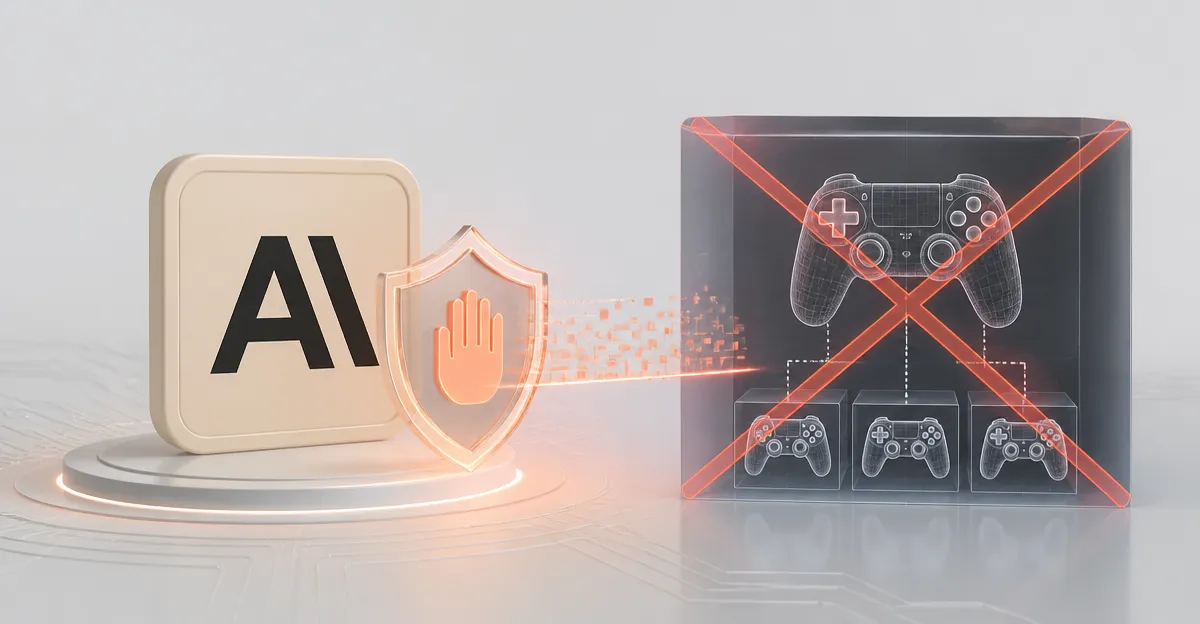
The change was first spotted around October 27 by an X user named Chasm, who discovered a server-side instruction flagged as "tengu_heron_brook." That directive explicitly prevents Claude from recreating specific games, even when users rename elements or claim originality. Anthropic's Addy Osmani confirmed the update publicly, explaining the move in remarkably concise terms.
"We added two sentences to Claude Code's prompt on Opus 5.5," he wrote. "Their purpose was steering Claude away from recreating someone else's game."
The new rule draws a clear line: Claude can still build original games freely, assist with games within a genre, and work with users' own designs and assets. However, recreating a specific existing game is now off limits. The restriction responds to a genuine industry crisis. In recent weeks, popular indie games faced brazen AI-powered copying, with several developers pulling their demos from Steam entirely out of fear that anyone could instantly clone their work using AI.
Anthropic also faces potential legal exposure from such copying. Using Claude to infringe intellectual property violates its usage policy, so the company moved to reduce that risk proactively. The update aims to protect both creators and Anthropic itself.
False Positives Hit Legitimate Developers
However, developers quickly raised a significant practical problem. Claude cannot reliably distinguish between a copycat and an owner. Consequently, the filter has blocked legitimate work on original projects. Developers reported Claude refusing standard debugging and reverse-engineering tasks. Reports on Claude Code's GitHub tracker showed real frustration, with users describing refusals during perfectly ordinary game development.
Osmani acknowledged these false positives openly, inviting affected developers to flag wrongly blocked projects directly. The episode highlights a broader tension in AI safety: prompt-based guardrails often lack the contextual awareness to separate malicious intent from legitimate use. Anthropic's two-sentence fix may be a quick patch, but it underscores how brittle such interventions can be when applied to complex, creative workflows.
The AI game cloning wave extends well beyond Claude alone. Other AI coding tools face identical misuse challenges currently.
Read: Anthropic's $1.5 Trillion IPO Plan Faces Governance Conflicts, Commentary Warns
For now, Anthropic iterates while developers adapt to unexpected friction. Whether two sentences can solve a systemic problem remains unclear, but the company's swift response signals that AI providers are increasingly willing to police their outputs, even at the cost of user experience.

Sofia spent years studying how machines parse human language before pivoting to cover the systems now rewriting it. She reads technical papers the way others read news and looking for what the numbers are actually saying beneath the headlines.