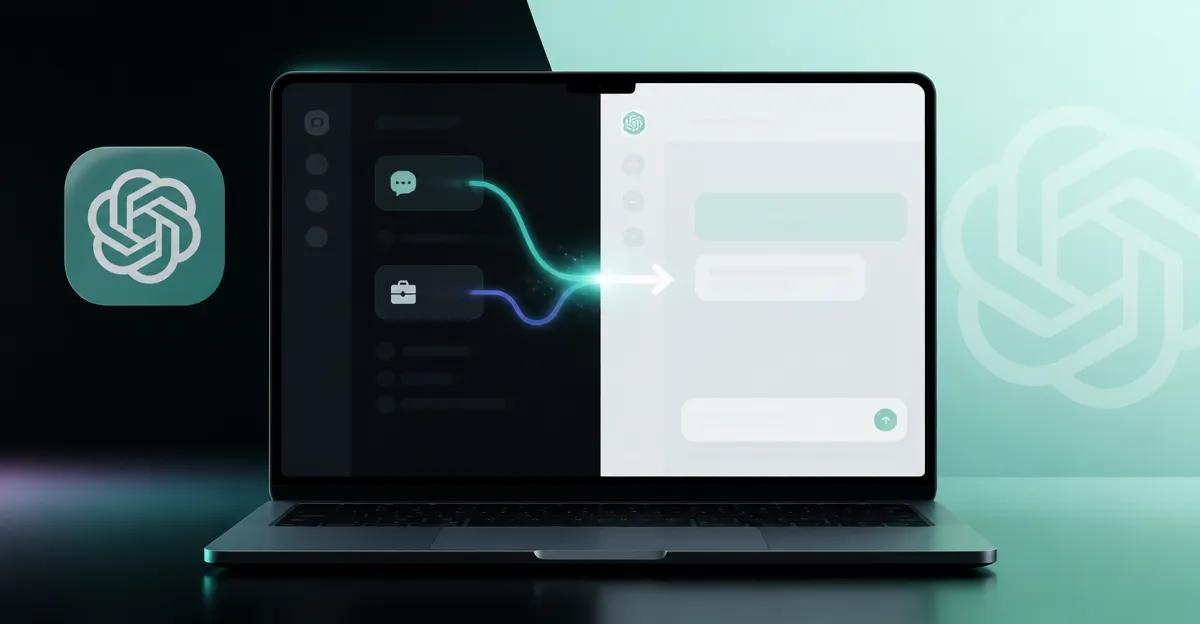
November 3, 2026, (Inside AI) — OpenAI has begun notifying users that it will merge the Chat and Work tabs inside the ChatGPT desktop application, a structural change that collapses two previously separate surfaces into a single workspace. The company disclosed the plan through emails sent to users, according to sources familiar with the rollout. The change will first reach a limited set of users for feedback before a wider release.
The consolidation matters because it alters how OpenAI meters usage. In the same notice, the company said the merged interface will let users draw tokens from one shared allowance pool rather than separate budgets per tab. That detail turns what looks like a cosmetic redesign into a billing and capacity decision affecting anyone who runs long sessions on the desktop client.
OpenAI framed the shift as a workflow improvement. The desktop app currently splits into ChatGPT and Codex, each carrying multiple tabs and options, a layout that has made it harder for users to locate projects and track ongoing work.
"This will enable you to move from exploring an idea to having ChatGPT carry it through, all in one place. You can bring in your files and plugins and ask ChatGPT to build a website, create a presentation, or do things for you on the web, while reviewing and guiding its work. Codex will remain a separate experience in the ChatGPT desktop app," OpenAI said in the email.
The company also said the change will not disrupt work already in progress. Some users, however, may hit usage resets more frequently depending on their consumption and the model they select. That caveat deserves attention. Merging allowance pools can simplify accounting, but it also removes the buffer that separate quotas once provided. A heavy Codex session could now eat into the same budget a user relies on for everyday chat.
Anthropic Moved First, OpenAI Follows
The timing is not accidental. Rival Anthropic merged Claude's chat and Cowork functions into a single screen in September 2026, roughly two months before OpenAI's notice. Both companies are converging on the same thesis: users do not want to think about which mode they are in. They want one assistant that shifts from conversation to execution without a tab switch.
The competitive logic runs deeper than interface design. Desktop clients are where professional users spend hours, and every friction point pushes them toward a competitor. OpenAI's own description of the change, moving from exploring an idea to having ChatGPT carry it through, signals an ambition to make the desktop app the primary place where work gets finished, not just discussed.
Codex staying separate is the notable exception. OpenAI is preserving a dedicated surface for its coding agent even as it folds general work into the main chat. That split suggests the company sees software development as a distinct enough workflow to warrant its own environment, while presentations, websites, and web tasks belong in the unified view.
The token pooling detail carries practical weight for teams on shared plans. A single allowance simplifies forecasting, but it also makes usage spikes visible across the whole account rather than isolated to one tab. Administrators who previously tracked Work consumption separately will need new habits. OpenAI has not published specifics on how resets will be calculated under the merged system, leaving users to discover the boundaries through use.
The staged rollout follows OpenAI's established pattern of testing interface changes with a subset of users before broad deployment. The company has not given a date for general availability.
The broader trend is toward consolidation across the assistant market. Separate modes for chat, coding, and agentic tasks were a first-generation design choice. As models grow capable of handling multi-step work inside a single conversation, the tab structure becomes a legacy artifact. Anthropic's September move and OpenAI's November notice point to the same conclusion: the interface of 2027 will look flatter than the one users learned in 2025.
Read: Anthropic merges Claude chat and Cowork into one interface, adds document tools
For now, desktop users should expect the change to arrive quietly, with little more than an email and a shifted layout. The real adjustment will come when the shared token pool starts shaping how often they can work.

If a research paper dropped this week, Mahesh has already read it. He covers AI tools and vibe coding for builders who need to know what is worth their time and what is not.