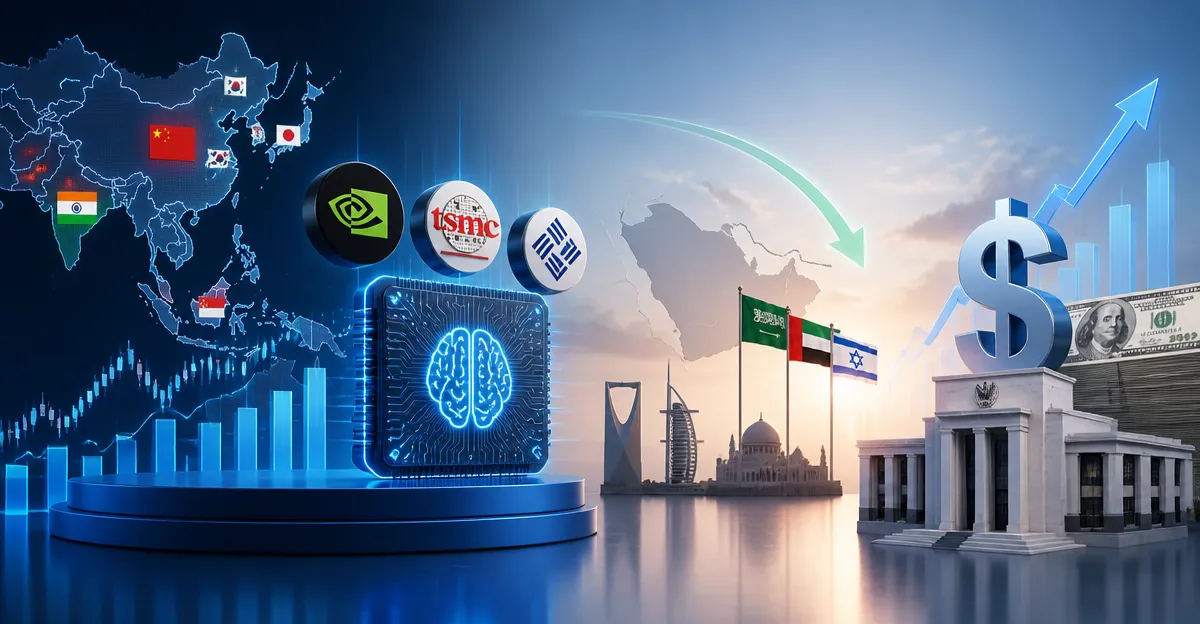
November 9, 2026, (Inside AI) — Asian equities staged a partial recovery on Monday after a brutal selloff last week, as investors tentatively returned to technology stocks despite lingering concerns over AI profitability and new regulatory risks following the U.S. midterm elections.
MSCI's broadest index of Asia-Pacific shares outside Japan rose 0.8%, clawing back some ground after a 4.6% weekly decline. Japan's Nikkei added 2.5%, while Taiwan's benchmark jumped 2.5% following its steepest weekly drop in two decades. U.S. equity futures also edged higher, offering a fragile sense of calm after Wall Street's chaotic finish on Friday.
The rebound comes as investors weigh whether the AI trade, which has powered global markets for much of the past two years, can withstand a confluence of pressures: rising interest rates, political uncertainty, and a critical earnings season that will test whether AI investments are generating real returns.
Can AI Earnings Justify The Buildout?
This week's earnings reports from CoreWeave, Applied Materials, and Cisco Systems will serve as a crucial referendum on AI infrastructure spending. These companies sit at the heart of the AI supply chain, from cloud computing capacity to semiconductor manufacturing equipment and networking hardware.
The results will arrive amid mounting skepticism. Last week's selloff was triggered not only by political developments but by growing doubts about whether the massive capital expenditures on data centers and AI infrastructure will translate into sustainable profits.
"The markets are far from being out of the woods yet," Kyle Rodda, senior financial market analyst at Capital.com, said. "Following last week's midterm elections that have led to increased regulatory risk and an overall underwhelming earnings season that's seen Magnificent Seven companies miss earnings expectations, the momentum remains skewed to the downside."
The political dimension adds a new layer of uncertainty. Democratic victories in the U.S. midterms have raised fears of stricter oversight of AI development and data center operations, potentially slowing the industry's rapid expansion.
Adding to the jitters, Nvidia is conducting an internal investigation into CEO Jensen Huang's relationship with an individual alleged to be a Chinese spy. The probe, led by the company itself, could introduce fresh volatility into a stock that has become a bellwether for the entire AI sector.
The broader market reaction illustrates how interconnected AI sentiment has become with macroeconomic forces. Rising interest rates have already pressured high-growth technology stocks, and the prospect of further Fed tightening in December could exacerbate those headwinds.
Fed Bets Tighten Grip On Markets
A surprisingly strong U.S. jobs report on Friday showed employers added 165,000 positions last month, more than double economists' expectations. The data bolstered the case for the Federal Reserve to raise interest rates again in December, with market-implied odds of a 25 basis point hike now at nearly 80%, according to the CME FedWatch Tool.
"US economic growth has remained remarkably resilient in the face of successive shocks but inflation is too high and it is essential to bring it back to 2%," New York Fed President John Williams said.
The dollar surged on the news, posting its biggest single-day gain in five months. The dollar index last traded at 102.2, while the yen strengthened 0.2% to 158.215 per dollar. The euro was little changed at $1.1148.
Cryptocurrencies felt the pinch of shifting political winds. Bitcoin fell more than 2% to $73,708, and ether dropped about 5% to $2,223, its lowest level in over two months, as investors anticipated tougher regulation from a Democratic-controlled Congress.
Oil prices also eased, with Brent crude falling to $97.49 per barrel after President Donald Trump indicated he was unlikely to order new attacks on Iran as long as negotiations to end the conflict continue.
The week ahead promises little respite. Tuesday's U.S. consumer price index reading could further cement expectations for a December rate hike, while the tech earnings parade will keep AI profitability under the microscope. For now, Asian markets have caught their breath, but the underlying tensions that drove last week's rout remain unresolved.

Shamil has a low tolerance for AI that only works in controlled demos. He covers agentic systems and generative AI with the skepticism of someone who has seen too many “revolutionary” tools quietly disappear six months after launch.