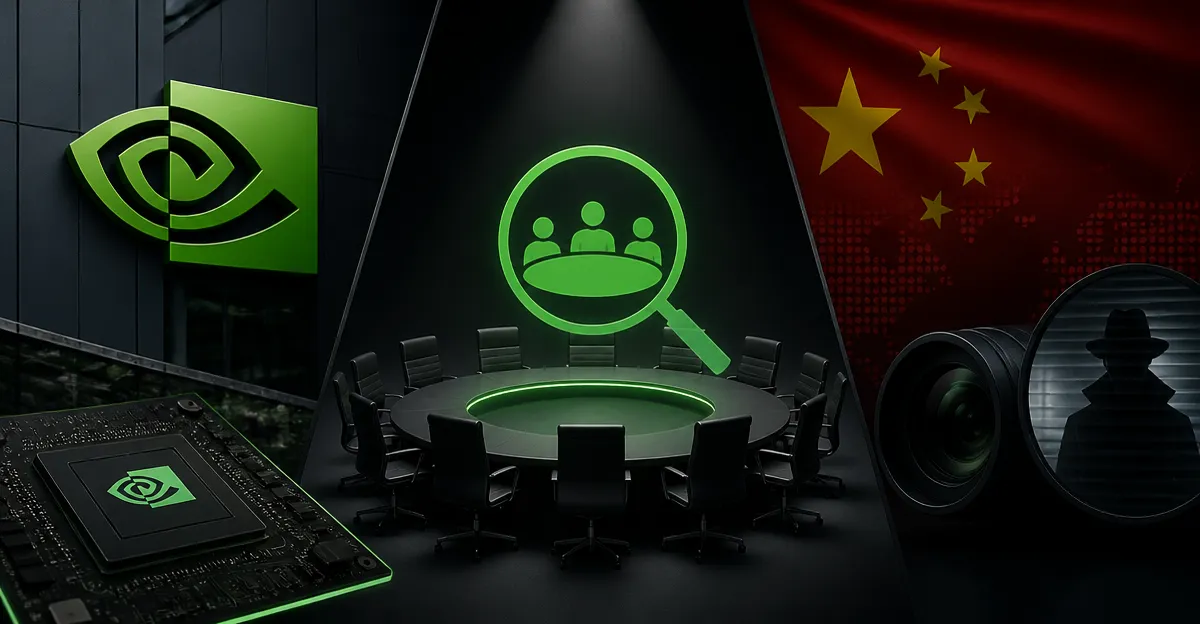
November 9, 2026, (Inside AI) — Nvidia CEO Jensen Huang has acknowledged to the company's board and employees an intimate relationship with a business executive identified in media reports as Alice Huang, also known as Huang Le. Those reports allege she was linked to a Chinese intelligence operation targeting him. Nvidia's board has opened an independent investigation into the reporting and its potential national security implications, and Huang has said he will cooperate.
The disclosure lands at the worst possible moment for the world's most valuable chipmaker. Nvidia sits at the center of the global AI buildout, and Huang, 63, is its founder, chief executive, and most recognizable face. The board's central question is whether any company information was compromised. If investigators find no security lapse, continuity may win. If they find one, and conclude Huang knew, the pressure on him would rise sharply.
Washington now faces difficult questions of its own. Who knew what, and when? Was Huang warned? Was Nvidia warned? Did US officials assess whether sensitive commercial or technological information could have been exposed? Huang has been a vocal advocate for rolling back US export controls on advanced AI chip sales to China, and that lobbying will now be viewed in a different light. The Trump administration has said publicly it has been receptive to his arguments.
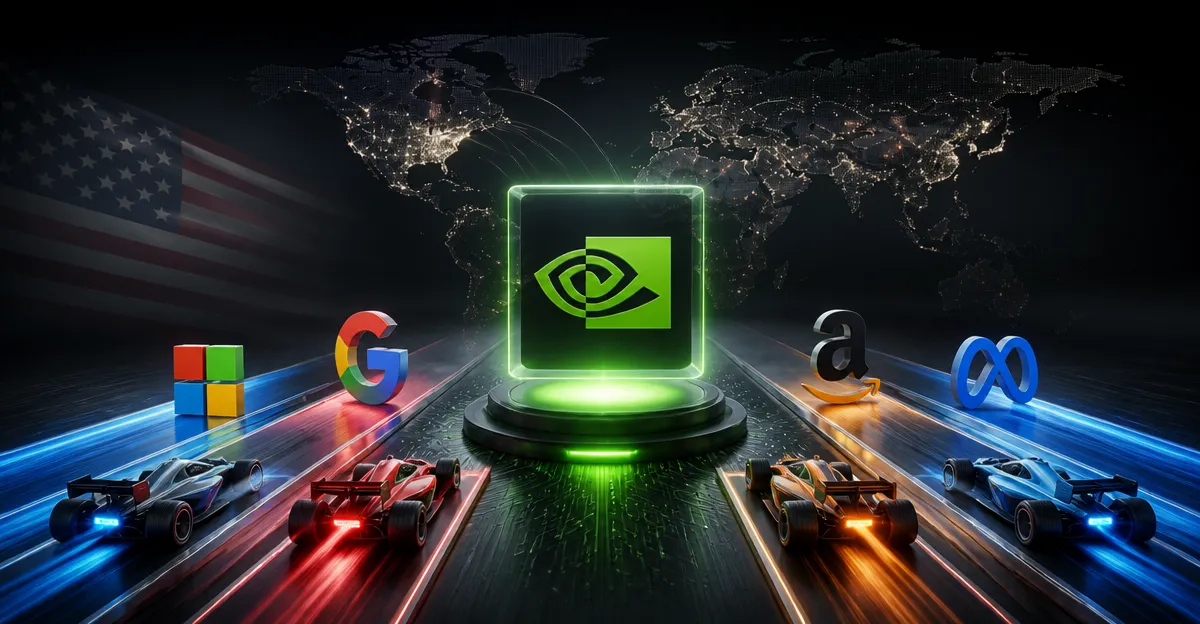
One Man Holds The Entire Supply Chain
Huang's influence extends far beyond chip supply. Nvidia has turned its cash pile into a war chest, funding AI cloud providers, suppliers, and the largest labs. That makes him a potential single point of failure for the industry. Stacy Rasgon, an analyst at Bernstein, framed the stakes plainly.
"It is hard not to read the news over the weekend as negative given it brings the stewardship of one of America's most important companies and the architect of the US AI trajectory under debate," Stacy Rasgon, analyst at Bernstein, said.
"Nvidia is not an ordinary company and Jensen is not an ordinary CEO; he is Nvidia, clearly sets the long-term strategy and direction, and pulls most of the company's strings himself."
His personal sway is equally unusual. A casual night of fried chicken and beer in Seoul with the CEOs of Samsung and Hyundai last year sent shares of two South Korean food companies soaring. His endorsement of Marvell Technology as the next trillion-dollar company pushed that chipmaker's stock to record highs. Fans in Taipei and Seoul mob him for autographs on books, posters, and sometimes their bodies.
Huang has also served as the industry's leading counterweight to AI skeptics, dismissing bubble fears and challenging Anthropic CEO Dario Amodei's warning that the technology could pose an existential threat to humanity. Any setback for him deprives the AI industry of one of its most vocal champions.
The comparison to other founder-led technology giants is instructive. Mark Zuckerberg at Meta and Elon Musk at SpaceX hold special voting shares that give them majority control. Huang, as Nvidia's fifth-largest shareholder with roughly a 3.6% stake, holds no such structural lock. His power rests on performance and reputation, which is precisely why a security investigation carries outsized weight.
His grip on the company is reflected in an unusually flat structure. More than 60 executives report directly to him, nearly all in engineering roles spanning memory chips, networking, and graphics and central processors. His family is woven into the business as well. Son-in-law Nico Caprez is vice president of global AI infrastructure growth. Daughter Madison is a senior director overseeing marketing for physical AI products. Son Spencer works in the robotics division.
There is no disclosed succession plan. Nvidia lists four executives on its leadership page besides Huang: finance chief Colette Kress, worldwide field operations head Nick Parker, operations head Debora Shoquist, and general counsel Tim Teter. None is seen as a ready replacement.
"Jensen is not replaceable... there is no other person on the management team bench that can step in seamlessly as CEO," Dan Ives, partner and senior managing director at Yorkville Ives & Co., said.
Huang's status as allocator-in-chief was captured by Oracle co-founder Larry Ellison in September 2024, when he recounted a dinner at Nobu in Palo Alto.
"I would describe the dinner as me and Elon begging Jensen for GPUs," Larry Ellison, Oracle co-founder, told analysts. "Please take our money ... We need you to take more of our money."
Huang has defended his management philosophy in public before. On the Lex Fridman Podcast in March, he said the architecture of a company should reflect the environment in which it exists, rejecting uniform organization charts.
The board's investigation now becomes the pivot. A finding of no compromise likely preserves continuity. A finding of a lapse, especially one Huang concealed, would test whether Nvidia's dependence on one man is a strength or a vulnerability. Congress may also weigh in, given the national security dimension and Huang's lobbying on China export rules.
Read: Nvidia Probes Chinese Intelligence Targeting of CEO Jensen Huang
For now, Nvidia says Huang retains the board's backing. The company has not disclosed a succession plan. The AI industry, which depends on his chips and his optimism in equal measure, is watching the investigation closely.

Sofia spent years studying how machines parse human language before pivoting to cover the systems now rewriting it. She reads technical papers the way others read news and looking for what the numbers are actually saying beneath the headlines.