November 9, 2026, (Inside AI) — Nvidia has launched an internal investigation into reports that Chinese intelligence targeted CEO Jensen Huang through a former executive of Singapore-based data centre operator Megaspeed. The probe, confirmed by a committee of independent directors on Sunday, follows Huang's public admission of an extramarital relationship with Alice Huang, also known as Huang Le, a Chinese national and former Megaspeed executive.
Huang confirmed the relationship in a message to employees on November 8, stating: "I was unfaithful to my wife. My actions hurt her and our children. There is no excuse for what I did. I am deeply sorry." He did not identify the other person in his statement. The same day, Nvidia's board said it had no reason to believe company secrets or US national security had been compromised, but would examine all available information with outside legal counsel.
The controversy arrives at a delicate moment for Nvidia, now valued at over $4.5 trillion, as Washington tightens restrictions on advanced AI chip exports to China. Huang has been lobbying the Trump administration to ease those restrictions, arguing that supplying inferior chips to China would slow its domestic innovation. The spying allegations now raise questions about whether Beijing sought to influence that advocacy through personal access to the CEO.
President Donald Trump, asked about the allegations, said: "I have not spoken to him about it. I just know he's a fine person, but you never know what is going on." He added: "I hope everything's fine. He probably has an excuse for it. You have to hear it."
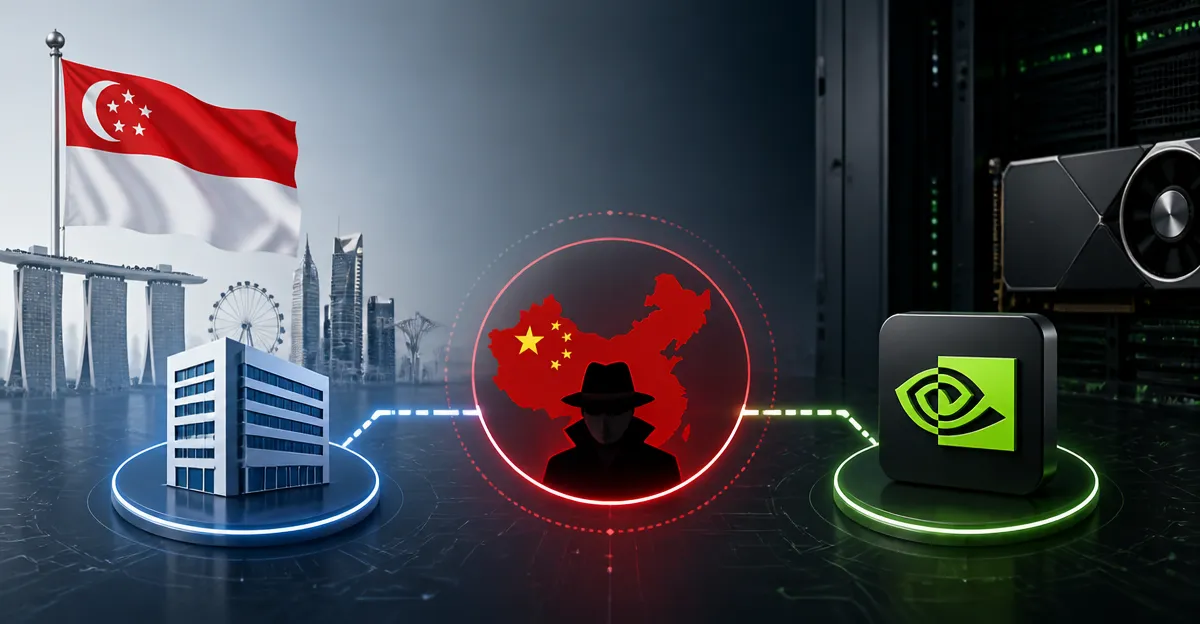
The scrutiny extends beyond Nvidia's CEO. Megaspeed, registered in Singapore, provides AI computing capacity through data centres in Malaysia and Indonesia. Its origins trace to 7Road, a Chinese gaming and cloud-computing company that US lawmakers have described as having links to the Chinese government. Megaspeed was previously incorporated as 7Road International before adopting its present name in 2023.
According to trade records cited by The New York Times, a Malaysian affiliate of Megaspeed purchased at least $4.8 billion worth of advanced AI equipment containing Nvidia technology between June 2024 and February 2026. The company reportedly supplied computing capacity to Alibaba and other Chinese businesses, allowing them to access Nvidia-powered infrastructure located outside China.
The US Commerce Department began investigating Megaspeed in late 2024 after an official visiting one of its Malaysian data centres reportedly found Nvidia equipment still packed in boxes, raising suspicions that chips could be shipped elsewhere. The investigation was transferred to the US Department of Justice earlier this year.
In October 2025, Republican Senator Tom Cotton wrote to Commerce Secretary Howard Lutnick, calling for an investigation into Megaspeed's ownership and potential violations of American export restrictions. Cotton flagged the routing of Nvidia equipment through intermediaries, including a US subsidiary of Inspur, a Chinese technology company whose parent had been placed on Washington's trade blacklist.
In May 2026, short-selling firm Culper Research published a report alleging Megaspeed received financial backing linked to Alibaba through intermediary companies. Citing corporate filings, Culper said Megaspeed's balance sheet expanded from $33 million at the end of 2023 to $3 billion in 2024, driven largely by $2.9 billion in refundable deposits from an undisclosed source. The report also pointed to filings showing Megaspeed's Malaysian subsidiary, Speedmatrix, pledged its business as collateral to Singapore-based Apex Enterprise Solutions, whose parent company was Alibaba. Culper disclosed it held a short position in Nvidia. Its allegations remain unproven.
Singaporean authorities have confirmed an ongoing investigation into Megaspeed for suspected breaches of domestic laws. However, neither American nor Singaporean investigations have publicly established that Megaspeed illegally diverted chips to China. The company has denied wrongdoing, while Nvidia has maintained its checks found no evidence of diversion.
On October 31, Singapore clarified that the Megaspeed investigation was unrelated to allegations involving Alice Huang's suspected links to Chinese intelligence, which it said it had not investigated.
Beijing Rejects Espionage Claims as Lawmakers Demand Answers
China has rejected the espionage allegations. US intelligence officials reportedly concluded that Alice Huang, a Chinese citizen, was passing information to Beijing. Reports suggest China's Ministry of State Security recruited her to gather information about Huang and potentially influence his position on chip exports.
The allegations have renewed scrutiny on Huang's lobbying efforts. Three Republican chairmen of US House committees have requested a closed-door briefing from Huang on November 18, citing significant national security concerns over China's access to American technology and information.
The broader context is Washington's effort to prevent China from accessing advanced AI technology through third countries. While export controls prohibit unauthorised shipment of certain chips to China, Chinese companies can rent infrastructure housed elsewhere. Such arrangements are not necessarily illegal, but they complicate enforcement.
Nvidia's graphics processing units have become central to training and running sophisticated AI models, giving the company a dominant position in AI computing hardware. Technology giants including Microsoft, Google, Meta and Amazon spend billions annually on Nvidia-powered infrastructure.
The controversy also highlights the limits of export controls in a globalised computing market. Nvidia maintains Megaspeed has no Chinese shareholders and operates outside China. Yet the company's origins and financing arrangements continue to draw congressional attention.
For Nvidia, the reputational risk extends beyond regulatory scrutiny. The company's stock has surged on AI demand, but any perception that national security concerns were overlooked could invite tougher oversight. The independent directors' investigation will likely examine whether Huang's relationship created vulnerabilities.
Huang has repeatedly argued that supplying inferior quality chips to China would help stem the growth of its domestic industries. Critics, including lawmakers and national security officials, contend Beijing could use advanced American AI technology to strengthen its military capabilities.
The November 18 briefing will test Huang's standing in Washington. Republican committee chairmen have signalled they want answers about China's access to American technology and the CEO's personal ties. How Nvidia handles the investigation may shape its lobbying effectiveness and its relationships with policymakers.
Read: White House Postpones Tech Advisers Meeting With Huang, Zuckerberg
Megaspeed, meanwhile, remains under scrutiny in both Singapore and the United States. The company has denied wrongdoing. Its business dealings with Alibaba and other Chinese firms continue to raise questions about whether export restrictions can effectively prevent Chinese access to advanced AI computing power through data centres in third countries.

Sofia spent years studying how machines parse human language before pivoting to cover the systems now rewriting it. She reads technical papers the way others read news and looking for what the numbers are actually saying beneath the headlines.