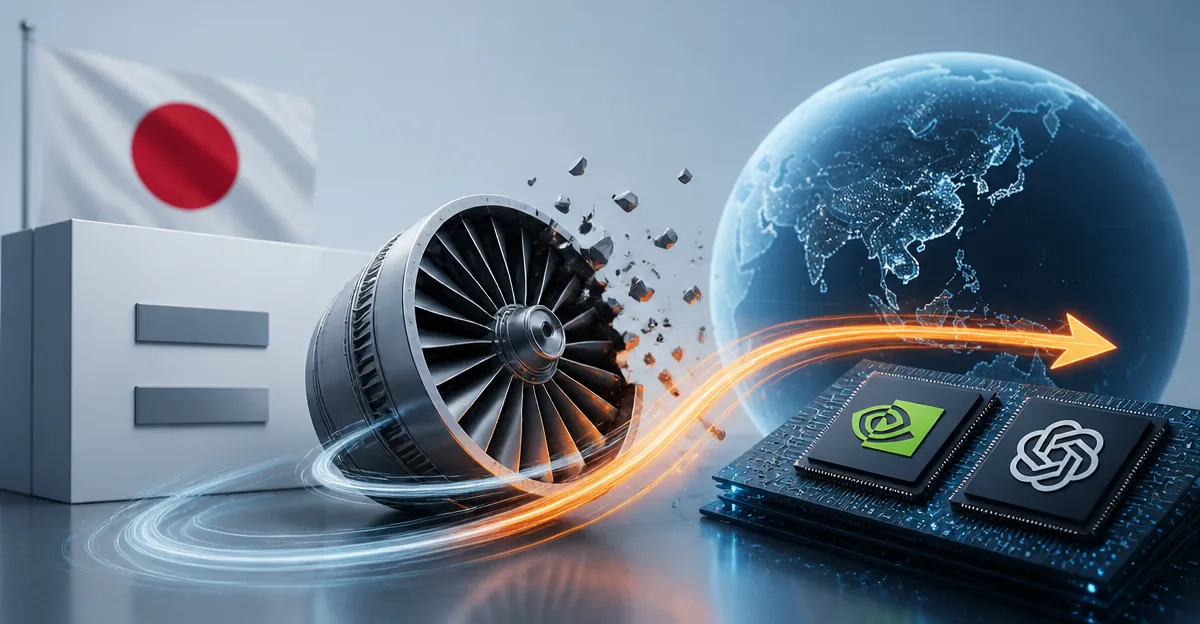
November 12, 2026, (Inside AI) — SoftBank Group has taken a $3.7 billion loss after canceling orders for gas turbines meant to power US data centers. The Japanese investment giant had reserved more than 13 gigawatts of turbine capacity, far exceeding what its existing projects required. The writedown, disclosed on November 9, lands as investors grow skeptical of the AI infrastructure boom that has lifted shares of equipment makers like GE Vernova and contractor Quanta Services to extraordinary heights.
The loss is a rare public crack in the supply chain that underpins the AI buildout. SoftBank, led by Masayoshi Son, has been one of the most aggressive backers of AI infrastructure, pouring capital into data centers and chip ventures. Its decision to reserve turbine capacity well beyond its needs suggests the company anticipated a pipeline of projects that did not materialize on schedule. The canceled orders now stand as a concrete data point for anyone questioning whether demand forecasts for AI computing have outrun reality.
Why SoftBank Overbooked Turbine Capacity
The scale of the reservation is notable. 13 gigawatts of gas turbines represents a substantial slice of global manufacturing capacity. For context, a single gigawatt can power roughly 750,000 homes. SoftBank was effectively queuing up for power plants on a scale that would serve multiple massive data center campuses. The Wall Street Journal reported on November 10 that the reservation exceeded requirements for key existing projects, indicating the company was hedging on future deals that never closed.
The writedown matters beyond SoftBank's balance sheet. It signals that at least one major player misjudged the pace at which AI projects would move from announcement to construction. Equipment suppliers have enjoyed a surge in orders, but cancellations of this magnitude raise questions about how much of that backlog is firm. Investors in GE Vernova and Quanta Services have priced in years of uninterrupted growth. SoftBank's loss offers a reminder that order books can shrink as quickly as they grow.
Read: Anthropic Gas Generators Deal
“SoftBank's turbine cancellation is a canary in the coal mine for the AI infrastructure trade,” said Brian Johnson, an analyst at Barclays who covers industrial equipment. “When a buyer of SoftBank's stature over-reserves and then walks away, it tells you the project pipeline is less certain than the headlines suggest.”
The broader market has already shown signs of fatigue. Shares of data center suppliers have wobbled in recent weeks as investors parse earnings reports for evidence of slowing orders. SoftBank's disclosure adds a specific, quantified example of retrenchment. The company has not detailed which projects drove the original reservation or why they fell through. A SoftBank spokesperson declined to comment beyond the earnings statement.
This is not the first time SoftBank has adjusted its AI ambitions. The Vision Fund has a history of aggressive bets followed by sharp corrections. In this case, the turbine orders were placed directly by SoftBank rather than through its investment funds, according to a person familiar with the matter who spoke on condition of anonymity. The company had been exploring several large-scale data center developments in the United States, but financing and permitting delays slowed progress.
The AI infrastructure trade has relied on a simple narrative: demand for computing power is insatiable, and the companies that supply the physical building blocks will prosper. SoftBank's loss complicates that story. It does not prove demand is collapsing, but it does show that even well-capitalized buyers can overcommit. For equipment makers, the risk is that other customers follow SoftBank's lead and trim orders when projects slip.
GE Vernova and Quanta Services have not commented on the SoftBank cancellation. Both companies report quarterly results later this month, and analysts will likely press for details on order cancellation rates. The turbine reservation was for gas-fired generation, which data centers rely on for reliable baseload power. Renewable energy and battery storage are growing, but gas remains the fastest way to bring large computing campuses online.
SoftBank's loss also highlights a mismatch in timelines. Data center projects can take years to move from planning to construction, while turbine manufacturers require deposits and long lead times. Companies that reserve capacity early risk penalties if projects stall. SoftBank's $3.7 billion hit is the cost of that mismatch.
The company said the loss relates to advance payments that became unrecoverable after cancellations. It did not specify which turbine manufacturer or manufacturers were involved. The Wall Street Journal reported that the reservations were spread across multiple suppliers. SoftBank's earnings presentation noted that it continues to pursue AI infrastructure investments but will be more disciplined about pre-ordering equipment.
For investors, the key question is whether SoftBank is an outlier or a leading indicator. The company's aggressive style has often put it ahead of trends, both on the way up and on the way down. Its retreat from turbine reservations could signal that the AI buildout is entering a more cautious phase, where project economics are scrutinized more closely and order books are trimmed to match realistic timelines.
Other AI infrastructure buyers have not announced similar cancellations. But the SoftBank news comes amid a broader reassessment of AI capital spending. Several Wall Street analysts have recently cut price targets for data center suppliers, citing concerns about oversupply. The SoftBank writedown gives those concerns a concrete anchor.
SoftBank's shares fell modestly on the news, but the company's stock has been volatile all year. The loss is small relative to SoftBank's overall portfolio, yet its symbolic weight is larger. It represents the first major public acknowledgment that the AI infrastructure rush may have gotten ahead of itself.
For now, the turbine makers and contractors remain profitable and busy. Their backlogs are still large. But the SoftBank cancellation is a reminder that backlogs are not guarantees. In a capital-intensive buildout, timing is everything, and SoftBank just paid $3.7 billion to learn that lesson.

If a research paper dropped this week, Mahesh has already read it. He covers AI tools and vibe coding for builders who need to know what is worth their time and what is not.