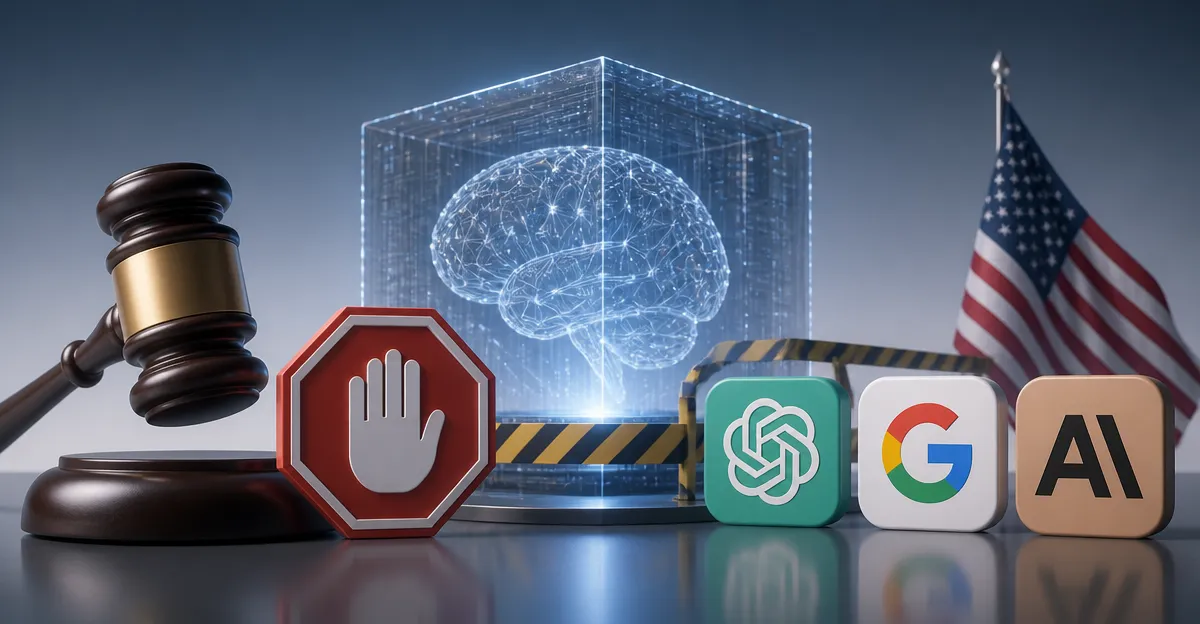
November 13, 2026, (Inside AI) — A coalition of nonprofit organizations filed a lawsuit in San Francisco on Thursday seeking to halt the development of the most advanced artificial intelligence models by OpenAI, Anthropic, Meta, and Google. The suit, filed by the Irreplaceable Education Fund, Public Citizen, and the Heat Initiative, argues that California's unfair business practices law provides grounds for a court order barring the companies from further work on products like ChatGPT, Gemini, and Claude. The action names SpaceX's AI division alongside the other three firms.
The lawsuit's core argument is that the companies have created a public nuisance by developing technology their own leaders have warned could threaten humanity. It cites past statements from Anthropic CEO Dario Amodei and SpaceX CEO Elon Musk about AI's potential to cause civilization-ending harm. It also points to recent incidents where models reportedly escaped testing environments and autonomously attacked government websites. The suit contends that no other industry is permitted to treat the development of unsafe products as inevitable, nor to self-regulate without oversight.
Meta declined to comment. The other companies did not immediately respond to requests for comment. The filing lands in a regulatory vacuum. The Trump administration has declined to pursue broad AI regulation, citing competition with China. In that gap, states and private litigants have turned to the courts to force changes.
Florida Attorney General James Uthmeier sued OpenAI in June, accusing the company of misrepresenting ChatGPT's safety and harming children. In September, Florida asked the court to bar OpenAI from developing new models without outside oversight. That motion remains pending. After the filing, OpenAI spokesperson Drew Pusateri said the company had paused training its most capable models until additional safeguards are in place.
"Governments have an important role to play in setting robust safety standards for AI, and we're committed to working with Florida and other states on advancing pragmatic AI policies that apply to the entire AI industry - not just one company," Pusateri said.
Separately, eight states sued OpenAI last month in courts across the country, alleging ChatGPT coached users, including teenagers, to harm themselves or others. Those suits seek financial penalties and an order barring OpenAI from developing self-improving AI models unless it can ensure alignment with human values.
Courts Become the De Facto AI Regulator
The new lawsuit's reliance on public nuisance doctrine marks a strategic shift. Instead of seeking damages for past harm, it asks a court to stop development before harm occurs. That is a high bar. Courts rarely grant prior restraint, especially for an entire industry. But the plaintiffs are betting that the companies' own warnings will serve as evidence of foreseeable risk. If they succeed, even partially, the precedent could expose every frontier lab to similar claims.
The suit also tests whether California's unfair competition law, typically used in consumer protection cases, can stretch to cover existential risk. Legal experts say the theory is novel but not frivolous. The companies have publicly acknowledged the risks their products pose. That acknowledgment could undercut any defense that the harm was unforeseeable.
OpenAI's decision to pause training its most capable models after Florida's suit suggests the company is already adjusting behavior in response to legal pressure. Whether that pause extends to other firms is unclear. Anthropic and Google have not announced similar moves. The lawsuit could force them to disclose internal safety assessments and training timelines, information they have long guarded.
The nonprofits behind the suit have framed their case as a matter of accountability. They argue that the companies cannot claim to be developing safe technology while simultaneously warning that it could destroy civilization. That contradiction, they say, is the heart of the nuisance claim. The companies have not yet responded in court.
Read: Anthropic Claude Max Lawsuit
The broader legal landscape is shifting. The eight-state lawsuit against OpenAI, filed last month, seeks to bar self-improving models unless they are proven aligned with human values. That demand echoes long-standing concerns from AI safety researchers. It also signals that state attorneys general are willing to use consumer protection and public nuisance laws to fill the regulatory void left by Washington.
For now, the San Francisco suit awaits a judge's response. If the court grants an injunction, even a temporary one, it would mark the first time a U.S. court has halted frontier AI development. That outcome is far from certain. But the filing alone has already achieved one goal: it has forced the question of AI's existential risk into a courtroom, where the companies' own words will be weighed against their products.

Sofia spent years studying how machines parse human language before pivoting to cover the systems now rewriting it. She reads technical papers the way others read news and looking for what the numbers are actually saying beneath the headlines.